Most Popular Famicom Games - Page 41

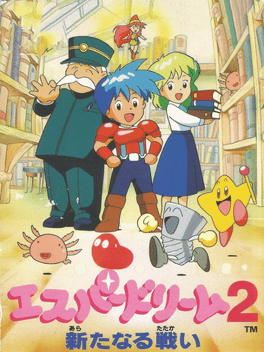
Esper Dream 2: Aratanaru Tatakai
1992
Esper Dream 2: Aratanaru Tatakai is a Role-Playing game, developed and published by Konami, which was released in Japan in 1992.Exciting Boxing
1988
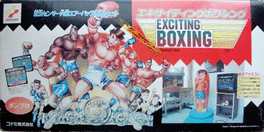
Exciting Boxing
1988
Exciting Boxing is a Sports game, developed by Human Entertainment and published by Konami, which was released in Japan in 1987.Ginga no San-nin
1987
Ginga no San-nin
1987
In the year 2300, the human race created an Earth federation government and spread out into space to begin colonizing the surrounding planets. However, an alien species from the far reaches of outer space began attacking the human forces, putting the very survival of the human race at stake. Though it was only a matter of time before Earth fell to the enormous power of the enemy forces, the Earth's army commander issued an order calling all of the units dispersed around the colonized planets to return to Earth. The player takes the role of a young soldier who was stationed with the Rayieza unit on the planet Mars. The journey begins as he makes his way back to Earth along with the other members of his unit.Famicom Doubutsu Seitai Zukan! Katte ni Shirokuma: Mori wo Sukue no Maki!
1990
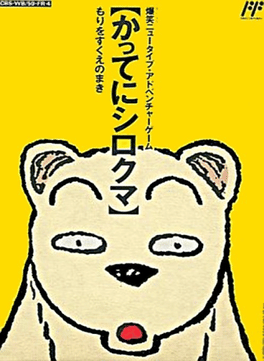
Famicom Doubutsu Seitai Zukan! Katte ni Shirokuma: Mori wo Sukue no Maki! is an Adventure game, published by CBS Sony Group, which was released in Japan in 1989.Famicom Jump: Hero Retsuden
1988
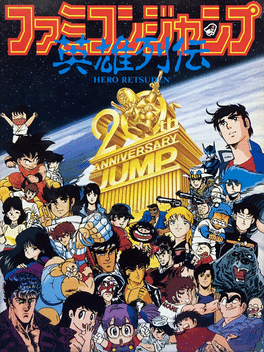
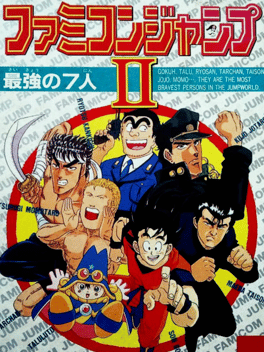
Famicom Jump: Hero Retsuden is a 1989 role-playing video game for the Family Computer published by Bandai. The game commemorates the 20th anniversary of Shueisha's manga anthology Weekly Shōnen Jump. Set in a world that brings together many of the long-running titles that had appeared in the magazine, both of the past and present at the time of its release. The game consists of a main character wandering and encountering the many Jump heroes as they try to save the world from an alliance of many of the most powerful and evil of the Jump villains.Famicom Jump II: Saikyou no 7-nin
1992
Famicom Jump II: Saikyou no 7-nin is a 1991 RPG for the Nintendo Family Computer published by Bandai. The sequel to Famicom Jump: Hero Retsuden, the game features seven main characters (as the subtitle indicates) from different Weekly Shōnen Jump manga serialized at the time. Only four of the 16 represented titles from the original are brought back, while the remaining three are new to the sequel. There would not be another crossover game until the release of Jump Super Stars and Jump Ultimate Stars. (of which six of these series would be represented, the only one not being Magical Tarurūto-kun.)Family Circuit
1988
Family Circuit
1988
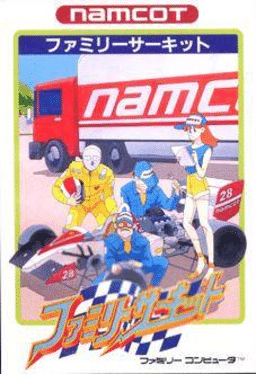
Family Circuit is a Racing game, developed by Game Studio and published by Namco, which was released in Japan in 1988.Family Circuit '91
1991
Family Circuit '91
1991
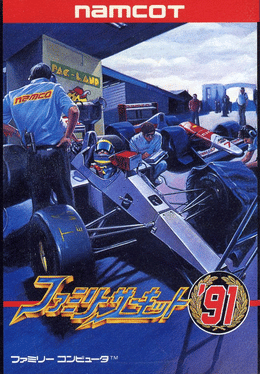
Family Circuit '91 is a Racing game, developed by Game Studio and published by Namco, which was released in Japan in 1991.Family Quiz 4-nin wa Rival
1988
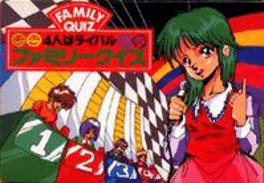
Family Quiz 4-nin wa Rival (ファミリークイズ 4人はライバル? lit. Family Quiz 4 Man Rivalry) is a Japanese trivia game devloped by Athena for the Famicom, and published in Japan in November of 1988. This game was Athena's first console release. With a focus on family play, the game allows for four players to compete simultaneously. The goal is to beat the other opponents in four mini-games, each requiring that the player answer some Japanese trivia questions in order to proceed. The four mini-games are based on a game show, a board-game, the game of Othello, and a memory match game. In the game show, the only version that allows for just one player, answering questions correctly raises that player's podium towards a balloon. The other versions require at least two players, and turns may only be taken after players have answered a trivia question correctly.Famista '89: Kaimaku Ban!!
1989
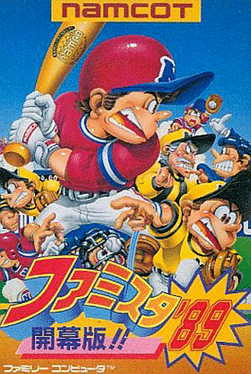
Famista '89: Kaimaku Ban!! is a Sports game, developed and published by Namco, which was released in Japan in 1989.Fighting Road
1989
Fighting Road
1989
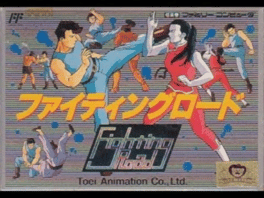
Fighting Road is an Action game, developed and published by Toei Animation, which was released in Japan in 1988.Fleet Commander
1988
Fleet Commander
1988
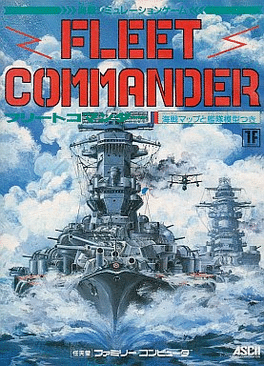
Fleet Commander is a strategy game developed and published by ASCII Entertainment for the Famicom in 1988. It is the first naval battle game ever released for the system. While it supposedly depicts a battle between two fictional countries, the game is largely recognized to be a recreation of one of the crucial naval battles that occurred between Japan and the United States near the end of World War II. Players control a Japanese fleet of heavy cruisers, battleships, submarines and aircraft carriers. A couple of things set this game apart from typical Famicom games. First, in addition to the cartridge and the manual, the game also came packaged with a large map and plastic models which represented ships and airplanes. The game never shows the entire state of the water, so it is up to the player to use the information that he or she has to update the representation of battle on the map using the plastic models. Second, no background music is heard while playing this game. Finally, this game makes use of a device knHikari no Senshi Photon: The Ultimate Game on Planet Earth
1987
Photon: The Ultimate Game on Planet Earth is an adventure game developed for the Famicom by Takara, and published in 1987. The English name of the game has special significance, since "Photon: The Ultimate Game on Planet Earth" is also the name of the first commercial version of a game commonly known today as Laser Tag. However, besides the name, and the fact that you play a character who fires a Photon gun, any further connection between the live action game and this video game is unknown. In the video game, you play a soldier who must navigate through several different floors of a dungeon which contains items and traps. The player must figure out how to maneuver through the dungeon in an effort to collect various items that will expand his ability to search, and find various disks which contain hints and messages to further aid the player. The game is played from a third-person behind-the-shoulder perspective and contains pseudo-3D visuals. This game was never released outside of Japan.Fushigi no Umi no Nadia
1991
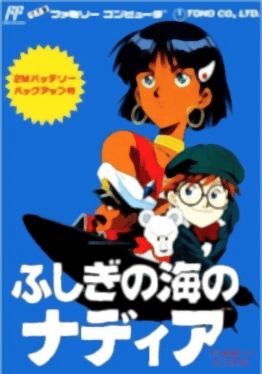
Fushigi no Umi no Nadia is a Strategy game, developed by Advance Communication Company and published by Toho, which was released in Japan in 1991.Fuzzical Fighter
1991
Fuzzical Fighter
1991
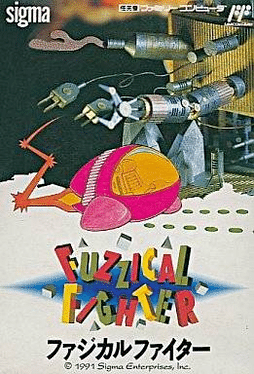
The Dimensional Stone, which is required to maintain balance in the world of starship pilot Mark was stolen. The king finds a hero to retrieve the stone; using the "Fuzzical Fighter" to transport the player's character into enemy territory. Towns are visited in-between stages to provide the player with weapons and artificats that are bought with the in-game gold currency. Players can choose to backtrack to either to previous stage while staying at the inn or to a stage that he has not yet explored. They also have access to three different kinds of healing spells: Riken (minor healing), Rikento (normal healing) and Rikentaru (major healing). Despite being a mechanical object and not a creature, the Fuzzical Fighter has magic points that can be replenished while in the towns. The Fuzzy Fighter itself resembles a spaceship with a mechanical tail at the end.Zunou Senkan Galg
1986
Zunou Senkan Galg
1986
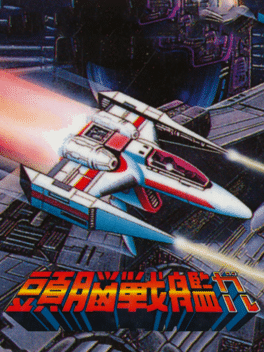
Zunou Senkan Galg ("Brain Battleship Galg"), referred to as just Galg by the game's title screen, is a vertical-scrolling shoot-em-up in which the player must navigate a serious of canyon-like environments for missing pieces to a war machine. Each stage has at least one piece, so the player must visit them all in order to find the necessary number. In addition to this, there are numerous secrets hidden throughout the many stages of the game, and the player frequently has to choose between multiple paths which lead to different stages. The game advertises itself as a "RPG" on its box art, referring to this additional layer of complexity. Like The Tower of Druaga, it is considered a historically important game in Japan for the amount of secrets and mysteries it contains and the subsequent difficulty involved in reaching the end without this hidden knowledge. Therefore, it was one of the earliest games for the Famicom to feature its own printed game guide for players to follow. Zunou Senkan Galg is almost entirely unGanso Saiyuuki: Super Monkey Daibouken
1986
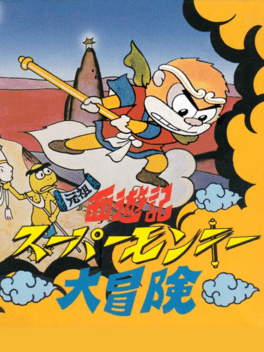
Sun Wukong must assist the Buddhist monk Xuanzang with his task of collecting some sūtras as they make the treacherous voyage from China to India. Other guardians can be asked to join the adventuring party after meeting up with them. Most of the storyline in this video game is based on the Chinese novel Journey to the West. Players can enter a code that allows them to return to any stage at any time.GeGeGe no Kitaro 2: Yokai Gundan no Chousen
1987
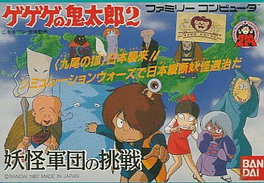
GeGeGe no Kitaro 2: Youkai Gundan no Chousen is a RPG game based on a manga and anime from Japan about a boy who is a youkai, a class of spirit-monster to which all of the main characters belong. The main character, Kitarou, is the last living member of a Ghost tribe. He is missing his left eye, but his hair usually covers the empty socket. He fights for peace between humans and yōkai, which generally involves protecting the former from the wiles of the latter. While the game follows the release of GeGeGe no Kitaro: Youkai Daimakyou (released in the U.S as Ninja Kid), it is not a direct sequel to the original game, which is an action side-scroller. GeGeGe no Kitaro 2 plays very much like a simplified traditional RPG. Fights are turn-based, where the player must input his command, and then watch the sequence of event play out until the round is over and the next round begins. However, even though it is simplified, it is actually a rather difficult and challenging game. In the very beginning of the game, Kitarou stGekitotsu Yonku Battle
1989
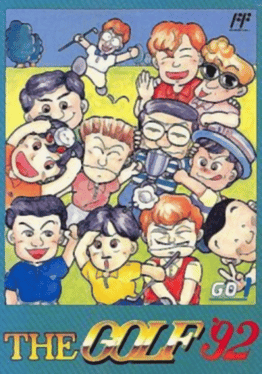
Gekitotsu Shiku Battle is a Japan-exclusive video game of the vehicular combat game genre released in 1989 by Irem for the Family Computer.The Golf '92
1992
The Golf '92
1992
There are three difficulty levels and the game is almost completely in Japanese. There are also three modes: leaderboard (similar to major PGA events), tournament (using a format found in most sports playoffs), and stroke play. Players have a crowd to play their round of golf into front of.