New Games - Page 11421

Monster Bomber
2006
Monster Bomber
2006
star 6Color, aim and speed matter most in this new take on classic arcade style gameplay! Monster Bomber challenges you to power up and fling different colored balls on the Touch Screen to hit rapidly descending, multi-colored monsters on the top screen. Destroy all monsters and you pass the stage but if they reach you first, it's game over!Samurai Warriors 2 Empires
2006
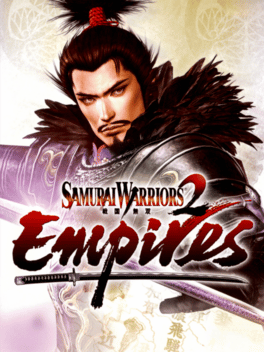
star 6.4Samurai Warriors 2 Empires is an expansion to the original Samurai Warriors 2 and the third Empires expansion by Koei. Very similar to both Dynasty Warriors 4 Empires and Dynasty Warriors 5 Empires, the game features the strategic and tactical Empire Mode that combines the gameplay of Samurai Warriors and several turn-based strategy elements from Nobunaga's Ambition and Romance of the Three Kingdoms. The Empire mode allows the player to select from some of Japan's greatest battles. In the CAW Mode, the options are limited to 13 models with 10 color patterns each, as well as four different voices. Fortunately, a new feature is added to the mix: the ability to copy movesets of other characters. Unlike Samurai Warriors: Xtreme Legends, the game does not feature new characters for the series. However, Sasaki Kojiro and Shibata Katsuie, who were unplayable special bodyguards in the original Samurai Warriors 2, are now playable characters in Samurai Warriors 2 Empires.Castlevania: Portrait of Ruin
2006
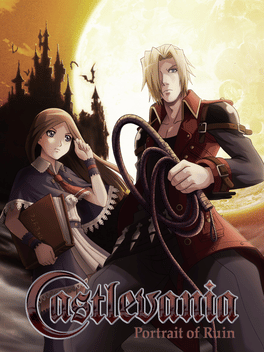
star 7.8Castlevania: Portrait of Ruin is a side-scrolling action RPG where you switch between two hunters, Jonathan Morris and Charlotte Aulin, to explore Dracula's castle and defeat the vampire Brauner. Set in 1944, Jonathan wields the Vampire Killer whip while Charlotte casts magic. You'll navigate eight painted worlds hidden within the castle, solve puzzles using each character's unique abilities, and acquire new skills and weapons. Your decisions determine which of multiple endings you receive.Dooms 4: Endgame
2006
Dooms 4: Endgame
2006
The disturbing adventure of Dooms continues after Mia confronted Jack the Clown. But other old characters like Steve will be back. This time the game includes some action shooting parts. Warning: gore and violenceHalloween Horror
2006
Singstar: La Edad de Oro del Pop Español
2006
SingStar La Edad de Oro del Pop Español is a karaoke game on the PlayStation 2 system published by Sony Computer Entertainment Europe and developed by SCEE and London Studio. This is the 7th installment in the SingStar saga and an exclusive version for Spain.Defender
2006
Defender
2006
star 6Defender put players in charge of a ship sent to protect mankind from wave after wave of attacking alien forces. Armed with smart bombs and the ability to use hyperspace to move quickly around the planet, the player ship must fight against Bombers, Pods, Swarmers, Baiters, and Landers - that can capture the humanoids and transform them into deadly and relentless Mutants. Fail to save the humanoids from freefall or Mutant transformation, and the planet is destroyed. Defender is a port with modern enhancements of the original 1981 arcade title released on Xbox Live Arcade on November 15th, 2006. On February 17th, 2010 Larry “Major Nelson” Hryb announced on Twitter that nine Midway Games had been removed from Xbox Live “due to publisher evolving rights and permissions”.Tonka: On the Job
2006
Tonka: On the Job
2006
Tonka: On The Job is an Action game, developed by Webfoot Technologies and published by THQ, which was released in 2006.Karous
2006
Karous
2006
In this unique vertically-scrolling shooter you take the role of a mysterious girl named Karous, who commands a tiny fighter ship and attempts to destroy an evil armada bent on world domination. The game plays as your average vertical-scrolling shooter, in which you must clear several stages by destroying all incoming enemies and surviving their onslaught. A unique addition to Karous, is that you don't collect weapons by power-ups, but instead upgrade each of your basic weapons (gun, sword and shield) depending on their use thanks to a basic experience module, with increased power and features at later levels (multiple shots, bullet reflection, etc.) The game uses cel-shaded polygonal graphics with a distinct black and white look.Luxor 2
2006
Luxor 2
2006
star 5The much anticipated sequel to the #1 casual game of 2005, LUXOR 2 sets the new standard for action-puzzlers. LUXOR 2 takes you on a beautiful voyage through 88 all-new, gorgeously rendered levels set amongst the pyramids of ancient Egypt. Use your mystical winged scarab to shoot and destroy the approaching magical spheres, and to help you shoot them down, Luxor 2 features more explosive power-ups than ever before.Bullet Bill 2
2006
Bullet Bill 2
2006
This took too long to make, it's 4x longer than Bullet Bill 1 and it uses mouse control (which a lot of you asked for). It also has checkpoints, multiple levels (i.e. Castle, Underground) and boss fights! Hopefully you have a decent computer so it won't lag. ^^; If you come across any glitches in the game. please PM me so I can get it sorted. Have fun!Autumn war
2006
Charlotte's Web
2006
Charlotte's Web
2006
Charlotte's Web is based on the 2006 holiday hit movie released by Nickelodeon Movies, Walden Media, and Paramount Pictures. Play as Wilbur, the pig, or Templeton, the rat throughout four settings: Zuckerman Farm, the countryside, a junkyard, and the Country Fair. Throughout the journey, you'll unlock arcade-style mini-games and take on a variety of amusing and complex missions. Collect letters of the alphabet to help Charlotte spell out messages in her web, stash firewood so Mr. Zuckerman can't cook in his smokehouse, release rats imprisoned by the nasty crows, and collect tickets so Fern and Avery can play at the carnival Charlotte's Web features a wide range of gameplay elements that include exploration, stealth, and puzzles. Be rewarded with high-quality movie stills and sharp gameplay visuals. The Nintendo DS version of the platformer has even more exclusive features including taking on the role of Fern and use the stylus to feed, bathe, or pet Wilbur, as well as a variety of unlockable mini-games, includinCharlotte's Web
2006
Charlotte's Web
2006
Charlotte's Web is based on the 2006 holiday hit movie released by Nickelodeon Movies, Walden Media, and Paramount Pictures. Play as Wilbur, the pig, or Templeton, the rat throughout four settings: Zuckerman Farm, the countryside, a junkyard, and the Country Fair. Throughout the journey, you'll unlock arcade-style mini-games and take on a variety of amusing and complex missions. Collect letters of the alphabet to help Charlotte spell out messages in her web, stash firewood so Mr. Zuckerman can't cook in his smokehouse, release rats imprisoned by the nasty crows, and collect tickets so Fern and Avery can play at the carnival Charlotte's Web features a wide range of gameplay elements that include exploration, stealth, and puzzles. Be rewarded with high-quality movie stills and sharp gameplay visuals.Bionicle Heroes
2006
Bionicle Heroes
2006
star 5The PS2/Gamecube Port of "Bionicle Heroes". Bionicle Heroes is a third-person action game where the player takes on the role of the various Lego Bionicle Toa Inika - Jaller, Matoro, Hahli, Kongu, Hewkii, and Nuparu. These heroes wear Toa Masks of Power - power-ups that can be found throughout the levels to gain different elemental based abilities. There are also Bionicle canisters to aid the protagonists on their quest to defeat Vezon - the 7th Piraka who had stolen the Mask of Life. The gameplay centers around firefights against the alien "robots" called Vahki, Visorak, and Bohrok. Players will collect Lego pieces for every enemy they defeat, and eventually enable an invulnerable Hero Mode to help defeat the Toa's enemies.Asphalt: Urban GT 2
2006
FIFA Soccer 07
2006
Pocket Racers
2006
Pocket Racers
2006
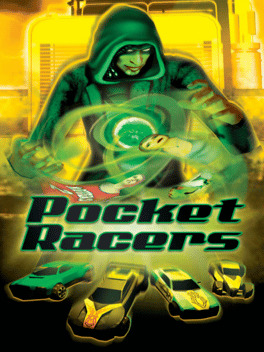
Pocket Racers features miniaturised cars whizzing around a series of everyday environments. The player is cast as a spoilt teenager at a party, who is transformed into a toy car by of a vengeful demon. What follows is a frenetic race for survival as the 'Nemesis' demon sets a series of increasingly hard challenges within the fully interactive and destroyable!