New Games - Page 11790

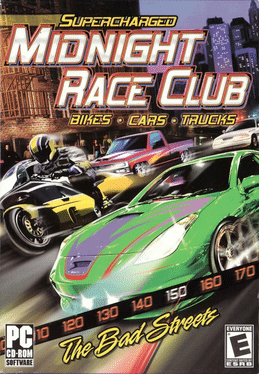
Midnight Race Club: Supercharged!
2004
Midnight Race Club: Supercharged! is the second racing game from the developers behind the notorious Big Rigs: Over the Road Racing. Unlike Big Rigs, it has proper collision detection, unintentionally removing one of the quirks that made the previous game famous. Midnight Race Club was originally intended to be a single package along with Big Rigs, but GameMill decided to split the two early in development. For this reason, both games share an identical UI and near-identical gameplay.Fallout: Brotherhood of Steel
2004
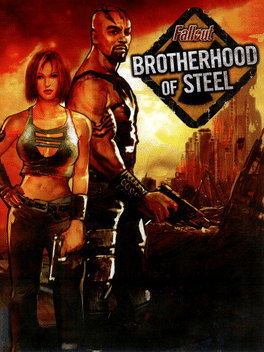
star 5.6As a spinoff, Brotherhood of Steel's gameplay greatly differs from that of other Fallout games. The gameplay is linear, not open-world. Instead of being able to travel freely across a broad world full of places and events as in other Fallout games, the player is confined to one location at a time. Previously visited locations cannot be visited again, and new locations can only be discovered by advancing the story. There are 50 distinct zones of varying size in Brotherhood of Steel. Brotherhood of Steel uses many of the same mechanics as other entries in the Fallout series, including the SPECIAL (Strength, Perception, Endurance, Charisma, Intelligence, Agility, Luck) attribute assignment system. These seven attributes are assigned numeric values and govern most interactions in the game. Unlike other Fallout games, however, the values are constant for each character rather than customizable. Skills exist in this game, but they do not behave like skills in other Fallout games. Rather, they are analogous to perks. WhStar Trek: Shattered Universe
2004
star 5.5The universe is not as you know it...Think Fast, Shoot Faster! All hands to battle stations! Get ready for a frenetic, adrenaline pumping experience in an entirely new breed of Star Trek.An intense,edgy high-energy space-combat action game set in the dark mirror universe of Star Trek: The Original Series classic-era setting, Star Trek Shattered Universe challenges the player to adapt to a new reality where everything once familiar is now a dark reflection - where the noble Federation is now an evil and relentless foe.NFL Street
2004
NFL Street
2004
star 8.3NFL Street is a series of sports video games developed by EA Tiburon and published by Electronic Arts. It combines the talent and big names of the NFL with the atmosphere of street footballStrongBadZone
2004
StrongBadZone
2004
StrongBadZone is a vector graphics game that plays similarly to the Diamonds 3D game for the PC and Mac. You are a spikey-headed cyber-shield guy (with a cyber-shield) trying to block "perplexing 3D geometric attacks" that come flipping toward you. If you hit them, they bounce back. The object of the game is to try to hit Vector Strong Bad's head until it disappears. The game's graphical style appears to be a reference to Nintendo's ill-fated 3D system, the Virtual Boy. The graphics of the console were well-known for solely consisting of the colors red and black, much like those in StrongBadZone. In particular, the game stylistically resembles the Virtual Boy vector game Red Alarm, which at one point also features a large face that must be destroyed.Strong Bad's RhinoFeeder
2004
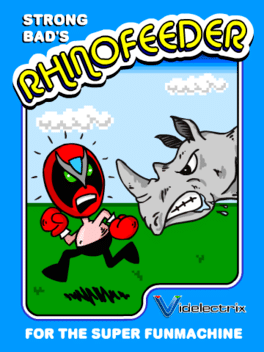
Strong Bad's RhinoFeeder is a game invented by Strong Bad where you have to feed an angry rhino. You have to avoid snakes to get his food. If you fail to feed the rhino, it charges after you. This game comes equipped with the amazing 8-bit graphics that look almost real!Secret Collect.
2004
Secret Collect.
2004
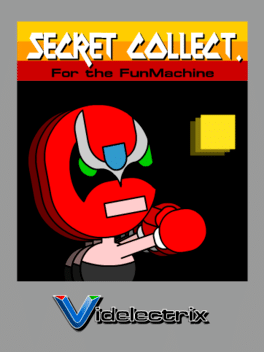
The greatest secrets man has ever known have been scattered all over the globe and its your job to find them.Thy Dungeonman
2004
Thy Dungeonman
2004
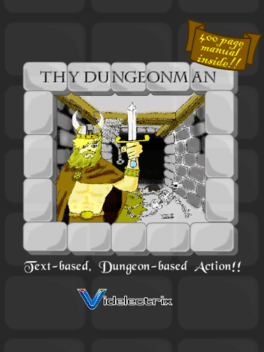
A parody fantasy text adventure game, inspired by classics such as Zork and Colossal Cave Adventure. Created in conjunction with the Strong Bad Email flash animation "video games."Chicken Shoot
2004
Chicken Shoot
2004
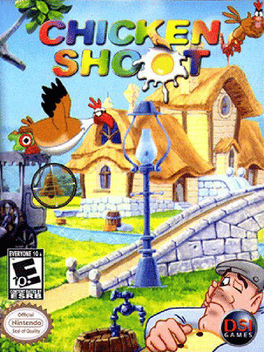
Chicken Shoot is a gallery shooting game based on free 2003 flash game of the same name. Played from the first-person perspective, the player points the Wii remote and shoots all chickens that fly across the screen.Croket! 3: Granyuu Oukoku no Nazo
2004
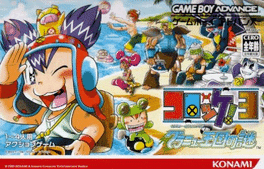
A platform fighting game based on the Coro Coro comic Croket!, with a story mode that includes light exploration and RPG elements.Peter Pan: The Motion Picture Event
2004
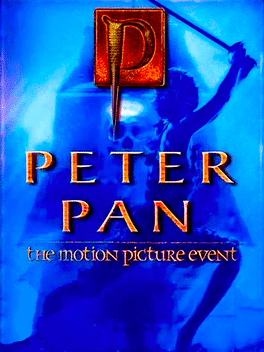
Explore, soar and save the day in an action-packed epic adventure, based on Universal Studios' motion picture event, Peter Pan. Play as Peter Pan and join Wendy, John, Michael and Tinker Bell on a fantastic journey from London to Neverland. Relive fierce pirate battles, hair-raising danger, narrow escapes and ultimately face off against the notorious Captain Hook. Played from a three-quarter view perspective, Peter Pan can fly, jump, dive, roll, walk, and use his sword to fight enemies. In addition to combat, puzzle solving, and platform jumping, players have to collect special objects for extra lives and bonus points. Developed by Saffire, Peter Pan also features digitized scenes from the movie.The King of Fighters 2000/2001
2004
A double-pack of the two hardcore fighting games from SNK, King Of Fighters 00/01 features all of the tight gameplay and characters (35+ in KoF 2000, over 40 in KoF 2001) of the arcade hits. New features to the home versions include redesigned character select and menu screens, a new continue system that allows players to handicap the CPU fighters as they progress through the game, an auto-save feature, intro movies from these and other previous King of Fighters games, and special new Strikers not seen in the original games or any other versions of these titles. Game modes including Team Play, Party Mode, and even 4-on-4 bouts (KoF 2001 only for 4-on-4) provide hours of gameplay in these classic 2D fighting games.Destruction Derby: Arenas
2004
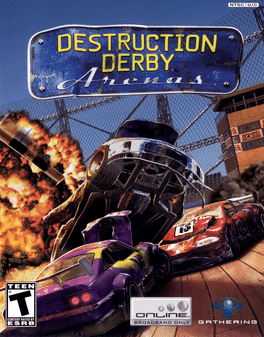
star 7.1The PS1 Destruction Derby titles would put you in the seat of a high powered vehicle, in either an arena or a track, and the target was to race to the finish, while causing as much destruction to the other cars as possible. Now comes the PS2 sequel. Because this is now on the PS2, the capabilities are much higher, so now there is a vastly improved graphics engine, physics engine, and levels. There are now loads of online play modes to try, with up to 19 other racers online with you, and now, the crashes are bigger than ever.DHTML Lemmings
2004
DHTML Lemmings
2004
DHTML Lemmings is a partial, independent remake of the classic puzzle-strategy game from 1991. Completely rewritten in Javascript, it can be played on most modern internet browsers. The first 10 levels from each section of the original game are playable, though the remaining levels are absent due to copyright disputes.Augustus: Im Auftrag des Kaisers
2004
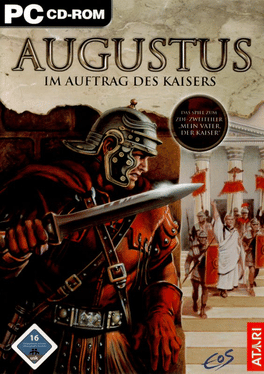
Augustus: Im Auftrag des Kaisers is a licensed game based on the TV movie Imperium: Augustus. The player takes the role of gladiator Titus Gladius who has to rescue Rome from insurgents. Since he is outnumbered, he mainly uses stealth to avoid his enemies or kill them unnoticed. Similar to Thief: The Dark Project, the player uses shadows and a light meter to his advantage. Light sources can't be extinguished. When there is no way around the guards, the player also has the possibility to distract them with a coin or to kill them with one of his five weapons (e.g. throwing spear or sword). The fights are action oriented, the player can only stab or block. There are also switch puzzles to solve. The game features eleven missions with cutscenes taken from the movie.Wolfen
2004
Wolfen
2004
A warlord has harnessed ancient powers, and is turning his subjects into wolf like creatures. He must be stopped before his wolfen army grows beyond possible defeat.Taxi Racer London 2
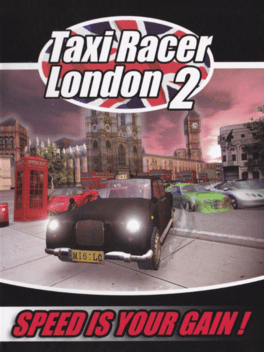
2004
Love Hina Sim Date RPG
2004
Practice getting a date with Love Hina characters. Meet girls, talk to them, make them like you. Love Hina Sim Date RPG is based on the popular Japanese animation Love Hina. Begin by choosing the name for the main protagonist and allocate the available 40 points into age, power, intelligence, and magic levels. The main goal is to get one Hina girl to fall for you and become your girlfriend and your Valentine’s date. Try to gain as much money and experience as possible.