New Games - Page 11860

Sinjid: Battle Arena
2003
Sinjid: Battle Arena
2003
Sinjid: Battle Arena is the first game in the Sinjid series. It is a role-playing action-adventure game made for flash. It has a turn based battle system.Ejay Clubworld
2003
Ejay Clubworld
2003
Make your own hit without any musical training in a matter of minutes! Eight real world clubs and locations are waiting for you: each with a different and current music style for your creativity to explore. With help given to you along the way by DJ Carl Cox, you can be sure that the crowd in your Clubworld will be jumpin'!Weird War: The Unknown Episode of World War II
2003
Weird War is a classic RPG with loads of action and is set during the Second World War. It's a game brimming with adventures and humor but also with many battles. The game combines an atmosphere of adventure like that found in "Raiders of the Lost Ark" with a unique brand of humor made popular by the "Allo, Allo" Television series, creating a refreshing and lighthearted perspective of World War II. Weird War - the Unknown Episode of World War II, is similar to classic RPGs such as Baldur's Gate, Arcanum and Planescape Torment. This familiar style will allow RPG fans to feel right at home, allowing them to enjoy an original storyline in a classic gaming environment. Graphically, Weird War resembles a classic RPG's. The world is depicted in an isometric view that is centers on you as you move throughout the environment. An intuitive icon-based interface allows you to issue team commands for movement, combat, inventory management and character statistics. Combat occurs often in Weird War and takes place in real timKreed
2003
Kreed
2003
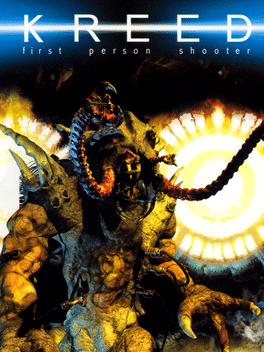
star 4.9In the year 2944 humanity is still at war with the Tiglaary and a strange anomaly named Kreed gives the scientists riddles they can't solve. Some religious groups believe the Kreed is a higher being and many of them try to enter it. One day they finally succeed and under the command of Teofrast Rumi, a high ranking officer, a ship full of fanatics makes his way into the anomaly. As a soldier of the legion, you and your colleagues aboard the spaceship Aspero are sent after him.Pro Beach Soccer
2003
Pro Beach Soccer
2003
The Pro Beach Soccer Tour (PBST) are international events in the sport of beach soccer. First started in 1996, the PBST is an international exhibition tour in beach soccer allowing teams to practice in beach soccer as well as to allow spectators to see the sport. The tour holds events in different locations around the world.Space Colony
2003
Space Colony
2003
star 7Space Colony: Steam Edition is a remaster of the real-time base builder and strategy game from Firefly Studios, creators of the Stronghold series. In Space Colony you colonize to survive, designing intergalactic bases that keep your crew productive, happy and defended against hostile alien threats.American Conquest: Fight Back
2003
star 6.9Three centuries of war continue with frantic combat and desperate power struggles raging across the American continent. The Spanish press the attack in the Yucatan against the fierce Maya and Aztec nations. The Germans put all their efforts into finding the legendary El Dorado. The Pontiac Uprising ends in a terrifying bloodbath between Native Americans and the British. And the Russians will do anything to conquer Alaska at the cost of the Haida. Lead armies of thousands of troops to victory in large-scale battles in 10 missions. Both games are a real treat for any strategy fan. But this is not a standard RTS, there is no simple build-send-and-forget here because even the biggest army can be defeated by a well coordinated, but relatively small force. Just like the old proverb says: “An army of sheep led by a lion would defeat an army of lions led by a sheep.”Sword of Mana
2003
Sword of Mana
2003
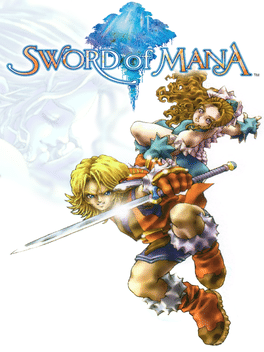
star 7.6The Mana Tree Needs Defenders! The location of the Mana Tree - wellspring of all life - has long been lost to legend. Many centuries have passed, and the Granz Realm's Dark Lord is searching for the secrets of the ancient tree so that he can control the source of Mana. Now, a young hero and heroine must come together to defeat the evil that threatens both the mystical tree and the world itself. Choose your hero! Guide a battle-hardened gladiator on his quest to avenge the deaths of his parents! ...Or guide a young girl, one of the last survivors of the Mana Clan, as she confronts the past that haunts her. Experience the saga of these two heroes as their stories weave together and they join forces to protect the Mana Tree from the powers of darkness.Tales of Symphonia
2003
Tales of Symphonia
2003
star 8.8In a dying world, legend has it that a Chosen One will one day rise from amongst the people and the land will be reborn. The line between good and evil blurs in this epic adventure where the fate of two interlocked worlds hangs in the balance.Age of Mythology: The Golden Gift
2003
Golden Gift is a free downloadable expansion that follows the adventures of Brokk and Eitri, the dwarves who appeared in the Fall of the Trident campaign.Cupid Bistro!! 2
2003
Cupid Bistro!! 2
2003
Cupid Bistro!! 2 has the player returning to the world of magical cooking. Like in the last game, players manage a magical restaurant in a business simulation; to obtain ingredients, they can venture forth in the game's RPG mode. It features a new cast of romanceable women and a new battle system compared to the original game.Burden of 80 Proof
2003
Burden of 80 Proof
2003
Somewhere out in the suburbs, an cubicle full of nonsense sits unnoticed, unmolested. Rich has taken the day off. At a different office, somewhere else, Peter Kent is embroiled in an over-caffeinated, lightning-paced, perfectly normal day at work. It's good then, that Rich has arranged for "the house." A relaxing, semi-permanent party headquarters to be used all summer by the two of them, their boozy crew of half-wit friends, and anyone who follows the trail of noise to their doorstep. Unfortunately, a bit of confusion has left the boys with all house and no supplies. So is it possible to have a good time, the kind of good time to which Rich and Peter are accustomed, without any preparation at all? The answer, as it turns out, is no. We'll still need beer. Definitely. Right? And some other stuff. And so with no money, no patience, and a lunch hour long since spent, can Peter secure the supplies necessary to fend off the fearsome hurricane of boredom which threatens this warm, warm weekend?Sega Ages 2500 Vol. 2: Monaco GP
2003
Monaco GP is a remake of the original 1979 arcade release of Monaco GP, sporting vastly updated graphics and audio. There is an "original" mode which mimicks the arcade game, and a "grand prix" mode which adds fifteen new courses, multiple camera viewpoints, powerups and a jump button. There are a number of other gameplay changes in this mode, and multiplayer support.Sega Ages 2500 Vol. 3: Fantasy Zone
2003
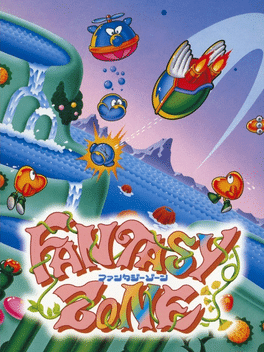
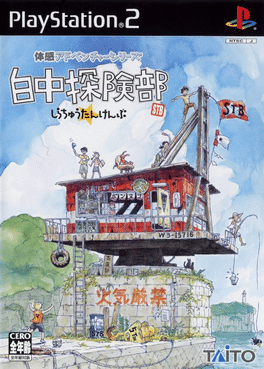
The third game in the Sega Ages 2500 line, this is a remake of the side-scrolling shoot-em-up Fantasy Zone.Shirachuu Tankenbu
2003
Shirachuu Tankenbu
2003
Adventure game from Taito, in which the happenings of two summers -- one past, one present -- intersect. Set in a ficticious small-town, the mature plot deals with friendship and memories.Pro Cast Sports Fishing
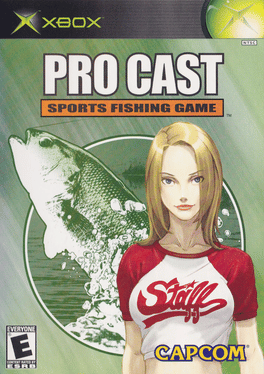
2003
Get back to nature and experience the primal thrill of the struggle of man versus fish in the first bass fishing sim available on the Xbox.Mark Davis Pro Bass Challenge
2003
star 2.5Mark Davis Pro Bass Challenge is a Fishing game, developed by Sims and published by Natsume, which was released in 2005.