New Games - Page 12100

Ooga Booga
2001
Ooga Booga
2001
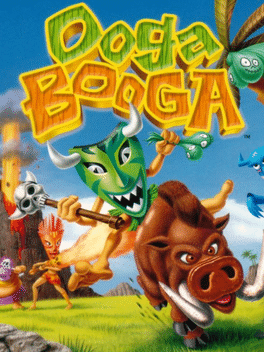
Ooga Booga takes place on a set of mystical islands in the tropics. Named after the Volcano Goddess, the Ooga Booga Island rises from the sea once every full moon and during this time, four tribes compete in a series of games. You take control of the witch doctor of your tribe where competing in various strategic games will power up your Island magic (called Mojo) thus appeasing Ooga Booga and sparing your tribe from her volcano wrath. Online matches have several modes of play including Capture the Flag, King of the Hill, Tiki Wars, Domination, and Deathmatch.Ace Combat 04: Shattered Skies
2001
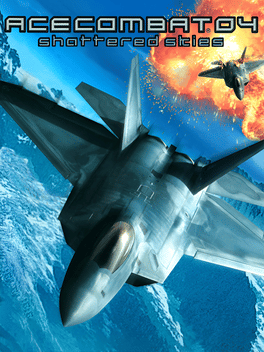
star 8.3Ace Combat 04: Shattered Skies is an aerial combat simulation. It allows the player to participate in semi-realistic dog-fighting with a collection of fighter jets, including the F-22 Raptor, F-16 Fighting Falcon, F-117 Nighthawk, U-2 Dragon Lady, C-130 Hercules and SR-71 Blackbird. Eighteen missions will take the player from search-and-destroy buildings to one-on-one and all-on-all dog-fighting. Along the way it becomes possible to upgrade the fighter with defense systems, deadly weapons, and other accessories.Robopon 2 Cross Version
2001
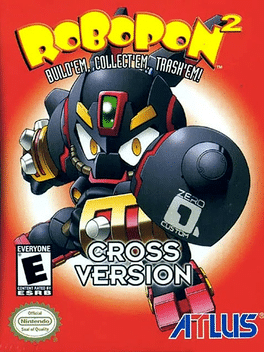
After becoming the Legend 1 of Porombo Island in the original game, Cody sets off to a new land, and a new tournament. Things take a turn for the worse when a violent storm destroys Cody's boat, and sends him adrift at sea. He awakens inside a shack in the land of Majiko but all is not well. He discovers that the nearby lands are being terrorized by the Maskman and his cronies. In order to put things right, Cody must travel back 20 years into the past and back again.Robopon 2 Ring Version
2001
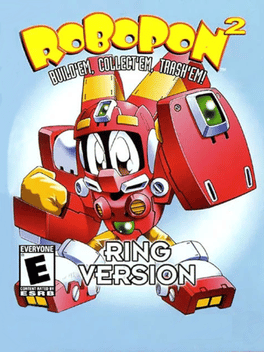
Hudson's Pokemon-like handheld RPG for the Game Boy Color that featured the "GB Kiss", a built-in infrared port to make for wireless link, to trade Robopons with friends, interact with household remotes to power up or evolve your Robopon, and unlock treasure chests that can't be opened otherwise.Genso Suikoden Card Stories
2001
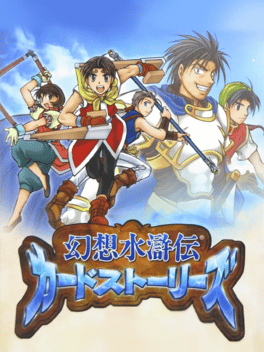
Set in the Suikoden universe, the game closely follows the story of Suikoden II. The hero is a young member of the Unicorn Brigade of the Highland Army. One night, your camp is attacked. You and your best friend Jowy escape, and the fate takes you into different directions, when you get involved in a war between several nations. Unlike the main Suikoden games, Gensō Suikoden Card Stories is a card-based RPG. Most of the game is spent playing a special card game with your opponents. The complex card game is not unlike a strategy battle: you have three types of cards, some of which take you to a specific "mission" (you open the game with such cards), while others represent various characters with different strengths and weaknesses. You can acquire cards in shops, get them from your opponents, and also look for them in randomly generated dungeons.Madden NFL 2002
2001
Toki Tori
2001
Toki Tori
2001
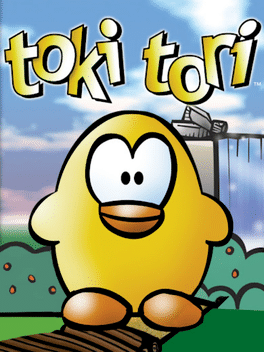
He may be a small, yellow chicken, but Toki Tori is no coward. He's the hero of this egg-cellent puzzle platformer. He must rescue all of his kidnapped brothers and sisters, who are still in their fragile eggs.NFL Blitz 20-02
2001
NFL Blitz 20-02
2001
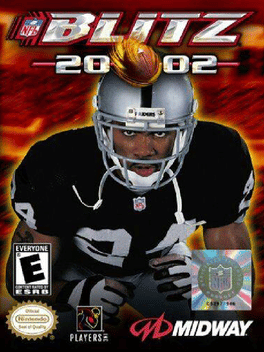
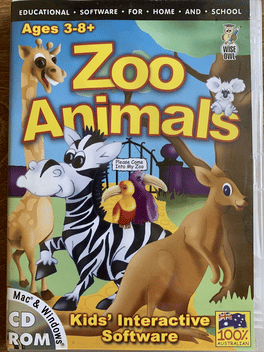
The Game Boy Advance release of "NFL Blitz 20-02". NFL Blitz 20-02 is a game based on the American Football sport. As the whole series, it takes away most rules and tactics (leaving 36 offensive and 18 defensive plays) while focusing on an action oriented approach. Because of the limited control scheme of the system, the options on the field are less in comparison to the main console version: besides the usual movement, passing and player moving commands, the player also may tackle, leap or activate a turbo boost. The playing perspective is an angled pseudo-3D view with the goals at the top/low side of the screen. Both in the exhibition and season mode (17 weeks), the game offers the choice between 32 teams with different statistics regarding passing, defensive and line. The mini games, which can be also selected from the main menu, are basically practice modes for field goal and goal-line situations as well as a NFL trivia quiz.Zoo Animals
2001
Portal Runner
2001
Portal Runner
2001
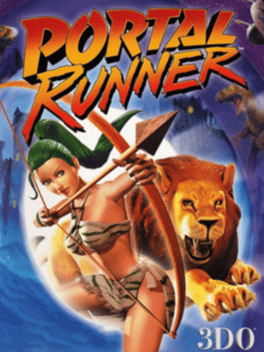
The characters from 3DO's popular ARMY MEN series have invaded the Game Boy Color! This time, you take control of Vikki Grimm as she battles the evil Brigitte Blue. Though you begin as a pint-sized plaything, you can eventually travel to worlds that are of an accommodating size over seven different locations. Each world contains numerous levels, resulting in 43 scenarios overall. Throughout your journey you'll come across swamps, dungeons, and even intergalactic spaceships. Each level progresses like typical a side-scrolling game, with plenty of action and adventure awaiting you. Some environments offer different weapons and enemies, and you'll even get the opportunity to commandeer a vehicle on some levels. For those with a penchant for exploration, there are even some hidden worlds to discover that offer even more amazing discoveries and challenges. Progress can be saved using a password system based on which levels have already been conquered. PORTAL RUNNER is a graphically impressive game for a portable systemPortal Runner
2001
Portal Runner
2001
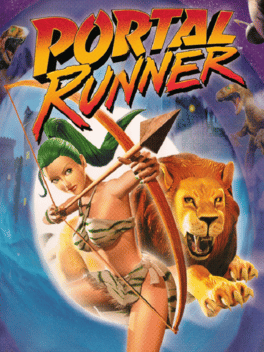
Portal Runner is a 2001 platform game published by The 3DO Company for PlayStation 2 and Game Boy Color. It is a spin-off of the Army Men video game series, focusing on a conflict between characters Vikki Grimm and Brigitte Bleu.James Bond 007: The World Is Not Enough
2001
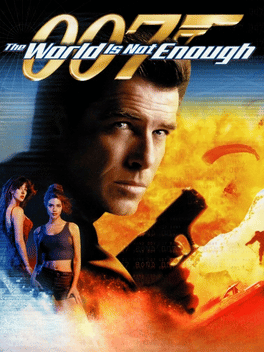
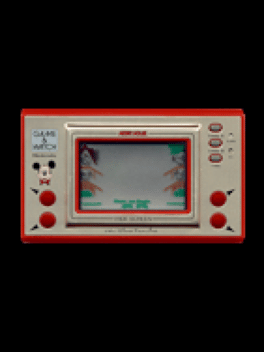
star 7.3James Bond 007: The World Is Not Enough is based off of the 1999 James Bond film of the same name. In contrast to the Nintendo 64 and Playstation versions, this game only has eight missions and features a 2D overhead view instead of a 3D first-person. There is no multiplayer, no difficulty levels, and no save feature. Passwords are used to skip to later levels and unlock certain cheats.Mickey Mouse
2001
Goku Mahjong Deluxe: Mirai Senshi 21
2001
Goku Mahjong Deluxe: Mirai Senshi 21 is a Miscellaneous game, published by Athena, which was released in Japan in 2001.Advance Wars
2001
Advance Wars
2001
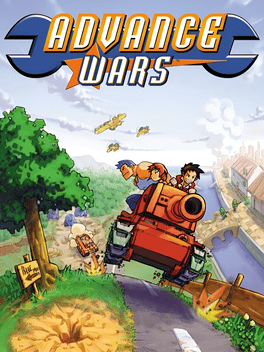
star 9.2Just because this battle fits in the palm of your hand doesn't mean the stakes are small. On the contrary, this all-or-nothing fight will have you accessing guns, grenades, launchers, and weaponry of all sorts. Players assume command of an army that's out to reclaim a world that's been broken up by warring factions. The battle map is essentially a grid, and moving units is like moving chess pieces on a board -- each of the units can move a specific amount of spaces within this grid, and can only attack at a certain distance from specific enemies. Advance Wars features more than 115 maps, a map editor, head-to-head play via link cable, and an easy-to-understand tutorial mode for beginners.Barrel Patrol 3D
2001
Barrel Patrol 3D
2001
Barrel Patrol 3D is an arcade-style 3D shooter in which you protect fuel cells from enemy attackers inside circular arena levels. Gameplay mixes fast-paced shooting and defense across progressively harder waves, with simple controls and retro-style graphics.Zen-Nippon Shounen Soccer Taikai: Mezase Nippon Ichi!
2001
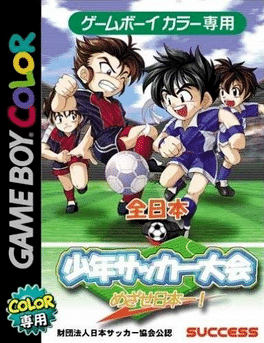
A soccer game for Game Boy Color, developed by Boom and published by Success Corp.Medarot Navi: Kabuto Version
2001
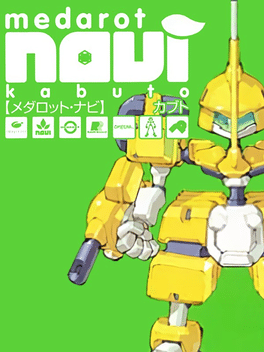
Medarot Navi: Kabuto Version is a Role-Playing game, developed by Natsume and published by Imagineer, which was released in Japan in 2001.Medarot Navi: Kuwagata Version
2001
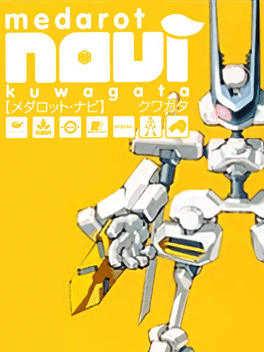
Medarot Navi: Kuwagata Version is a Role-Playing game, developed by Natsume and published by Imagineer, which was released in Japan in 2001.Paris-Dakar Rally
2001
Paris-Dakar Rally
2001
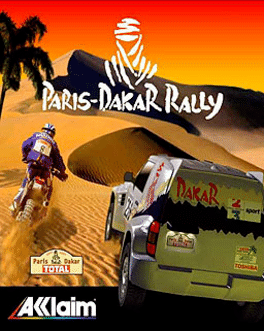
Paris-Dakar Rally is a racing video game developed by Broadsword Interactive and published by Acclaim Entertainment for Microsoft Windows and PlayStation 2. It is based on the real-life Paris Dakar Rally – one of the world's most difficult and dangerous sporting events.