New Games - Page 12418

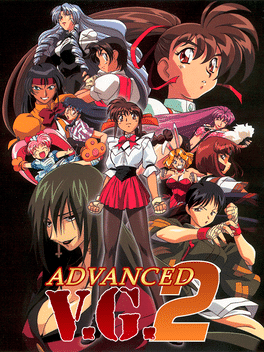
Advanced V.G. 2
1998
Advanced V.G. 2
1998
Advanced Variable Geo 2 is one of several titles in the long-running all-girl fighting game series. Using one of 12 characters, including nine returning from the previous title, the player can choose from a variety mode, including a standard arcade mode, a story mode, a 2-player versus mode, and a time attack mode. There is also a practice mode, a wide variety of game options, and play statistics tracking.Namco Anthology Vol.2
1998
This is the second volume of one of the series of Namco game compilations, released only in Japan. This anthology is similar to the "Namco Museum" series except that this collection include games that have been released on consoles originally. Each disc includes 4 games and, along with each of the games, there were also updated versions of those. This volume includes: - Pac-Attack (The updated version of this game was also included as an unlockable extra game in "Pac-Man World 2") - Valkyrie no Bouken: Toki no Kagi Densetsu - Namco Classic II (Golf) - King of KingsBlaze and Blade Busters
1998
Blaze & Blade Busters is the sequel to Blaze & Blade Eternal Quest and use the same graphics engine. But this time the game wasn't released outside Japan, there were originally plans for a PAL release but for some reason it never happened. Even though Blaze & Blade Busters uses the same engine as Eternal Quest it has some huge differences: - For example, there are some very interesting features on the start menu alone. You can do things that you cannot on Eternal Quest, such as renaming the items in your inventory to whatever you want and even battling friends in a duel. - Character creation is also interesting. When you have assigned your attribute points it adds them up and assigns you level based on how many points you have. So, you may start off at around level 50. The game will not only give you level 50 stats but it will also give you up to level 3 spells if you have chosen a sorcerer/priest/fairy, etc. - The game itself also plays very different. You begin at the Roadside Inn, but instead of walking arouGuardian's Crusade
1998
Guardian's Crusade
1998
star 6.9Guardian's Crusade, known in Japan as Knight & Baby, is a 1998 role-playing video game (RPG) for the PlayStation, developed by Tamsoft and released worldwide by Activision. The game revolves around a warrior named Knight, his fairy friend Nehani, and a pink creature named Baby that the player raises and feeds like a virtual pet. The gameplay is that of a standard turn based RPG with non-random encounters. Guardian's Crusade did not enjoy commercial success but received positive reviews.Digital Monster Ver. S: Digimon Tamers
1998
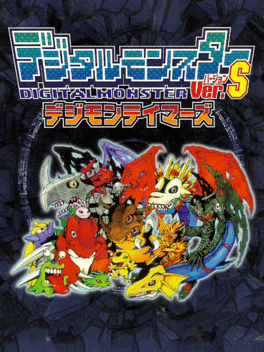
The first video game adaptation of the Digimon virtual pet. In this particular version, you can raise up to four different Digimon at the same time. In addition, you can battle other Digimon through an in-game Arena mode.Decay
1998
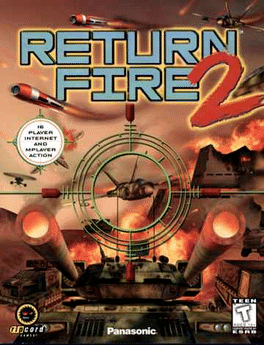
Return Fire 2
1998
Spiritual Soul
1998
Spiritual Soul
1998
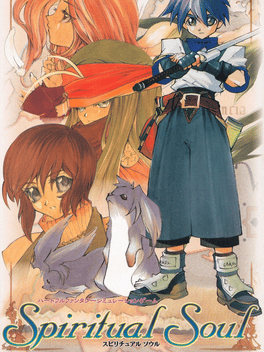
A tactical strategy game, developed and published by Shuwa System, which was released in Japan in 1998 for PC.Kurayami Zaka no Ie
1998
Kurayami Zaka no Ie
1998
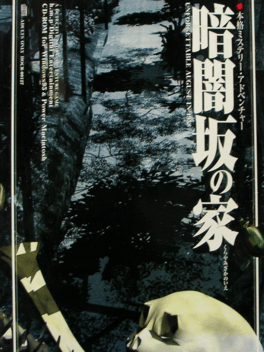
Afterwar Tokyo. There is a hill called "dark slope". There is an old house where master is missing for 18 years already. Women in the house still know nothing of that mysterious disappearance. That is the beginning of the story about a serial killer.Chousoku Spinner
1998
Knights and Merchants: The Shattered Kingdom
1998
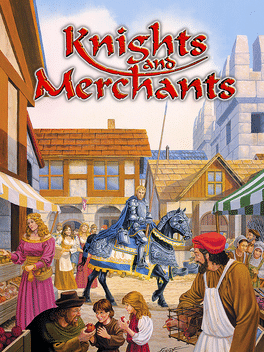
star 8.7Knights and Merchants recreates the era of the Middle Ages. Apart from the purely fictitious geography of our world, all game elements and scenes are based on the Anglo-Saxon period, 1200 A.D. And we haven't used imaginary elements like fabled creatures, either. The player takes on the role of an ordinary captain in the Palace Guard. A conspiracy against the king catapults the captain into a situation where he finds himself responsible for the defence of the last royal province. This is all that remains of the shattered kingdom, which has been split into numerous small principalities and fiefdoms. And now even the king himself, ensconced in his capital, is threatened by enemy armies. This is the starting point of your Middle Ages adventure. Now you must win back all those provinces which once belonged to your king.Fisher-Price: Big Action Construction
1998
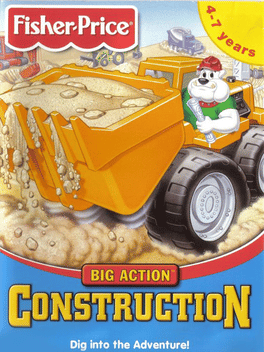
Fisher-Price Big Action Construction is an activity center game released on September 17, 1998. It is Funnybone's take on Tonka Construction. In the game, the player can visit different work areas of the Big Action Construction Site. Collector Cards are rewarded for playing the actives. Obtaining all the collector cards in an activity will reward the player a certificate. One all six are completed, the player is declared a "number-one construction worker".Train Simulator: JR Hokkaido 1
1998
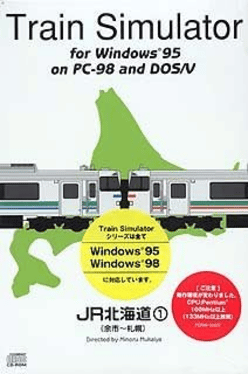
An entry in the Train Simulator series of FMV games by Ongakukan, featuring the JR Hokkaido Hakodate Line between Yoichi and Sapporo.Bishi Bashi Special
1998
Bishi Bashi Special
1998
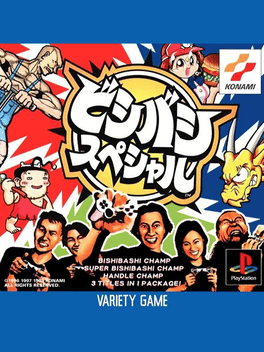
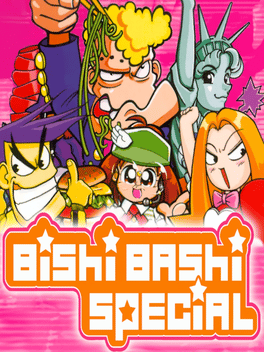
Bishi Bashi Special is a compilation (and conversion) of the Konami arcade titles Bishi Bashi Champ, Super Bishi Bashi Champ and Handle Champ. Gameplay is made up of tons of mini games, all of which use a simple 3-button interface that mimics the arcade originals. The mini games encompass a wide variety of button-mashing, timing and button combination games. The games themselves can be anything from making hamburgers, throwing a pie down a church aisle to balancing a car on a floating narrow gravel road and much more. The game can be played alone, vs a computer player or play up to eight people using a multi-tap and three controllers.U.P.P.
1998
U.P.P.
1998
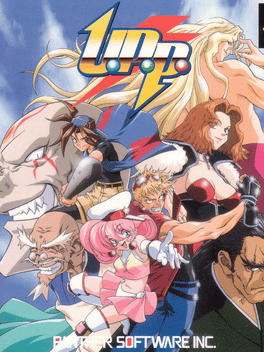
The Soul Fight International Championship has begun. Eight fighters have gathered to put their skills to the test. Defeat the best fighters, and become the king of the Soul Fight world. U.P.P. is a puzzle game that plays like an upside-down version of Columns with a twist. Groups of various-colored gems appear from the bottom of the screen and rise toward the top. Match three in a row vertically, horizontally, or diagonally of the same color to clear them. Every clear and combo earns charge for your Soul Gauge, which when enough charge is gathered allows you to unleash special attacks that can either hinder your opponent or give yourself an advantage. Each character has three different attacks, which require different amounts of energy charge.Simulation RPG Tsukuuru
1998
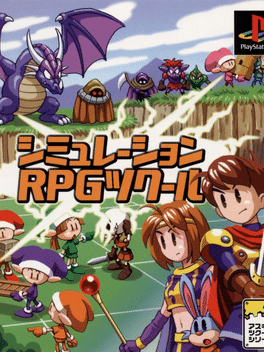
RPG Maker, known in Japan as RPG Tsukuru, is the name of an expansive series of programs for the development of role-playing games (RPGs), first created by the Japanese group ASCII, then succeeded by Enterbrain. The Japanese name, Tsukuru, is a pun mixing the Japanese word tsukuru , which means "make" or "create", with tsuru, the Japanese transcription of the English word "tool". The RPG Maker series has been released primarily in Japan, with later versions also released in China, Taiwan, South Korea, and North America.Rami-chan no Ooedo Sugoroku: Keio Yuugeki-tai Gaiden
1998
Rami-chan no Ooedo Sugoroku: Keio Yuugekitai Gaiden is a 1998 video game for the PlayStation. Developed by Victor Interactive Software, it is the third and last game in the Keio Flying Squadron series, and was released only in Japan. While the first game is a side-scrolling shoot 'em up and its sequel, Keio Flying Squadron 2, is a platformer with shooter sections, the third game is a party game. Like the first two games, the third game refers to Japanese culture, both ancient and modern simultaneously.Mikagura Shoujo Tanteidan
1998
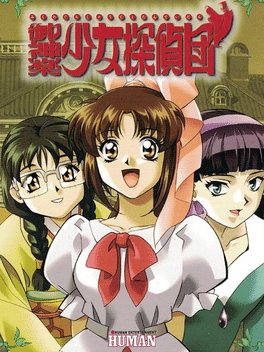
Mikagura Shoujo Tanteidan makes use of an inference trigger system in which players have to detect points that need attention or are contradictory during conversations and look for suspicious spots in crime scenes to find out the truth. Have fun playing detective with the Mikagura girl detectives today!Bishi Bashi Special
1998
Bishi Bashi Special
1998
star 6.9Bishi Bashi is a series of Konami video games for arcades, mobile phones, PlayStation and Windows. All games in the series comprise playing through a wide variety of competitive minigames against other players. The arcade games support 1 to 6 players and the PlayStation game allows 1 to 8 players; the game will provide computer opponents if there are not enough players.Gubble
1998
Gubble
1998
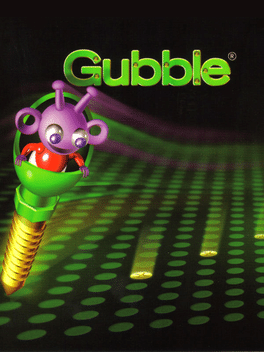
Gubble is a cute, colorful alien and he needs your help to get back to his home in this PlayStation game. It seems that creatures of Gubble's kind are particularly adept at loosening screws, nails, rivets, and other such fasteners. So adept, in fact, that Gubble has been kidnapped and sent to a dangerous planet to ply this skill. His captors have instructed him to unfasten the screws and bolts on a large enemy ship, promising to return him to his home if he is successful. Success will take good puzzle-solving skills though (and perhaps a little luck), as the falling pieces from the unfastened ship could put a quick end to Gubble's efforts. Not to mention the enemy creatures, who would rather their high-tech equipment remain in one piece.