New Games - Page 12425

Bust-a-Move 4
1998
Bust-a-Move 4
1998
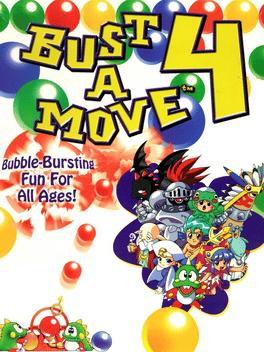
Arcade Game Boy Color PlayStation 3 PC (Microsoft Windows) PlayStation PlayStation Portable Dreamcaststar 7.3Puzzle Bobble 4 (also known as Bust-a-Move 4 in North America and Europe) is the third sequel to the video game Puzzle Bobble and is the final appearance of the series on the Arcade, PlayStation and Dreamcast. The game is also the final title to be recognizably similar in presentation to the original. Building upon the success of Puzzle Bobble 3, the game adds a pulley system that requires two sets of bubbles, attached to either side of a rope hanging across two pulleys. The game contains a story mode for single player play. In total, the game features 640 levels. The console version features a level editor to either create and save a level, set a succession of levels, or to create an unlimited amount of extra levels and stages. It also has an alternative "story mode".Arthur's Computer Adventure
1998
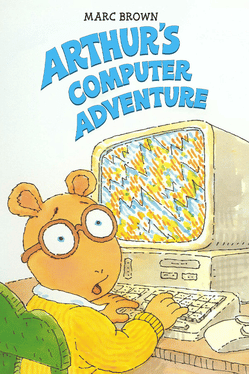
Explore Marc Brown’s classic "Arthur’s Computer Adventure"! Arthur and his friends bring the story alive one word at a time, fully animated and voiced. Increase the challenge and the fun with an interactive at-your-own-pace option with lots of bonuses and secrets to discover!Airplane Tycoon
1998
Airplane Tycoon
1998
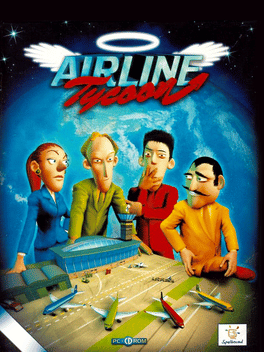
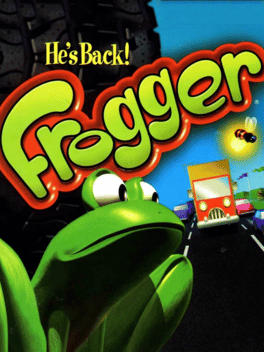
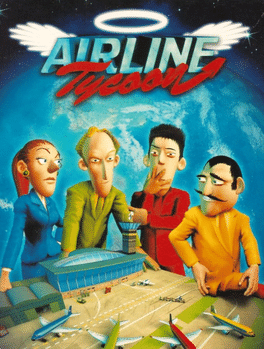
Airline Tycoon is a business simulation game by Thomas Holz and Robert Kleinert, in which the player must successfully manage an airline. The original was developed by Spellbound Entertainment, and published by Infogrames Deutschland, however, the succeeding versions were published by a variety of publishers.Frogger
1998
Frogger
1998
Crash Bandicoot
1998
Crash Bandicoot
1998
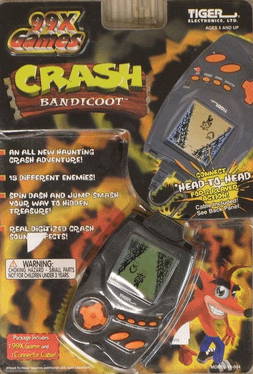
Crash Bandicoot is a licensed platform game developed and published by Tiger Electronics and published by Universal Interactive in North America, released on a handheld dedicated console in 1998. It is the third game released in the Crash Bandicoot series overall, the first to be released on a handheld console, and the first to feature a multiplayer option. Despite bearing the same name, the game is neither an adaptation nor port of the 1996 Crash Bandicoot game, featuring a distinct storyline and a set of levels of its own.Sutte Hakkun
1998
Sutte Hakkun
1998
This version was released for use with the Nintendo Power cartridge, and included all the levels designed by game creators (which wasn't possible to do with the 8MB Satellaview Memory Pak). It was afterwards released as a Super Famicom standard cartridge and also for the japanese Wii and Wii U Virtual Console. Sutte Hakkun is a puzzle action game in the shape of a platformer. The playing character is an abundant-beaked bird resembling a penguin, named Hakkun, that is able to walk and jump but not to fly. The Rainbow of Happiness shined in the sky above Peaceful Islands: one day it broke apart and now Hakkun has to track down, collect, and put together all rainbow crystals to relive it. The gameplay hinges upon two elements: blocks and potions, the latter of several colours. Hakku makes its way through levels by changing the position of blocks — that will be done by swallowing them to release them on an other place then — and sucking potions — that are to be injected to blocks by the beak, endowing them withReal Pool
1998
Real Pool
1998
Pool simulation game, boasting photorealistic graphics for its time, featuring 6 pool games: 8-Ball, 9-Ball, Straight, Rotation, Carom (Spanish) Billiards, and Bumper Pool.Sítio do Pica-Pau Amarelo
1998
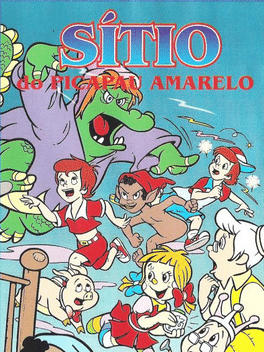
A platform game based on the books and characters of "Sítio do Pica Pau Amarelo", a literary work created by the Brazilian author Monteiro Lobato.M. I. A. - Missing In Action
1998
Missing In Action is a 3D action helicopter game that takes place during the Vietnam War. The game features a single player campaign which is divided into 26 missions, which are briefed by full motion videos with real life actors. Missions include finding MIAs, providing back-up for a damaged helicopter, destroying Vietcong camps or scouting an area. Each missions is action packed with many enemies that try to shoot you out of the air. The game features a radar that shows nearby enemy and friendly troops so that you know who to shoot. Each mission you receive a new helicopter of a different type. Each new helicopter has more firepower than the previous one. It is also possible to call in artillery support, SEAL teams, napalm strikes and drop flare and smoke grenades.V-Ball: Beach Volley Heroes
1998
V-Ball - Beach Volley Heroes is the sequel to the NES game Super Spike V'Ball, an arcade game that deals with beach volleyball in a very special way. There are several teams you can choose from, such as Soldiers, Ninjas, Soccer players and so on, and each of them has got its own moves and special effects. There are commands for both heavy shots and for light ones, making you choose the strength to hit and throw the ball. There are no power bars and once hit, the ball flies to the opposing side automatically. The special moves can be triggered whenever you push certain button combinations (triangle and circle, circle and cross, etc) at the right moment. If it is a defense move, for instance, you must do it in response to others attacks. There is a Tournament mode, which is the main solo entertainment (although you can also play single matches vs the AI), but this game is clearly designed around player-vs-player mode, for arcade matches against human opponents.Cracking the Conspiracy
1998
Cracking the Conspiracy is a point-and-click adventure game released by Pixel Shop Inc. in 1998. The game focuses on science fiction and political secrets. A possible Macintosh version was planned, but never came to development due to lack of demand and Mac hardware.Pocket Monsters Stadium
1998
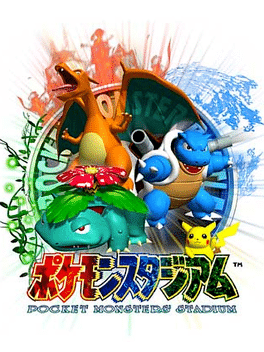
Pokémon Stadium is the first game of the Pokémon Stadium series. It was released exclusively in Japan. The game focuses mainly on battling. Upon start-up, the game asks if the player if they want to use the Pokémon in their Game Boy Game Pak. If not, only Battle Mode can be accessed.Crime Killer
1998
Crime Killer
1998
In the 21st century, you are a Crime Killer with three heavily armed police vehicles and a license to kill. Patrol the streets at breakneck speed, and crime will become a distant blur. Because on your shift, noting outruns the long arm of the law.Builder's Block
1998
Builder's Block
1998
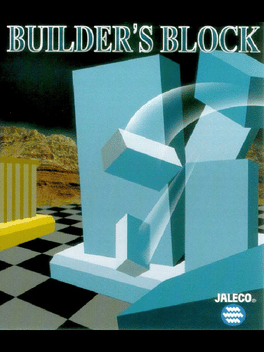
Builder's Block (known as "Land Maker" in Japan and "Landmaker" in Europe) is a puzzle game in which you must construct buildings and then eliminate them for points. Although a certain color can only eliminate itself, the object of this game is to match colored blocks together to form buildings. Once you have made a building, you can eliminate it by shooting a block on the corner of it. The larger the building, the more benefits you'll reap when you destroy it! The game can be played three different ways: Puzzle mode, Battle mode, and Arcade mode. In the Puzzle mode, you must travel to one of seven different courses and construct specific size buildings. You must not destroy the buildings in this mode. The object is to build cities for the specific course or region you're in and make the cities grow.V2000
1998
V2000
1998
V2000 is a 3D space shooter based on the '80s game Virus. Aliens are using a virus to corrupt and possess many creatures from different worlds by opening up links between the worlds they are trying to conquer. From many of these links emerged the hives. The usual mission objectives in the game are to destroy the mutated creatures and the hives, rescue local inhabitants, while "beaming up" weapon upgrades along the way. Players are then awarded "trophies" for each world saved or if it is saved quickly. These trophies allow the player to receive new ships.Tetris: The Grand Master
1998
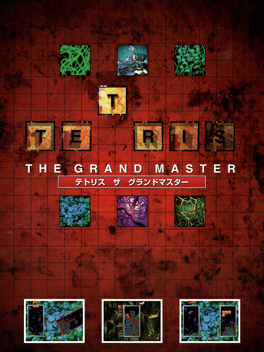
The first entry in the Tetris: The Grand Master sub-series, this game plays similarly to other Tetris games, but rather than merely expecting the player to survive indefinitely, it challenges the player to attain the highest level and score they can in the shortest amount of time. The Grand Master series introduced several play mechanics to Tetris gameplay which can be seen today in its sequels and many other Tetris implementations.Airline Tycoon
1998