New Games - Page 12435

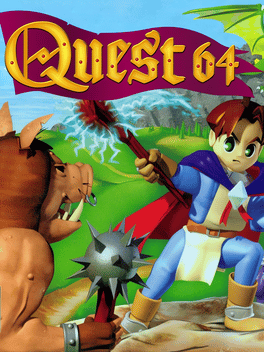
Quest 64
1998
Quest 64
1998
star 3.7Celtland has been cast into chaos by the theft of Eletale's Book. This mystical volume contains the secrets of the Spirit Tamers. Control Brian, a magician's apprentice, as he explores the expansive countryside and villages on his quest. If he does not reclaim the book, the Kingdom of Celtland will be cast into darkness forever.Virtual Chess 64
1998
Virtual Chess 64
1998
Transform your N64 into a powerful chess adversary. The most awesome chess engine adapts to any skill level. Learning is endless fun yet even superb players face the maximum challenge. Brilliant graphics brings this classic game alive. Become the next chess legend!FIFA 99
1998
FIFA 99
1998
star 7.9FIFA 99 features an elite league called the "European Dream League" in which 20 top teams from across Europe battle it out in a league format. It was also the first game to feature a block containing teams which did not pertain to any of the main leagues (back then, it was known as "Rest of Europe" since all teams were European, the vast majority of them featured either in the 1998-99 season of the UEFA Cup or Champions League). Graphically, it is a major improvement over FIFA '98, with the inclusion of basic facial animations and different players' heights as well as certain other cosmetic features such as improved kits and emblems, although they are unlicensed. Gamers may also create their own custom cups and leagues and select the teams they wish to participate.Namco History Vol. 3
1998
Namco History Vol. 3
1998
Includes Pac-Man, Ms. Pac-Man, Dig Dug, Super Pac-Man, Pac & Pal and Dig Dug II.Sicilie
1998
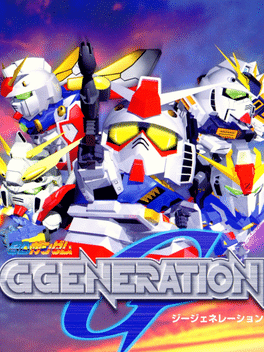
SD Gundam G Generation
1998
The culmination of the Super Famicom SD Gundam Generations series, this strategy RPG would be the first of a long, on-going series of games.Seven Kingdoms: Ancient Adversaries
1998
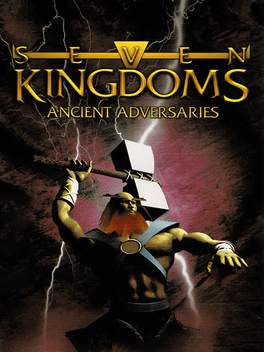
star 7Seven Kingdoms Ancient Adversaries: This is a strategy game designed by Trevor Chan, the author of Capitalism. Players choose to play as one of seven civilizations. Military might is not enough to win the game. Players must plan actions a few steps ahead, trade with other races, build up industry and establish diplomatic contacts.Chou Mashin Eiyuuden Wataru: Mazekko Monster 2
1998
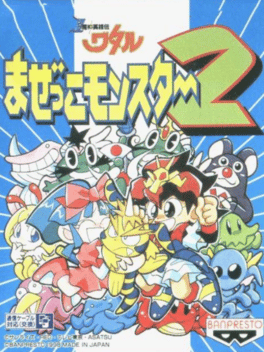
Chou Mashin Eiyuuden Wataru: Mazekko Monster 2 is based on the anime Chou Majin Eiyuu-den Wataru and released on the Game Boy.The Beginning of the End: Part 2
1998
The follow up to The Beginning of the end. Lots of new stuff here. All these levels have an original feel to them. You will enjoy playing these wads! But be warned... they are tough!Newman/Haas Racing
1998
Newman/Haas Racing
1998
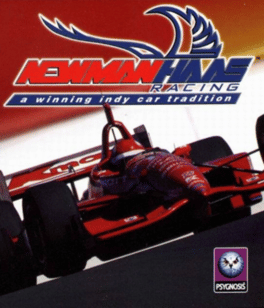
Newman/Haas presents racing in its purest form - no power-ups, shortcuts, or weapons here - and playing it requires equal parts patience, skill, and raw endurance. Those looking for an authentic Indy Car experience are in luck, as this is a game of remarkable depth and customizability. It offers a mind-boggling array of options - digital or analog control, single- or dual-player racing, four levels of difficulty, eleven tracks, 16 drivers, and a partridge in the pit stop. OK, I'm kidding about the last item, but it's obvious that Psygnosis doesn't think Indy Car racing is a laughing matter, and it's gone to great lengths to make Newman/Haas as realistic as possible.Kimi ni Steady
1998
Emergency: Fighters for Life
1998
The player receives a series of missions that he must complete involving the rescue of injured and endangered civilians, extinguishing fires, and arresting any violators of the law, some scenarios would be like: an accident at a race track, a plane crash, a flood, a traffic accident and a bomb threat, as well as scenarios based on true events such as Ramstein airshow disaster.Dino Breeder 2
1998
Dino Breeder 2
1998
Dino Breeder 2 is a Simulation game, published by J-Wing, which was released in Japan in 1998.Descent: Freespace - The Great War
1998
star 7.9The heartless Shivans emerged through subspace near Earth, harboring technology light years ahead of anything seen before. They made no attempt to communicate. They did not respond to your heralds. They simply attacked and destroyed everything in their path. As a pilot for the Galactic Terran Alliance (GTA) you are no stranger to war. But when racing through space to engage your new enemy for the first time, you sense something different. Suddenly, darkness blankets your craft. Your stomach sinks as your eyes pan across the Shivan flagship's massive body. Then it begins. Swarms of fighters pour from the belly of the flagship and scream towards you. You are about to discover everything you thought you knew about space combat just changed.Star Luster
1998
Babel
1998
Haou no Tairiku
1998
Wrestleball
1998
Formation Soccer '98 - Ganbare Nippon in France
1998
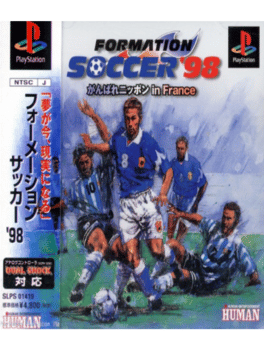
After the releases of the SNES & N64 games, Formation Soccer '98 - Ganbare Nippon in France is the third game for Playstation One, the game features the national teams that had entered the World Cup '98, and a new different camera angle.T kara Hajimaru Monogatari
1998
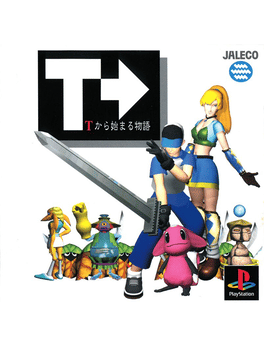
T Kara Hajimaru Monogatari is an action adventure game developed by Jaleco in 1998, in the game the player takes the role of a young skater boy (which name is unknow since the player can put the name that he wants to) that one day he arrives at home and received in email in his computer to create a graffitti using these 4 words: Trap, trick, trip, truth.