New Games - Page 12436

Dynamite Soccer 98
1998
Dynamite Soccer 98
1998
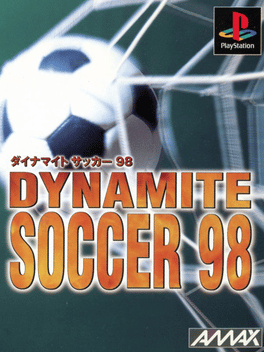
Dynamite Soccer 98 is a soccer/football game focusing on national teams and national team players of 1998. Aside from penalty kicks practice and training mode which includes free kicks, corner kicks, and other basics, there are four gameplay modes available. Exhibition mode is a quick play which lets 1 or 2 players start a quick match with selected teams. Tournament uses a typical tree structure and supports up to 16 teams, each of which can be set as player or CPU controller team. When two CPU teams play, only the result is displayed. A-Max Cup uses four groups of four teams after which it turns into a tree structure and elimination play, and All Star mode lets you assemble a team of top players from all available national teams. Basic setup such as selecting stadiums, changing strategies, replacing players, setting time duration for a full match, and other options are all available. The game supports 1 or 2 player matches, with up to 4 players using multi-tap. It was later re-published under the SIMPLE 1500 seriNamco Anthology Vol.1
1998
This is the first volume of one of the series of Namco game compilations, released only in Japan. This anthology is similar to the "Namco Museum" series except that this collection include games that have been released on consoles originally. Each disc includes 4 games and, along with each of the games, there were also updated versions of those. This volume includes: - Star Luster - Tower of Babel - Wrestleball (aka. "Powerball" in America) - Haou no TairikuCrisis City
1998
Crisis City
1998
Crisis City is an action game with 3 different game modes: - Time Attack allows you to choose any of the seven game characters and romp through a selection of levels at lightning pace. Each character is rated A, B or C with a bar scale highlighting their personal strengths and weaknesses. Comparable to the best beat-em-ups they are all remarkably dissimilar to control therefore each will provide a unique challenge in their own right. Some move extremely swiftly but may only carry a hand pistol while others are a little slower off the mark but are packed with high-power weapons of destruction. - Versus Mode is your typical beat-em-up, one vs one, battle to the death. Taking place in an enclosed arena two of the selectable fighters enter into a gun battl. Scattered around each arena are a number of obstacles that may be used for cover therefore speed of movement becomes a great leveler. - Story Mode: You are allowed 99 seconds to complete each of numerous screens where there are several enemies to eliminated beforInternational Superstar Soccer '98
1998
star 6.5Do you have what it takes to be a superstar? Over 17,000 new motion captured animations! Team motivation, players and teams react to real game situations. Vertical camera angle allows you to see more of the pitch. 52 International teams and 9 unique soccer stadiums. Create your own players and trade existing ones. Infinite team formations and customizable strategies.Skola
1998
Bienvenue au club Tom-Tom et Nana
1998
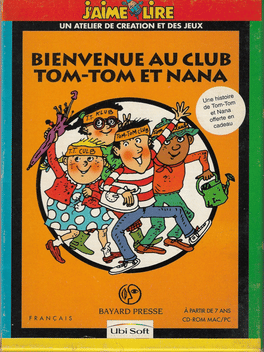
Join Tom-Tom and Nana's club! Like them, be resourceful, inventive, and full of humor to complete your missions: manage restaurant service, wash Poussin the dog and prepare the ghost party. You can also make membership cards for your own club, invitation cards... and more thanks to the creative workshop!Hugo: The Magic Oak
1998
Hugo: The Magic Oak
1998
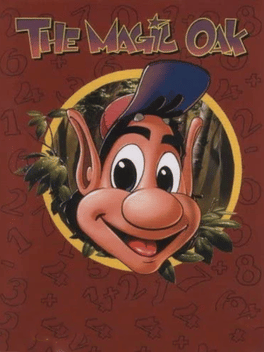
Hugo: The Magic Oak or The Magic Oak is a 1998 video game developed and published by ITE Media for the PC as part of the "Play and Learn" series. It was titled Den Fortryllede Eg / Hugo: Leg Og Lær 1 in Denmark, Tajemný les (Mystic forest) in Czechia, Taikatammi in Finland, Die Zaubereiche in Germany, Zaczarowany dąb in Poland, and Кузя и его друзья: Волшебное дерево (Kuzya and friends: The magic tree) in Russia. Originally released on 1 June 1998, the game was re-released on 21 April 2005 as Hugo Gold III in Germany. It was also re-released as part of the compilations Hugo 2 in 1 and Hugo - Sonderpaket 1 (with a beach wristwatch) together with Wild River in 1999 in Germany, Hugo: Birthday Party in 2000, and in the Best of Hugo series with Hugo Classic #1 (Hugo) in Denmark.World Cup 98
1998
WWF War Zone
1998
WWF War Zone
1998
WWF War Zone is here, featuring the top superstars in the World Wrestling Federation! Signature and finishing moves unique to each wrestler. Specialized matches including Steel Cage Match. Four-player action with Tag Team, Tornado, War, and Training Modes! Over 300 motion captured maneuvers. Create and save up to 30 customized wrestlersDr. Mario
1998
Dr. Mario
1998
Dr. Mario was remastered for the Super Famicom and released as a stand-alone Nintendo Power service release, only in Japan, and also for the Nintendo Gateway System. The game also received a Satellaview broadcast. The same version was previously bundled with Tetris and released in the West as Tetris & Dr. Mario.Rocks'n'Gems
1998
Rocks'n'Gems
1998
Rocks'n'Gems is a 2D puzzle game based on the 80's classic 'Boulder Dash' It was developed by Gerhard Rittenhofer via the Net Yaroze PS1 development kit and released as a full game on the Official UK Playstation Magazine's demo disc 16, volume 2.Sport Games
1998
Sport Games
1998
Sport Games is a compilation of Sega Mega Drive sports games released by TecToy in Brazil in 1998. Included games are Super Volley Ball, World Championship Soccer II and Super Real Basketball.Lucky Luke: On the Dalton's Trail
1998
You, as Lucky Luke, have to stop the Dalton gang from making another crime. Walking around town you have to solve puzzles, shoot criminals and collect money. After finishing the level you have a chance to buy an extra life with the money collected. Shooting isn't ordinary, often Lucky needs to ricochet shots to hit his target. The game view sometimes changes from 2D style to behind the shoulders. The levels differ from town exploring, to bottle-shooting in a bar, to freeing hostages on the roof of train, to Indian sneaking. But, all of them lead Lucky to $1,000,000 for the capture of the Daltons.Video Time Machine
1998
Video Time Machine
1998
A lost homebrew out of "time", this useful utility cart by Chris Cracknell uses favorite classic characters racing across the screen to track the time (along with a digital display), turning your Atari and tv into a retro timepiece. On the half hour the happy chasing characters change, giving you a wide variety of icons to wile your time away looking at.Genjuu Ryodan
1998
Genjuu Ryodan
1998
Genjuu Ryodan is a Strategy game, developed by Crea-Tech and published by Axela, which was released in Japan in 1998.Vangers
1998
Vangers
1998
star 7.2Mind-altering sandbox game that can be described as a racing role-playing adventure game with a complicated storyline. You’ll find a unique atmosphere, complete freedom and lots of gameplay hours to figure out what’s the game is all about.Vigilante 8
1998
Vigilante 8
1998
star 5.6Vigilante 8 is a vehicular-combat game set in an alternate 1975. Australian terrorist Sid Burn is hired by OMAR to dispose of all competing oil companies in the U.S. so that OMAR can establish an oil monopoly in the country. After hearing reports of destruction by Sid Burn's gang, the Coyotes, a man named Convoy, a kind-hearted trucker, forms a group of his own, the Vigilantes, to combat the Coyotes and stop the tyranny of OMAR.The X-Files Game
1998
The X-Files Game
1998
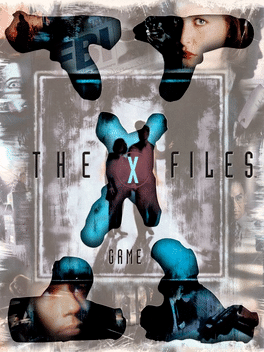
star 6.8The X-Files Game is an interactive movie point-and-click adventure video game developed by HyperBole Studios and first published by Fox Interactive. The game was released for Microsoft Windows, Mac OS and PlayStation in 1998, and is based on the television series The X-Files.Tribal Rage
1998
Tribal Rage
1998
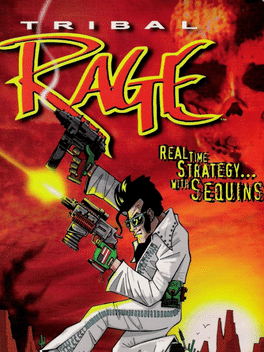
Rule the wasteland of the future as a gorgeous Amazon, or an evil Death-cultist in the real-time strategy game that doesn't take itself too seriously. With family choices including chain-wielding Bikers, Cyborgs, Enforcers, and Good ol' Trailer Trash, you're bound to find the Tribe that's right for you.