New Games - Page 12437

Icarus: Sanctuary of the Gods
1998
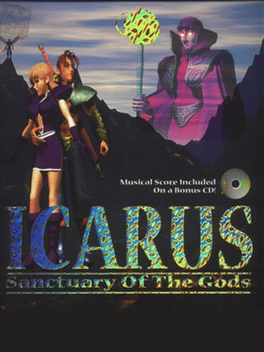
Icarus: Sanctuary of the Gods, also known as simply Icarus, is a single player role-playing game or strategy RPG released for Microsoft Windows in 1998 by JC Research Inc. and KRGsoft. The game's graphics are rendered and put in three-quarter view. This game has a turn-based battle system like traditional RPGs of its time. The player can move a certain number of tiles or steps in order to either use a physical attack, or use a magic spell or rest in order to regain mana, or use an item. Each character has their own class, and levels, as well as stats. Each character can gain levels and learn new skills that can aid them in battle. When the characters move is based on their speed stat. There is also some sort of inventory system. It also allows the player to walk around in some towns and talk to NPCs. You take control of eight different characters. There is also a money system as well as a buying item system that allows the player to purchase equipment and items with in game currency. Money can be found by performiQuake II Mission Pack: The Reckoning
1998
star 8You are part of an elite commando force that must infiltrate a hostile alien cite. Once inside, you must scour industrial landscapes, crawl through waterways and air ducts, navigate treacherous canyons teeming with vicious mutants, stow away on an alien spacecraft, and destroy the enemy's secret moon base.Redneck Rampage Rides Again
1998
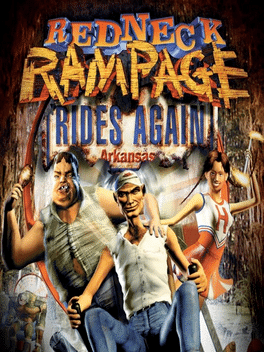
This stand-alone sequel to Redneck Rampage finds Leonard and Bubba shooting their way back to Hickston after crash-landing the UFO at the end of the first game. Using the same engine and most of the same graphics as the original, RRRA adds vehicles, some new weapons (including a sling blade), new alien clones (a Dennis Hopper-ish biker and an evil cheerleader), and fourteen levels of ass-whuppin'.Jeremy McGrath Supercross 98
1998
Jeremy McGrath Supercross '98 is a racing video game for PlayStation developed by Probe Entertainment and published by Acclaim Entertainment.Major League Baseball Featuring Ken Griffey Jr.
1998
star 8.4Make your dreams of becoming a Major Leaguer a reality! Hit a grand slam, pitch a no-hitter, go for the cycle and steal home - all in the same game! If that's not enough, check out the real-time stat tracking in over 30 major categories. Improve your team by making the right trades and picking up the best free agents. Major League Baseball Featuring Ken Griffey Jr. is so real, every pitch counts!Norm Koger's: The Operational Art of War vol. 1 - 1939-1955
1998
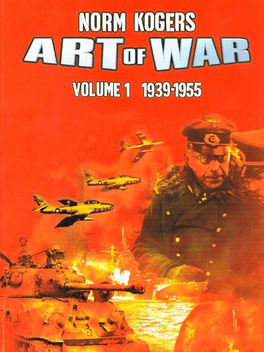
TOAW is the first in a series of wargames released by Talonsoft. The game focuses on historic conflicts (mainly World War 2 and Korea) that lie between army- and battalion-sized engagements. Each unit is modelled individually down to infantry guns, tanks, etc. The game is scenario driven, meaning that there is no campaign where you fight battle after battle. A scenario can last from a couple of hours to several years (in game time). Two graphics modes are available: Top-down and isometric (pseudo 3D). The latter one shows units as "miniatures-like" icons, representing the main type of equipment in the formation. The other mode uses military symbols for representation. The game is played on a zoomable map (2 levels). The game includes weather effects and political events. All features of the game (units, map, events, etc.) can be edited through the included scenario editor.Super Speed Race 64
1998
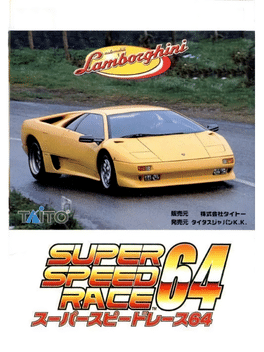
Super Speed Race 64
1998
Super Speed Race 64 is an enhanced version of Automobili Lamborghini, released only in Japan.Pachinko 365 Nichi
1998
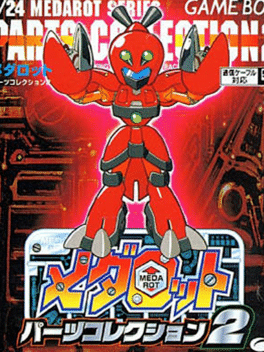
Medarot Parts Collection 2
1998
Medarot Parts Collection 2 is the second add-on game for Medarot 1 released for the Game Boy in 1998. It's a side game where the player Robottles their way through a tower and collects parts, which can then be traded to the main game.Shining Force III: 2nd Scenario
1998
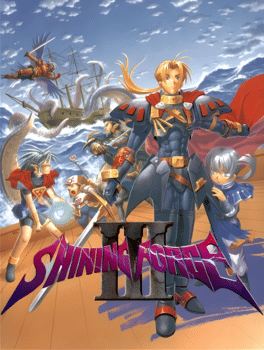
star 8.8Scenario 2, Target: Child of God, features Medion, Prince of Destonia, and youngest of three sons of Emperor Domaric. Although loyal to his father and his country, he senses that there are other forces at work beneath the tensions between Aspinia and Destonia. He attends the conference in Saraband on behalf of Destonia, along with his brothers Arrawnt and Mageron. As discovered in Scenario 1, much of this influence comes from the Bulzome sect, as well as collaborating separatist factions within both Destonia and Aspinia. Medion works parallel to Synbios of Aspinia, often disposing of rogue Aspinian elements to spare Synbios's force from fighting against its own countrymen. At the end of the game, Medion is forced to battle with Synbios' force when Julian steps in to stop them.Super Tempo
1998
Super Tempo
1998
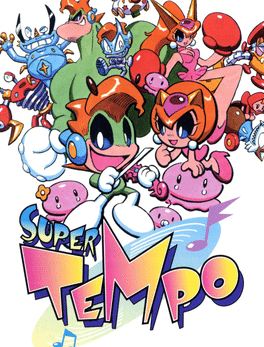
Tempo now teams up with its eponymous host and his girlfriend Katy to rescue the Prince of Music World from Planet Technotch.Fox Junction
1998
Fox Junction
1998
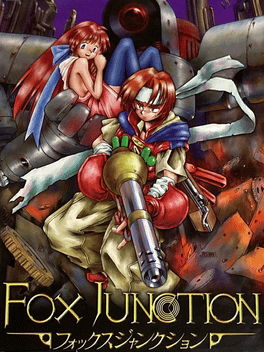
Fox Junction is a mecha action-adventure game. The game features rogue-lite elements, with procedurally generated maps. It uses a unique mix of 3D environments and 2D sprites for the characters.GT 24
1998
World Soccer Jikkyou Winning Eleven 3: World Cup France '98
1998
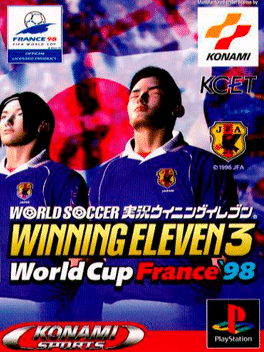
World Soccer Jikkyou Winning Eleven 3 World Cup France '98, is a soccer game published by Konami Sports. This game itself, looks like more an enhanced version of Konami's recent games Goal Storm and a world series revised of J-League WE3. You're able to select your favourite team among the 32-qualified team in the World Cup 1998, and even some other 8 good teams. Play in the real World Cup, selfmade tournament, international league, or just in a friendship exhibition. The game features audio comments in six lenguages : English ,French, German , Italian , Spanish and Japanese.Downhill Snow
1998
Downhill Snow
1998
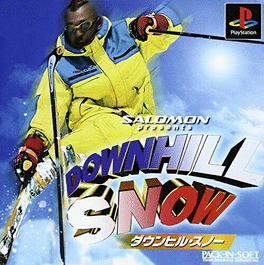
Downhill Snow is a Sports game, published by Pack-In-Video, which was released in Japan in 1998.World Soccer Jikkyou Winning Eleven 3: Final Ver.
1998
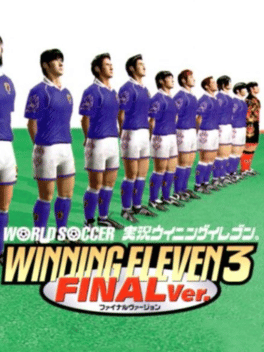
star 6The Japanese release, Winning Eleven 3 was re-released in 1999 as Winning Eleven 3: Final Ver.. The major changes and improvements have been focused on graphic and statistical updates rather than on engine itself. The most significant differences from the original are: Whole look of the game is less vivid in order to increase the level of realism. Some home, away and goalkeepers kits have been updated (including the All Star teams). The appearance of goals and nets has been changed. Squads have been updated to exactly reflect 1998 FIFA World Cup squads, the number of players in line-ups has been extended to 22 as well. Three difficulty levels instead of five: easy, medium and hard. The choice of match length has been widen to 30 minutes in spaces of 5. Match settings in Exhibition Mode now include the choice of uniforms, extended period, penalty shoot-out and golden goal. During the Cup Mode the statistics of scores and assists have been added. The imitation of Stade de France, the venue of 1998 FIFA World Cup finParanoiaScape
1998
ParanoiaScape
1998
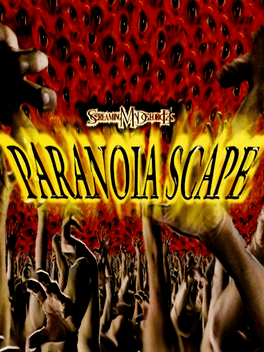
Paranoia Scape is a first person action pinball game that features the designs and sounds of Screaming Mad George. The gameplay is about going around each creepy stage of the game using the ball to destroy the enemies.Shoujo Kakumei Utena: Itsuka Kakumei Sareru Monogatari
1998
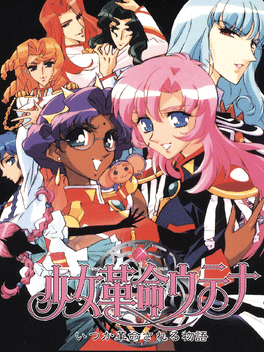
Based on the 1997 anime, Shoujo Kakumei Utena: Itsuka Kakumei Sareru Monogatari tells an original story which is set between episodes eight and nine of the TV series. The main character of the game is an original character who transfers to Ohtori Academy. The game is in the style of a visual novel with strong dating sim elements. The major characters each possess a statistic called "Heart's Nobility" which the player affects through dialog choices that appear sporadically during play. Each character's level of Heart's Nobility determines how the game will end. The special endings available for characters that end with particularly high Heart's Nobility represent the game's dating sim element, but because it is set within the larger plot of the TV series the relationships are usually somewhat platonic, or one-sided affections on the part of the main character.