New Games - Page 12493

Monty Python's the Meaning of Life
1997
The Meaning of Life is a Monty Python game based on the movie of the same name.MTV's Beavis and Butt-head: Screen Wreckers
1997
9 different twisted "toys" Restore distortions with a single keystroke Save, print and e-mail screen distortions Screw around whenever you're ready. No loading, no waitingChex Quest
1997
Chex Quest
1997
star 7.9Set on a distant planet named Bazoik, the game follows the Chex Warrior, a humanoid in an anthropomorphic piece of Chex cereal armor, as he fights to eradicate the Flemoid invasion. These slimy, green creatures have infested the planet and captured many helpless citizens whom the Chex Warrior must save. His only weapon is a device called a "zorcher", which teleports his enemies instead of killing them. The game starts at the landing pad of the research facility on Bazoik, after which the protagonist is teleported to the storage facility. The other levels include the laboratory, the arboretum, and finally, the underground caverns of Bazoik, where the Flemoids seem to be making a home for themselves.The Smurfs' Nightmare
1997
star 6.8Come join Hefty Smurf as he saves the day by rescuing everyone in the Smurf village. The story takes place during a full moon on a dark night as Gargamel casts a terrible spell on the Smurfs' village. All the Smurfs are now trapped inside their worst nightmares. Help Hefty Smurf rescue his friends by voyaging into this weird and crazy world. The fate of the Smurfs is in your hands! Will you be able to save them? This game contains cver 16 stages of game play, plus bonus stages!Screamer Rally
1997
Screamer Rally
1997
Screamer Rally is a follow-up to Screamer 2. Like its predecessor, it is a rally-style arcade racing game. The player can choose among four different rally cars (two front tractions and two 4x4), each with different parameters such as acceleration, braking, and weight. Handling, tire type and pressure, front and rear suspensions, and brakes can be customized in a garage. The game contains seven tracks located in different countries (such as China, Canada, Italy, etc.), pitting the player against five opponents. The tracks may contain obstacles and hazards such as holes on the roads, bumps, etc. The game also offers 3D acceleration support.Ignition
1997
Ignition
1997
star 8.5Ignition is an action packed racing game viewed from above and slightly behind the player. The cars on offer range from police car and VW Beetle to school bus and truck, each of which has its own strengths and weaknesses - trying to win with the bus, which involves blocking everyone behind the hideously slow vehicle for 3 laps, is perhaps the ultimate challenge. Initially there are 5 tracks available, with practice and single race modes as well as full championship at 3 levels - winning each of the first 2 levels unlocks an extra track. They all have hazards running through them, and sections where you must make a split-second choice between the safer route and the risky but potentially rewarding one. Multiplayer can be done via network or by split-screen - in a break with convention the screen is split vertically rather than horizontally.Koala Lumpur: Journey to the Edge
1997
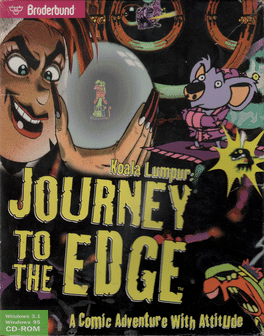
Koala Lumpur, a silly and twisted tongue-in-cheek ride until the very last screen, is well worth your time. The game centres around a Zen Master koala named Koala Lumpur and his friend, a dingo named Dr. Dingo Tu-Far in their quest to prevent the apocalypse caused by Koala Lumpur's mistaken utterance of a mystic incantation. To perform this feat, Koala and Dr. Dingo must collect pieces of the lost scroll of cartoon prophesies spread out over four stages; Search for Dr. Dingo Land of lost things Stream of consciousness Eye in the sky The style of the game is wacky from start to finish, for example, Koala Lumpur stores any items picked up in his seemingly bottomless fez, and the cursor of the mouse is a fly which at several points must be flown into Dr. Dingo's brain.Riana Rouge
1997
The Simpsons: Virtual Springfield
1997
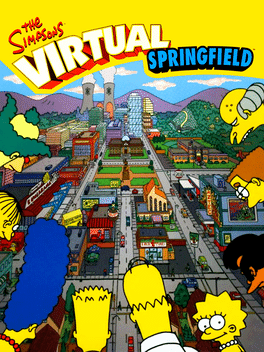
star 4.9Tour a virtual Springfield in this game released in 1997.War Diary
1997
Fragile Allegiance
1997
Fragile Allegiance
1997
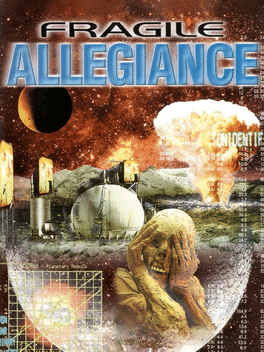
star 7Assemble your fleets, fill your silos with nuclear warheads, conduct research, gather resources, and wage war in a vast galaxy in this unique take on 4X Strategy. Appoint Colony Supervisors to manage your colony and deploy Spy Satellites for the ultimate in skulduggery. Negotiate and trade with 6 different alien cultures, each with their own unique personality.Marble Master
1997
Marble Master
1997
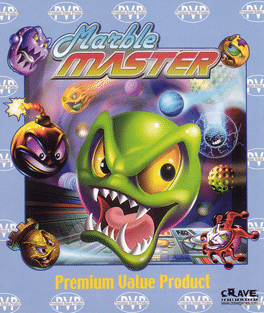
Master all four exciting modes of play: Single Player - Mission and Sudden Death, Competitive and Arcade Mode. Plus an in-depth tutorial mode that will help you become a Marble Master! Marbles with Attitude - Over 25 different kinds, Jokers, Bombs, Crushers, Color Zappers and more, each with a special Power. Infinite Gameplay! Endless hours of challenging fun. Balance is Key! Innovative scale feature adds a new puzzle challenge.Constructor
1997
Constructor
1997
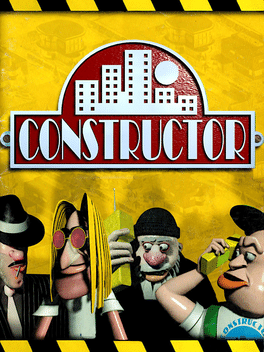
star 7.9In a town where anything goes, you can’t rise to the top without taking a few others down. From dodgy deals to shifty tricks, do what you gotta do to go from small-time slumlord to filthy rich tycoon.Descent to Undermountain
1997
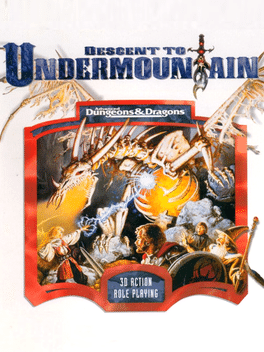
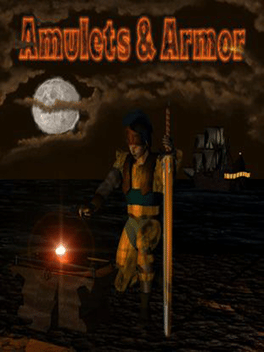
Descent to Undermountain is a first person RPG for the PC. It is based on the AD&D ruleset (2ed) using the Descent engine.Amulets & Armor
1997
Aleshar: The World of Ice
1997
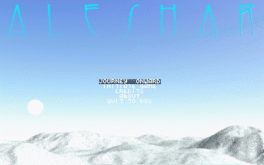
You were born to a minor town mayor and his wife. You had the spark of Elemental Powers. Your grandfather once had the same spark. He was to become a priest of the Cult of Wisdom, The only legal user of Power. Your grandfather abhorred the priest life. He was given a choice. To be bereft of the Powers for ever, or to become a priest. He chose neither, he managed to escape the priests. But he was too dangerous an example. He was hunted down and executed publicly. Most people still believe the Cult is the only answer to their everyday religious needs. But your father knew the truth. The Cult had many good men, true keepers of wisdom, but as every power does, even wisdom corrupts. The Townspeople were loyal to your father, and so they arranged you to 'disappear'. In truth you were sent to an old man, elementalist himself by some claims. To avoid suspicion, he lived far distant from any larger settlement. He was forgotten by the cult. Your father hoped you would be forgotten as well.Zombieville
1997
Zombieville
1997
What connects an emergency at a covert military base with a 200 year-old infant and a graveyard where the dead are rumored to live on? How does Margie Poole know so much about weapons? Who is General Barrow really working for? And just what is the XMZ1A project? Unravel the shocking secrets of Downforth- the town with the kookiest collection of citizens you're ever likely to meet. As lawman Vic Buckmaster would say, "Welcome to our little community. You ain't leaving."