New Games - Page 12494

Solar Assault
1997
Solar Assault
1997
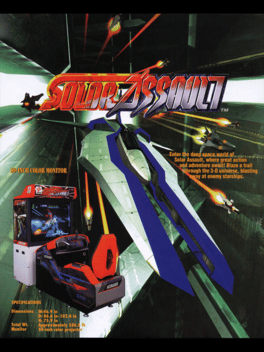
Solar Assault is a 1997 Konami arcade shoot ’em up and a 3D spinoff of the Gradius series. Using a flight-sim style cockpit cabinet, players pilot Vic Viper through fully 3D environments while retaining classic Gradius mechanics like power-up bars and iconic enemies. Despite its impressive visuals and unique perspective, the game was never widely released outside Japan and remains one of the more obscure entries in the Gradius franchise.Worms 2
1997
Worms 2
1997
star 8.1Worms 2 is a turn-based strategy game, with each team moving in a randomly determined sequence across two-dimensional terrain. During a single turn, a team can only move one of its worms. Worms can crawl and jump, as well as swing by ninja-rope, parachute, teleport, and bungee when the appropriate items are available. The objective of a traditional match or campaign mission is to defeat all opposing teams by killing their worms. When hit with a weapon, the worm will lose health depending on the power of the weapon and the directness of the hit. A worm can be killed either by having its health reduced to zero or being knocked into the water around and below the level.F1 Racing Simulation
1997
F1 Racing Simulation
1997
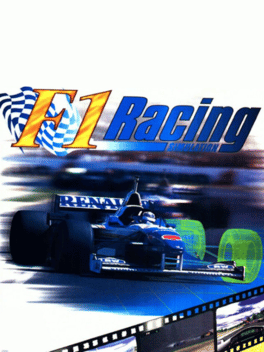
Duel for position against the world's greatest drivers at 180 miles per hour! F1 Racing Simulation will impress even the most demanding Formula 1 fanatic! Featuring 22 drivers and all 16 tracks from the 1996 FIA Formula One Grand Prix Championship and the most comprehensive car set-up ever, F1 Racing Simulation thrusts you into the roles of Driver, Chief Engineer and Pit Crew Leader.Steep Slope Sliders
1997
Steep Slope Sliders
1997
Steep Slope Sliders is a 1997 downhill snowboarding game by Cave and Pack-In-Soft for the Sega Saturn that was later brought to Sega Titan Video arcade hardware by Cave, Capcom, and Pack-In-Soft parent Victor Interactive Software.Winter Heat
1997
Winter Heat
1997
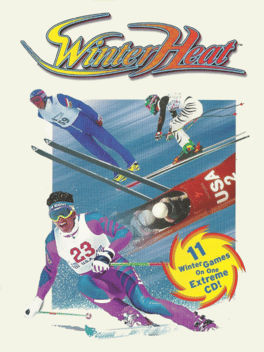
Winter Heat is the home conversion of the DecAthlete (also known as Athlete Kings) sequel, replacing decathlon by Winter sports. Competition (in Arcade, Saturn or Practice modes) includes 11 events featuring eight athletes of different nationalities - Li Huang, Karl Vain, Joe Kudou, Ellen Reggiani, Aleksei Rigel and Rick Blade are joined by B.B. (replacing Jef Jansens, who appears as a secret athlete) and Johann Stensen (instead of Femi Kadiena). The game is a typical Winter-sports game, in the line of those released by Epyx but with a more arcade feel. The events include: Speed Skiing: A simple dashing event where the goal is to descend the hill as fast as possible (in speeds over 200 km/h). Action is reduced to mash the button to gain speed. Ski Jumping: Composed by four parts: The run up (mash the button to gain speed), the jump (selecting the angle), the flight (mash the button to gain extra length) and the landing (pressing the action button too early will lose valuable meters, too late will cost the jump).Iron Soldier 2
1997
Iron Soldier 2
1997
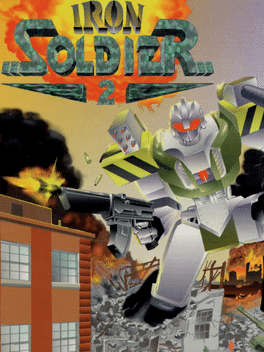
Iron Soldier 2 is a first-person 3D giant mech game. Players must pilot their building-sized robots in a variety of missions ranging from search-and-destroy to surgical attacks to defending objectives. Starting with a limited set of weapons, players can collect more armaments throughout the game. Each weapon can be mounted on a certain part of the robot's body, but once mounted, no other weapons can be placed there. So, while there is a wide range of weapon configurations, not every weapon can be combined with others. Players can destroy buildings in levels to find crates containing new weapons and extra ammunition for current weapons.Duke: Nuclear Winter
1997
Duke: Nuclear Winter
1997
star 6Simply Silly Software's sole professional release and the most frequently criticized of the major Duke Nukem 3D expansion packs.Combat Chess
1997
Combat Chess
1997
Play with living, battling characters! Combat Chess takes the basic chess game and adds an imaginative element for players bored with the simple "black vs. white" chess board. Beautifully done in rendered 3D graphics, Combat Chess adds stunning animation sequences during gameplay. Combat Chess is written to Grand Master standards and supports play against human opponents. Combat Chess includes 3D rendered pieces from a medieval setting with fantasy elements. Pawns become dragons, Knights become real knights, the Black Knight’s turning your pawns to green jelly, and the Queen’s threatening to deliver a majestic head-butt to your king. With over 600 animation sequences, each piece includes "fidget" sequences for those moments you need to think. The animations include movement, combat, fidgets, and "check" moves. For the traditional minded, Combat Chess includes a traditional set, also 3D rendered. Two boards come with the game, each assigned to the genre of pieces.Cho Ren Sha 68K
1997
Cho Ren Sha 68K
1997
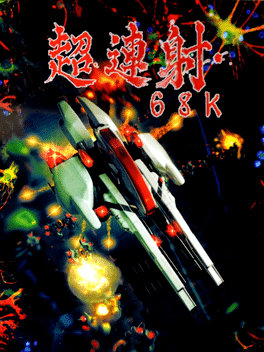
Cho Ren Sha 68K is a vertical scrolling shoot 'em up in which the player takes control of an unnamed spaceship to fight against a horde of enemy spacecraft on a giant and seemingly endless ring-shaped space station. The game features a loop system whereby after defeating the last boss of stage 0 in loops 1, 3, 5 and 7 the player starts at the beginning of stage 1 with an increase on the game's difficulty level. The game features a total of seven stages and eight loops in total.The Killing Blade
1997
The Killing Blade
1997
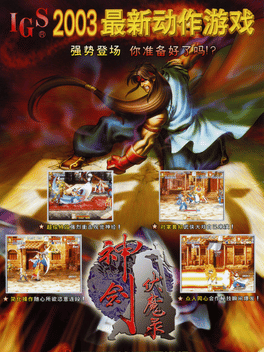
The Killing Blade is a 2D fighting game released in 1998 by International Game SystemTouhou Yumejikuu: Phantasmagoria of Dim. Dream
1997
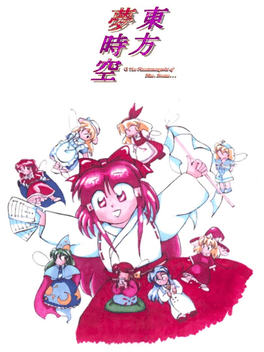
star 6.8This game is a vertical danmaku shooting game, where two characters engage in danmaku gameplay within individual and separate play areas (aka. split-screen). Upon meeting certain conditions, players are able to unleash a variety of character-specific Spell Attacks upon their opponents in an attempt to whittle down their remaining health points. In Story Mode, the player will face nine opponents, each more capable than the previous. Phantasmagoria of Dim.Dream also features a Match Play Mode where the player may face off against AI opponents or compete against other players, as well as watch AI vs. AI matches.BS Super Mario Collection: Dai-1-shuu
1997
The first part (week) of BS Super Mario Collection. BS Super Mario Collection is an altered version of Super Mario All-Stars. It was only released via broadcast on the Satellaview add-on for Super Famicom. It consists of levels from the Super Mario All-Stars versions of Super Mario Bros. and Super Mario Bros. 3. Using the Soundlink feature, radio-quality music was streamed during the broadcast, including music from Mario-related CDs of the time as well as licensed music. There was also some narration, as well as added cutscenes. Some minor changes were also made to gameplay.Mario Paint BS Ban: Yuushou Sakuhin Naizou Version
1997
Mario Paint BS Ban - Yuushou Sakuhin Naizou Version (also known as Mario Paint Yuushou Naizou Ban is a Downloadable Game for the Satellaview that ran between December 28, 1997 and January 31, 1998. It is a modified version of the original Mario Paint BS Ban that includes the winning design from the associated "Mario Paint Contest". The winning picture was designed by a Tokyo-based gamer named Hiroko Mizota, and it is entitled "Dreaming of the Moon.Panel de Pon Event '98
1997
Panel de Pon Event '98 is a modified special event version of Panel de Pon that was broadcast between December 28, 1997 and January 31, 1998 for the Satellaview Super Famicom peripheral. This game only has 1P Stage Clear mode (five stages only, which only skips Lip's Stage) and the 2P Vs. mode with no background characters.BS Super Mario Collection
1997
BS Super Mario Collection is an altered version of Super Mario All-Stars. It was only released via broadcast on the Satellaview add-on for Super Famicom. It consists of levels from the Super Mario All-Stars versions of Super Mario Bros. and Super Mario Bros. 3. Using the Soundlink feature, radio-quality music was streamed during the broadcast, including music from Mario-related CDs of the time as well as licensed music. There was also some narration, as well as added cutscenes. Some minor changes were also made to gameplay.Trivial Pursuit: Millennium Edition
1997
Quiz game. The game features over 2000 questions, all of them accompanied by a video or picture.Monkey Magic
1997
Monkey Magic
1997
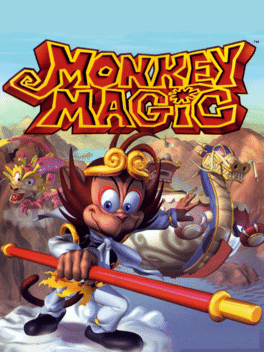
star 5Based on the cartoon series, this 2D side-scrolling action game (with 3D elements) has you seeking out Master Subodye to learn the four magic spells: fire, freeze, shrink and strength. Use these powers in over 30 worlds (five levels featuring 28 scenes and 16 opponents) to gain items like the Power Rod in order to survive the game. Then travel the world to gain other magical items and defend your monkey friends from, well, everybody. With a playful spin on one of the great Asian folk tales, Sunsoft's Monkey Magic is filled with martial arts moves, environments and exotic, Eastern melodies. Can you set a world right when it doesn't want to be corrected? Are you "monkey" enough to survive the attacks of gods and monsters? You bet your prehensile tail you are!Puyo Puyo SUN Ketteiban
1997
This game is a Japan-only port of the third game in the Puyo Puyo series originally made for the Arcades by Sega. The name of Puyo Puyo Sun comes from a Japanese pun on "san", and also indicates a new Ojama brought into the game. As Sun Puyos were used in this game, and the game itself is not only set on a tropical beach, but is the third in the series (三, "san" is the Japanese word for the number 3), the name suited the game. The Ketteiban (Definitive) edition of the game introduces a nazo puyo puzzle mode. Rerecorded audio tracks and voice acting, using higher quality audio tracks from the arcade version as a source. Just like the predecessors, Puyos fall from the top of the screen in pairs, can be moved left and right, and can be rotated clockwise and anti-clockwise by 90°. The rule of Sousai and Zenkesei still remained, but every time you countered, special garbage would fall on the screen in a preset pattern. Every time you cleared the screen however, Sun Puyos would fall on the screen, and the All ClearNBA Fastbreak '98
1997
NBA Fastbreak '98
1997
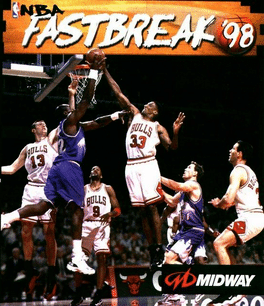
Pick your favorite team and take it to the championship in NBA Fastbreak 98. Play either a full season an exhibition game or fine tune your skills in practice mode. Run 27 different offensive sets and 16 plays. Watch the action from 11 different camera angles. You can even create players and then place them on the Free Agent List.Masters '98: Harukanaru Augusta
1997
A golf game for the N64, released in 1997 and licensed by the Augusta National Golf Club, based in Georgia, USA.