New Games - Page 12551

BS Zelda no Densetsu: Inishie no Sekiban
1997
Ancient Stone Tablets was a Japan-Only release for the Legend of Zelda: A Link to the Past. It was an add on made for Satellaview, a system that takes radio broadcasts and processes them into games live. The game came in four weekly broadcasts and made new additions to the original, such as weather, many new dungeons, and a new story. The game was much like a Second Quest or Master Quest of A Link to the Past, sharing a very similar overworld with slight changes and entirely new dungeons. Unlike a Second Quest however, it has an entirely new story. Various actions earned the player points, and these points could later be traded in to Nintendo for different prizes. Ancient Stone Tablets is different from most other Zelda games as the game's central heroes are actually the avatars of the player's ID for the BS-X Broadcasting System (Super Famicon), drawn into Hyrule, which is also true for BS The Legend of Zelda. The difference being that this time the player does not take the place of Link, but takes part in a newThe Last Express
1997
The Last Express
1997
star 8.4A point-and-click adventure game that takes place on a European train shortly before the outbreak of World War I. The game attempts to simulate real time with a non-linear story and dozens of fully voiced characters.Thieves
1997
Mega Man X3
1997
Mega Man X3
1997
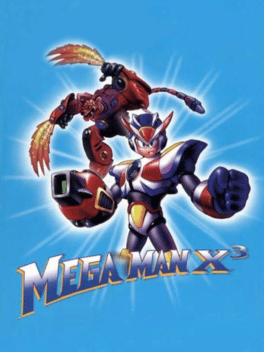
The PC port of Mega Man X3 expands upon the PlayStation and Saturn versions by adding a difficulty select option.Bust-A-Move 3
1997
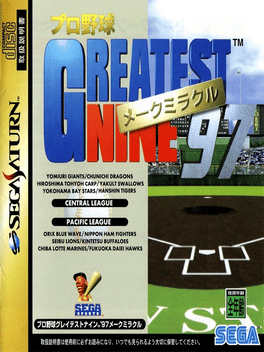
Pro Yakyuu Greatest Nine 97
1997
This is a baseball game released as part of the Greatest Nine series for the Sega Saturn.Boys Be
1997
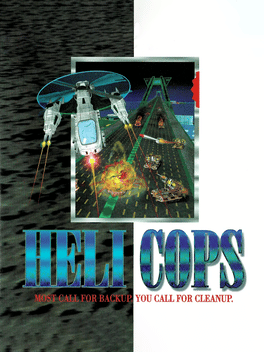
Helicops
1997
Helicops
1997
Helicops is a 3D Helicopter game with a view in the cockpit and externally. You can choose different pilots which have different stats, as well as choosing a helicopter.Hanagumi Taisen Columns
1997
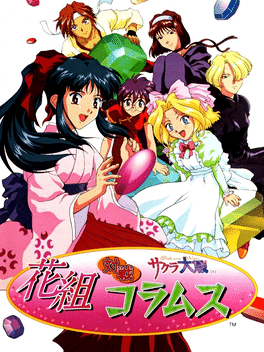
This game is a spin-off of Sakura Taisen and Columns. This was developed by Sega and was released in 1997 for the ST-V arcade board and the Sega Saturn in Japan. The game follows the Sakura Taisen story line and uses Columns gameplay.Monster Slider
1997
Monster Slider
1997
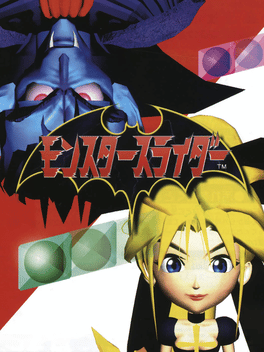
The game is a competitive falling block puzzle game similar to Puyo Puyo. Pairs of differently colored blocks fall into a well. The player must arrange them so that three identically colored blocks are touching in order to eliminate them. The floor of the well is staggered such that a block can be touching two other blocks on each side (in addition to a block above and a block below). Additionally, the floor is tilted at an angle. Blocks are affected by gravity and slide off of each other in the direction of the tilt after they are placed. The player can change the tilt of the floor at any time, which causes the blocks to shift around. A block also falls when placed over an empty space or when the block below it is eliminated. Players can use the effect of gravity to create chain reactions where one set of eliminated blocks causes another set to be eliminated, and the ability to change the tilt of the floor can be used to induce reactions by shifting falling blocks before they land.Dragon Master Silk
1997
Dragon Master Silk
1997
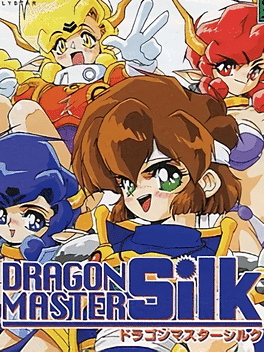
A less racy remake of the original Dragon Master Silk for the Sega Saturn. The size of the dungeons are considerably wider than the original, and the erotic contents are slightly modified for Sega Saturn.RPG Tsukuuru 95
1997
Doki Doki Pretty League
1997
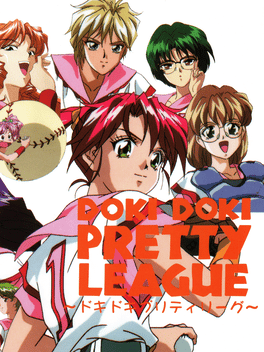
Developed by Xing, Doki Doki Pretty League is a baseball game that features high school girls making up the teams.Scud: The Disposable Assassin
1997
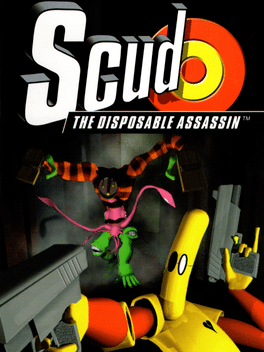
SCUD: The Disposable Assassin is a video game based on the Rob Schrab comic series of the same name.Professional Underground League of Pain
1997
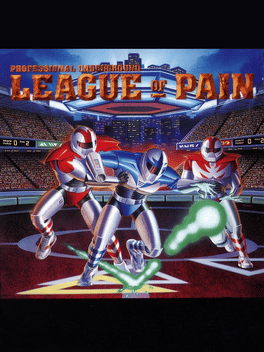
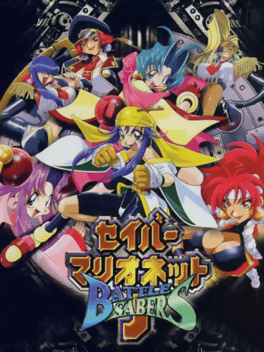
A combination of ice hockey, basketball, and bare-knuckle fighting, Professional Underground League of Pain is a futuristic sports game with few rules and loads of violence. The object of the game is to throw a plasma ball into a round goal that is suspended above the middle of a hockey-sized arena. Before you or your computer opponent can make a basket, the ball must be charged. Each team's charger is located in their opponents end of the court. Be careful, though: If the ball is charged with your opponent's color and you make a basket, your opponent gets the points. The same rule applies for the opposing team. There are different zones on the court and depending on where a player is standing when he makes a shot, he will score one, two, or three points. There are sixteen different teams to choose from, representing the countries of England, France, the United States, Germany, Japan, Mexico, Australia, and Russia. Each team has four players on the court at once. Most of the action consists of passing, shooting, aSaber Marionette J: Battle Sabers
1997
On a world with no women, the surviving men have reintroduced the female in the form of an android. Called Marionettes, they are built to serve men and are limited in their interactions with humans. That is until a poor boy named Otaru Mamiya encounters a Marionette named Lime. Lime is a Saber model with a special circuit that gives her emotions. When Otaru awakens two more Saber Marionettes, his life as an 'average' boy quickly becomes as extraordinary as the lives of his eager, busty new friends.Macross Digital Mission VF-X
1997
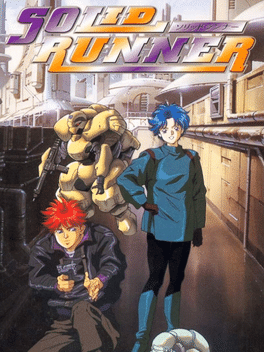
The year is 2047 AD, approximately two years after the Protodeviln War in which the United Nations discovered the Spiritia-enhancing potential of music. In this light, the popular five-member idol group Milky Dolls (yes, Milky Dolls) comes to a colony planet to perform a concert -- only to be captured by a fleet of Zentradi. Your mission is to fight through this massive armada of ships, pods, and fighters to save the idol singers. The opening sequence is storyboarded by Kawamori Shouji and accompanied by Fire Bomber's "Fly Away." The game itself is divided into nine missions, beginning with one in which you pilot a VF-1 Valkyrie against a VF-4 Lightning III as training and culminating with a final protracted duel with the de rigueur "boss" -- a transforming Zentradi fighter. Survive the battle with this never before seen mecha, and you will be at the front seat of a concert by the Milky Dolls with a song written and composed by Iijima Mari, the original Lynn Minmay voice.Solid Runner
1997
Solid Runner
1997
Solid Runner (ソリッドランナー) is a 1997 turn-based role-playing video game developed by Sting Entertainment and published by ASCII Corporation for the Super Famicom. The game was released exclusively in Japan on March 28, 1997, late in the console's life span. The game takes place in a town known as Solid City, which despite being technologically advanced, is overrun with crime. Very few people dare to challenge the control of the underground mafias and street gangs that threaten the city. While the game has a continuous plot, players are urged to complete individual missions.Parlor! Mini 5
1997
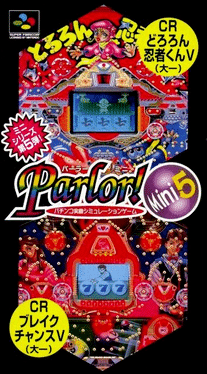
Parlor! Mini 5
1997
Parlor! Mini 5 is a Miscellaneous game, published by Nippon Telenet, which was released in Japan in 1997.