New Games - Page 13045

Dragon Fighter
1991
Dragon Fighter
1991
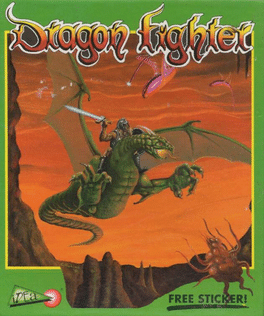
The player takes control of a magical human fighter who has the ability to transform himself into a flying dragon. As the fighter, the player can run, crouch, jump, and attack with his sword as he would in most side-scrolling action games. Underneath his life gauge is a "metamorphosis gauge" that will gradually be filled as the player destroys his enemies. When the metamorphosis gauge begins to flash, the player can transform into the dragon by pressing up and A button after jumping. As a dragon, the player will hover in the air while the screen scrolls automatically to the right, similarly to a side-scrolling shoot-'em-up game. The dragon's main attack is his fire breath. While the player can fly in any of the eight directions, they cannot turn around and the dragon will only face and attack to the right. While in dragon, the player's metamorphosis gauge will gradually be drained out. The player will transform back to a fighter if the metamorphosis gauge empties out completely or when the player rapidly taps the ADragon's Lair II: Time Warp
1991
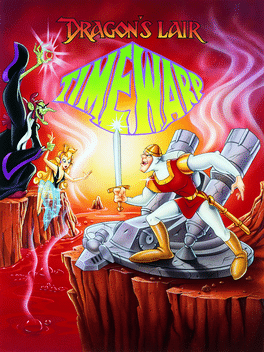
Arcade DVD Player Philips CD-i Blu-ray Player PlayStation 3 Atari ST/STE 3DO Interactive Multiplayer DOS Amiga Atari Jaguar CD Sega Saturn Nintendo DSistar 6.9Dragon's Lair II: Time Warp, the followup to Don Bluth's arcade classic Dragon's Lair, can now be enjoyed on your PC. This fully arcade authentic version includes all of the original scenes you've come to enjoy, and even the unreleased Director's Cut ending not seen in the arcades. Other bonuses include a full watch feature to sit back and enjoy Don Bluth's stunning animation.Disc
1991
Deathbringer
1991
Deathbringer
1991
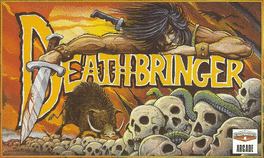
Empire's take on the hack'n'slash arcade-adventure games on the Amiga had a lot going for it: nice colorful graphics with plenty of parallax scrolling coupled with an equally nice music and decent sound effects.Black Gold
1991
Black Gold
1991
Despite having the same name, Black Gold is not related to the reLINE Software title also called Black Gold.The Return of Medusa
1991
The Return of Medusa
1991
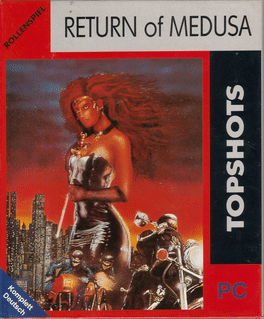
The player acts as the son of the king, on an unknown planet. The country flourishes and thrives, life goes on very calmly. But one day the situation changes. The people get more and more controlled by and evil force. Revolutions and wars arise. The formerly united kingdom divides. Finally, the old king finds out that a goddess called "Medusa" tries to control the people from out of the underworld, in order to conquer and rule the entire world with her army from hell. The player who takes the role of the prince is forced to stop Medusa's advance and to reunite the split kingdom. To reach that, he must fight against the goddess Medusa and defeat her again. As the opponent is a goddess, the player is not able to find her anywhere in the country. He can only call her when he finds 5 rings, puts them together in a temple and forces Medusa to face a fight. The basic task is therefore the search for the 5 rings. Unfortunately the king has very little energy, and so the starting conditions for his son do not look very goOh No! More Lemmings
1991
Oh No! More Lemmings
1991
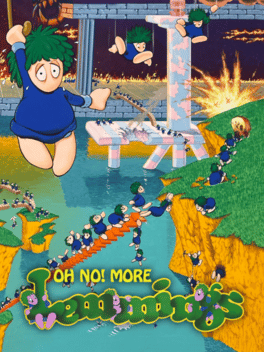
star 8.9Oh No! More Lemmings is the follow-up to Lemmings. The game features 100 new levels, and all-new graphics and music. It was released in both a stand-alone and an add-on version.The Games: Winter Challenge
1991
star 5.9In the Winter Challenge, you have to succeed in many winter Olympic games. Your goal is to beat your opponents and when you are a true master, to beat the world record. The game can be played against computer or against more players. You will enjoy many hours with this great game.Scorched Earth
1991
Scorched Earth
1991
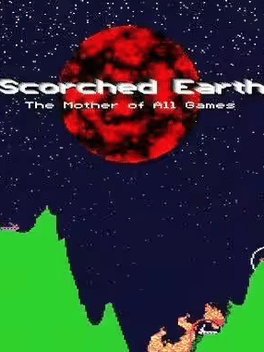
star 7.9Blast your enemies from the face of the Earth together with Earth itself. Buy bigger weapons to crush more enemies. Get more money for crushing more enemies. And finaly buy a much more bigger weapons to crush even more enemies. Scorched Earth is an early classic shareware artillery game that featured hot-seat multiplayer for up to 10 players, and was the spiritual predecessor to games like the Worms series.Rules of Engagement
1991
Rules of Engagement
1991
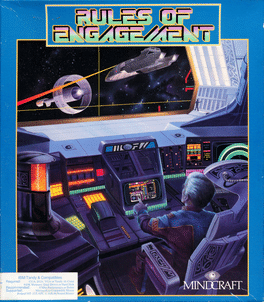
Rules of Engagement is a role-playing game in which you take on the role of a Fleet Commander deployed to lead Federated Worlds forces in specific missions against enemy or rebel forces. Each mission takes place an a particular solar system. The game is very realistic and extremely difficult. The extensive manual as attached to help the new players to become familiar with the game mechanics.Supaplex
1991
Supaplex
1991
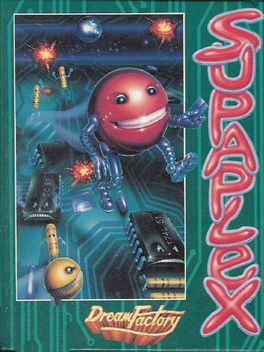
star 7Supaplex is the first Boulder Dash-like game that is not fully grid-based: while the playing field is an obvious grid, the objects do not "snap" from one grid position to another, but can be halfway or "in between" grid positions. Supaplex introduces a number of new elements that were not present in Boulder Dash, including bugs, pieces of base that randomly cause a life threatening electrostatic discharges, Ports, which limit Murphy's movement to specific directions, and terminals, which set off yellow Utility Disks. Utility Disks are explosive floppy disks and come in three different colors: Orange Disks work like Zonks, but explode when hit or when falling. Yellow Disks do not fall yet may be pushed in any direction, and explode when the Terminal is used. Red Disks can be carried and dropped when convenient, exploding seconds after.Cap'n Carnage
1991
Cap'n Carnage
1991
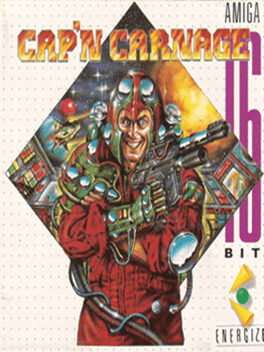
Cap'n'Carnage is a side-scrolling shooter created by Golden Sector Design and published by Energize in 1991.Bush Buck
1991
Bush Buck
1991
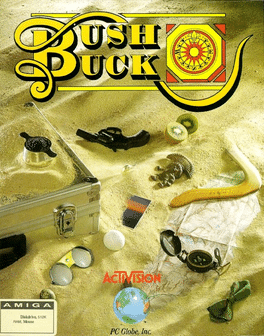
Application software experts PC Globe Inc. made an advance into the gaming sector in the early 90’s within their field of expertise: geography. With a back catalog of several installments of the then-leading world atlas and almanac software, PC Globe, the company turned snippets of country-specific info into an educational game that mixed two-player “Identify that place” strategy with a “Get to know the globe” learning effect – can you say Carmen Sandiego? As the sinister Otto von Slinkenrat tries to pocket the world’s treasures in his private collection, renowned adventurer Bush Buck sets out to find and secure the valuable objects for posterity. In a race around the globe, you and an opponent travel back and forth between 206 cities in 175 countries in search for clues to the treasures’ whereabouts. Cities are connected by a network of plane routes; players take turns in jetting from one destination to the next. On each visit to a city, you learn some background info – e.g. about landmarks, gBrigade Commander
1991
Brigade Commander
1991
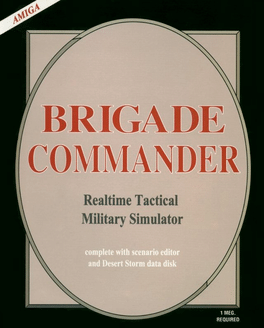
Brigade is a real-time wargame pitting the player against a computer opponent. Unless you physically pause the game, the computer opponent does not wait for you to move. It thinks and acts on its own, in real time. The game is played on a grid of hexagons, each hex represents an area of 500 meters from side to side. On this mapboard, units maneuver and attack under the control of their respective commanders. Brigade is a scenario-driven game in which the features of the mapboard, the composition of the opposing forces and their goals are dependent on which scenario is being played.Brat
1991
Brat
1991
Brat is an isometric action puzzle in which the player guides Nathan, the brat of the title, through a series of twelve levels. The isometric landscape scrolls up-screen, imposing a time limit on each level. Whilst Nathan automatically walks forwards at the same rate, if he is diverted he will begin to lag behind. If the screen catches up with him, the player loses one of three lives and must restart the level. Nathan is not controlled directly: the player must place icons onto the level to guide his movement. There are a variety of items that can be collected by Nathan, then later placed by the player to bypass certain obstacles: deadly spring toys can be suppressed with a lead weight, and building blocks can bridge gaps, for example.