New Games - Page 13140

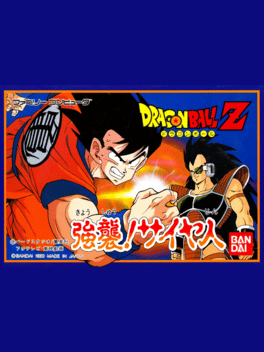
Dragon Ball Z: Kyoushuu! Saiya-jin
1990
Dragon Ball Z: Kyoushuu! Saiya-jin is a role playing video game and the first Dragon Ball Z console game. It was released only in Japan by Bandai on October 27, 1990, for the Nintendo Famicom. There was a limited edition gold cartridge of the game released. Kyoushuu! Saiyan is also one of the games included in the game compilation J Legend Retsuden for Nintendo 3DS.Daisenryaku III '90
1990
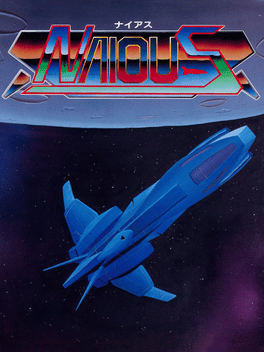
Naious
1990
Naious
1990
Naious is a horizontally scrolling shoot-em-up. The gameplay is fairly traditional and involves navigating outdoor and indoor stages (often with narrow spaces), destroying mobile and stationary enemies on the way. The fighter craft starts with a vulcan gun and can later change to wide shot, laser, and homing missiles. Rather infrequent power-ups appear at set points on the stages and change or enhance the plane's weapons.Rolan's Curse
1990
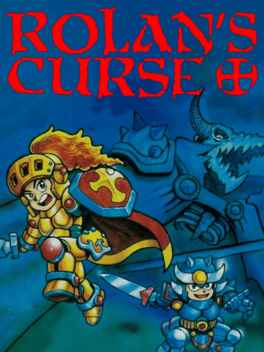
Rolan's Curse
1990
star 5.6After centuries in captivity, King Barius, Lord of the Demons, has escaped. In his fury he has cursed the peaceful land of Rolan. Hordes of dark creatures roam free in the countryside. A desperate cry goes out... are there any warriors brave enough to free the people from the curse?Pachio-kun 3
1990
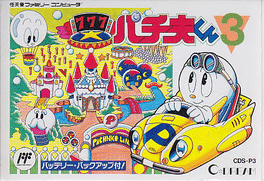
Pachio-kun 3
1990
The third Famicom entry in the Pachio-kun series. Pachio-kun 3 is a Miscellaneous game, developed by Color Dreams and published by Coconuts Japan, which was released in Japan in 1990.Astro Fang: Super Machine
1990
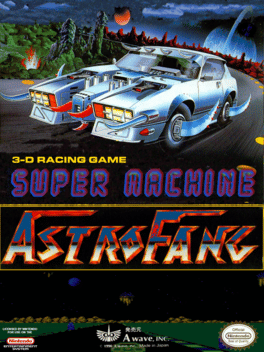
Astro Fang: Super Machine is a Family Computer video game that was released for an exclusively Japanese market in 1990. Somewhere in the galaxy lies the planet RS-121 – a desolate planet that has suffered terrible disasters which made life impossible. Only one construction still remains on the planet – a highway called the Black Line. It is said than an ancient legend is somehow connected to this highway. Players must knock enemies off the road by using missiles before they can knock him off the same highway. Automobile repair shops can be found where cars can be repaired and re-supplied with much-needed weapons. The playable vehicle resembles a 1982 DeLorean DMC-12 while the unplayable enemy vehicles resemble dune buggies. The game has an infinite amount of continues and a meter appears on the bottom left-hand side of the screen to remind how close the player is to achieving the goal.Naxat Stadium
1990
Ryu Kyu
1990
After Burst
1990
After Burst
1990
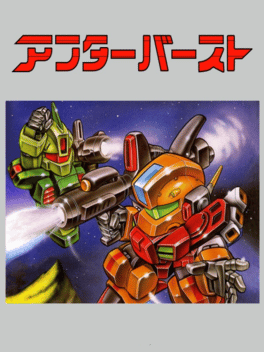
Players must control a combat robot as they make their way towards their ultimate goal: destroying the enemy orb. Each level only has one screen to blast hostile robots, solve challenging platforms, and manipulate a series of short puzzles. 30 stages await players as they look forward to a boss battle on every tenth stage. A weapon is available; its gunfire can be altered by changing the angle of the gun. Even the distance of the shot can be changed by holding down the button for extended periods of time.Oeka Kids: Anpanman to Oekaki Shiyou!!
1990
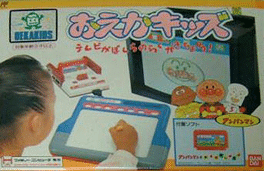
Tablet-based drawing game. Oeka Kids: Anpanman to Oekaki Shiyou!! is a Miscellaneous game, developed by TOSE and published by Bandai, which was released in Japan in 1990.Fire Hawk: Thexder - The Second Contact
1990
Fire Hawk: Thexder - The Second Contact is the sequel to Thexder, an amazing game originally developed in Japan and later released to the USA. Fire Hawk: Thexder is well known for its eleven game music tracks, which were of a quality that was relatively unknown for video games released in the late 1990's. Game play consist of the player in the role of a robot battle unit that transforms into a space fighter jet "Fire Hawk" depending on the current action. When battling, the player maneuvers the robot transformer which can levitate and float while firing at enemy objects, creatures, droids and bots in order to clear the room in order to proceed. The robot battle unit transforms into the "Fire Hawk" space ship jet in order to move quickly and to navigate narrow connecting tunnels. Ultimately the goal is to conquer the invading alien species by navigating the catacombs to clear alien enemies and disable the alien mothership. There are 9 different combat missions that must be completed to disable the mothership.Zan Gear
1990
Zan Gear
1990
Zan Gear is a wartime, strategy simulation game, released exclusively in Japan. The game is notable for its stylish presentation and well-received soundtrack.Amida
1990
Amida
1990
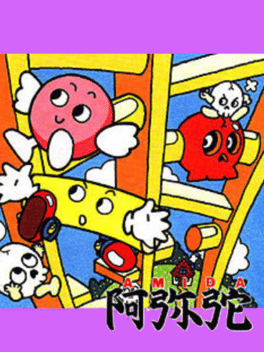
Amida is a Japanese ladder climbing puzzle video game. The game requires players to navigate the main character safely across several pre-set bridges. Each bridge is composed of a number of obstacles that the character will blindly navigate into. The player can utilize an animated platform to redirect the main character as they move through the stage.Tamura Mitsuaki no Mahjong Seminar
1990
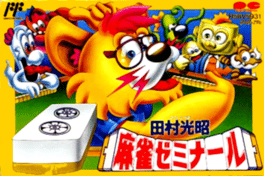
Tamura Mitsuaki no Mahjong Seminar is a Miscellaneous game, published by Pony Canyon, which was released in Japan in 1990.Apple Sauce Room
1990
Arrow Flash
1990
Arrow Flash
1990
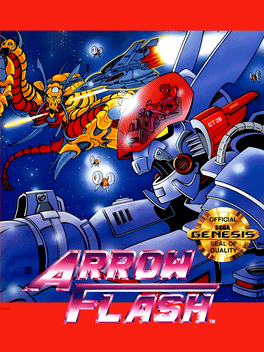
star 5Arrow Flash is a side-scrolling space shooter. The player controls a female spaceship pilot who is sent on a mission into deep space to save the Earth from an assault by an evil dragon from another galaxy. Moving vertically or horizontally, players must avoid or kill the enemies and make it to the end of the level alive where a boss battle awaits. During gameplay, the player can switch at any time between two modes: normal spaceship and flying robot. The two forms use different weapons and also have different special abilities, called Arrow Flash. While the spaceship can fire destructive lasers for major damage, the robot can raise a shield that will protect from enemy attacks for some time and instantly kill anything that touches it. The Arrow Flash attacks can be charged by holding a button for several seconds, or collect icons during your flight to release it quickly afterwards.Monster Truck
1990
Monster Truck
1990
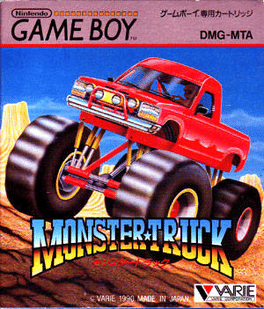
Monster Truck is a Racing game, developed by Another and published by Varie, which was released in Japan in 1990.Delta Arm
1990
Delta Arm
1990
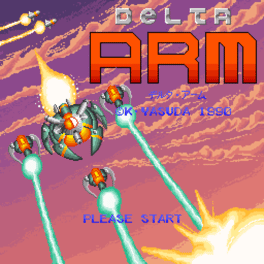
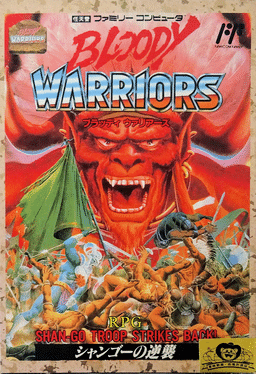
Set in the year 2064 this creeping horizontal space-shooter will certainly help you get your SHMUPS on. Different ship configurations give you different shooting types and patterns.Bloody Warriors: Shan-Go Troop Strikes Back!
1990
You are a young man from an ancient village, which suffers from attacks by a vicious monster. You are assigned to find the monster's lair and to defeat it. However, upon your return to the village you find out some people were abducted by the imperial troops. Now you have to find out the Empries's true motives and to solve a grand mystery.Panic Space
1990
Panic Space
1990
The second game to be released as a coverdisk special for the Japanese Famimaga magazine. Panic Space is a game based around the laser deflection puzzles that are common in games in the Zelda series as well as others. Panic Space, or Famimaga Disk Vol. 2 Panic Space, is a puzzle game in which the goal is to reflect a laser to an exit panel in order to open the way to the next stage. The laser cannot hit any of the stage's surrounding wall: were it do so, it would cause the level to explode and the player to lose a life (from an initial allotment of five, though this can be increased while playing the game). Much of the time the various reflectors (which send the beam off at a 90 degree angle) and blocks (which simply stop the laser in its tracks) must be maneuvered into place before the laser should be tested on them. The robotic protagonist also has access to three different power-ups. These appear on every level and quickly cycles through the three types - the player must grab it when it stops on the desire