New Games - Page 13137

Shadow Dancer: The Secret of Shinobi
1990
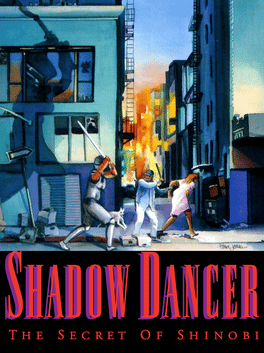
star 7Shadow Dancer: The Secret of Shinobi, also known as just Shadow Dancer, is a side-scrolling action game produced by SEGA that was originally released for the SEGA Genesis in 1990. It has been re-released via downloading services such as the Wii's Virtual Console and Steam in 2010. It was also included in the Sega Genesis Collection for the PlayStation 2 and PlayStation Portable but it was omitted in PAL version (Sega Mega Drive Collection). It is the second game in the Shinobi series released for the Mega Drive, following The Revenge of Shinobi. However, it is not a continuation of the previous game, but rather a loose adaptation to the 1989 arcade game Shadow Dancer. Like in the original arcade game, the player controls a ninja followed by a canine companion. The Secret of Shinobi was well received by critics.Teenage Mutant Ninja Turtles II: The Arcade Game
1990
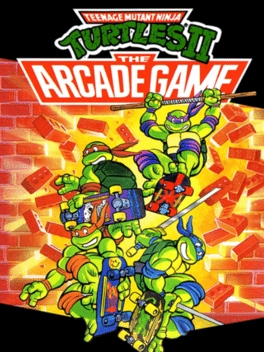
star 7.9This version includes two new levels (the first part of Scene 3 and all of Scene 6), which feature new enemy characters, including two new bosses: Tora (a dog-like "blizzard beast") and Shogun (a robotic samurai), both characters created for the game. Most of the original stages from the arcade version were extended as well and the second half of Scene 3, the parking garage stage, replaces the arcade version's end battle with Bebop and Rocksteady with a battle against the mutated fly form of Baxter Stockman.Tecmo Bowl
1990
Tecmo Bowl
1990
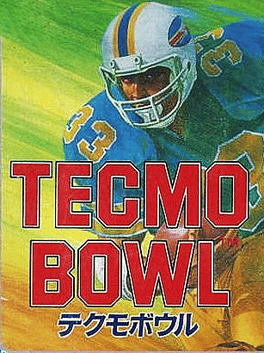
The Famicom port of Tecmo Bowl has many roster changes due to being based on the 1990 NFL season.Parodius
1990
Parodius
1990
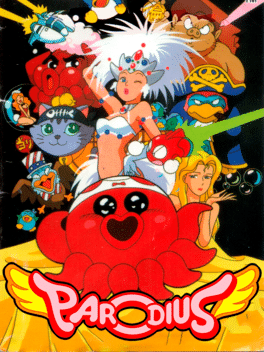
Parodius is a side-scrolling shoot ’em up developed and published by Konami. It is the home port of the arcade game Parodius Da! Shinwa kara Owarai e, a parody of the Gradius series. Players choose from a roster of characters and progress through stages filled with enemies, obstacles, and bosses. The game retains the series’ power-up system while adapting the visuals and performance for home consoles. It features a humorous tone, exaggerated designs, and references to other Konami titles.Wakusei Aton Gaiden
1990
Wakusei Aton Gaiden
1990
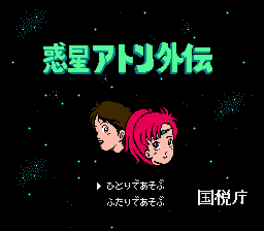
A vertical-scrolling shoot 'em up produced by Kokuzeichou: the Japanese equivalent of the IRS. Players are given frequent multiple choice questions while playing.Battle Bull
1990
Battle Bull
1990
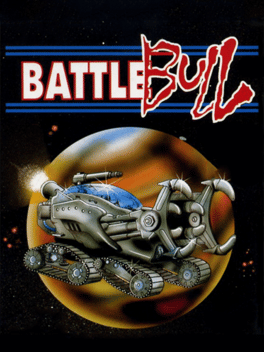
star 6.3The player controls a driver of an excavation vehicle as he competes in a 48-level tournament of drilling things. Players have to kill rival drivers only by pushing huge stones at them. Most of the other stones are a permanent part of the underground cavern; while others can be used to eliminate the opponents. Money is earned after each level for the purpose of upgrading the player's vehicle. Players can improve their engines, purchase extra lives, shovels that can dig better, and weapons to improve the odds on the playing field. A kill ratio is required to be met in order to reach the next stage. Otherwise, the player remains in the current level. After finishing all 48 levels, the game proclaims that the "battle is over" and that the player becomes "the new champion." The final scene in the game is where the player looks over the sunset with his girlfriend along with the closing credits.Nintendo Campus Challenge 1991
1990
Nintendo Campus Challenge is a special cartridge used in the event of the same name where players compete under a time limit to get a high score across 3 NES games; Super Mario Bros. 3, Pin Bot, and Dr. Mario. From November 1990 to December 1991, Nintendo held these competitions at universities in the United States and Canada. The winner from each campus won a trip to Walt Disney World in Orlando, Florida. The cartridge is considered to be even rarer than the Nintendo World Championships cartridge with only one known to exist.F1 Douchuuki
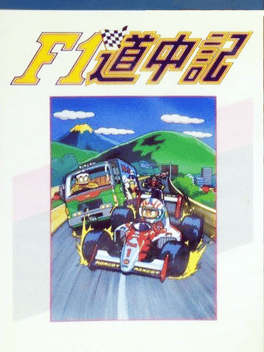
1990
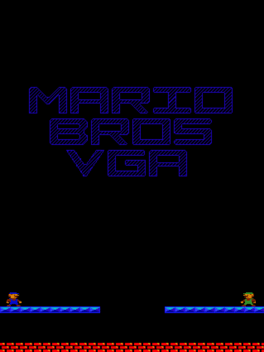
Mario Bros. VGA
1990
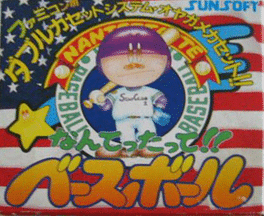
Nantettatte!! Baseball
1990
A baseball game by Sunsoft released on the Family Computer in 1991. Nantettatte!! Baseball is a baseball game with the innovative feature of being able to update team rosters without needing to buy a brand new full price game. This is done by inserting a mini-cartridge that updates the roster into the main game.Mizushima Shinji no Daikoushien
1990
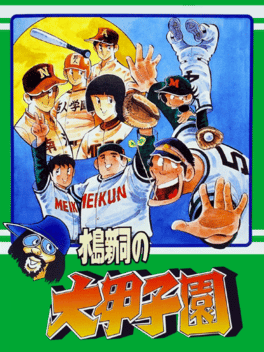
Mizushima Shinji no Daikoushien is a Sports game, published by Capcom, which was released in Japan in 1990.Ryuukyuu
1990
Ryuukyuu
1990
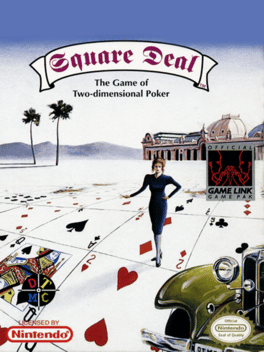
A puzzle game where you have to drop playing cards so they make poker-valid lines horizontally, vertically and diagonally.Junction
1990
Junction
1990
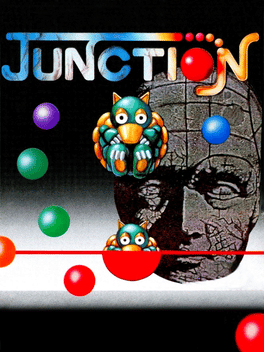
Junction on the Game Gear plays much like its Genesis equivalent but the view is top-down rather than isometric. The object is still to guide the ball along a path to the exit, shifting tiles as needed.Kickball
1990
Kickball
1990
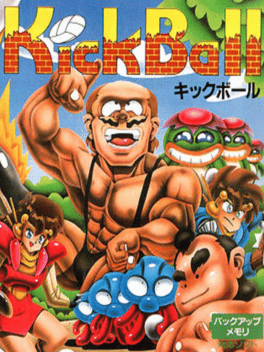
A comedic baseball game in which players kick the incoming ball before running the bases.Neural Gear
1990
Neural Gear
1990
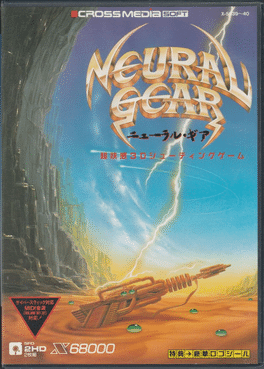
Neural Gear is a pseudo-3D scrolling shooter similar to Space Harrier. You play as Emi T. Fonon, a futuristic soldier from the years after World War IV, who wears a bio-powered suit that can fly back in time and destroy time travelling robots. Each level goes back to an earlier date and has more numerous and powerful enemies. The game is completely controlled with the mouse. Left clicking fires the main weapon - yellow energy balls, while right clicking fires a sub weapon, which is chosen at the start of the level. There are four sub weapons to choose from: SPC that shoots powerful blue energy balls, Rockets, Homing Missiles and the most powerful sub weapon in the game "???" which is actually a bomb that can instantly kill all enemies on screen, including bosses but it also take out around 500-600 health. An interesting feature of this game is the health system. The timer at the top of the screen also acts as the health bar and it decreases faster when you get hit. Enemies come in large groups, sometimes in fSanrio Carnival
1990
Sanrio Carnival
1990
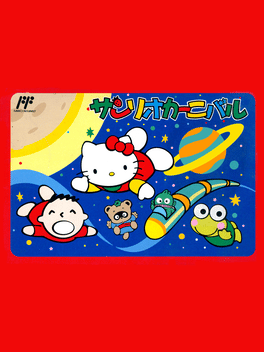
Sanrio Carnival plays in the style of Columns and Dr. Mario, but features Hello Kitty and her friends. The player must match block objects of the same type in a horizontal or vertical row of three, four of five. The menu allows the player three different single-player styles of game which determines what goal must be met as well as options to choose a music track and theme of the blocks. There is also a two-player versus mode available.Sol-Feace
1990
Sol-Feace
1990
star 5.9Sol-Feace is a typical 2D shooter with weapon powerups. The game features six levels: Sirius, Enemy Arsenal, ArtifiStar, Pluto Base, Almathea, and Final Battle.Tel-Tel Stadium
1990
Tel-Tel Stadium
1990
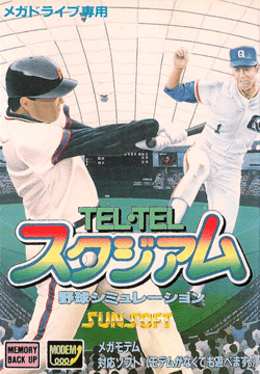
Tel-Tel Stadium is a 1990 baseball game. The game is a typical baseball game where you are only allowed to control the pitcher and batter - once the ball is hit, you can only watch what the rest of the team does.