New Games - Page 13306

Quarterstaff: The Tomb of Setmoth
1987
Enhanced version of the 1987 original. The game underwent improvements, including the addition of a subtitle, support for color Macs, and the fixes of numerous bugs. Additionally, the storyline was revised, and new features were introduced, such as a help window offering hints and various useful tools.Bop'n Rumble
1987
Bop'n Rumble
1987
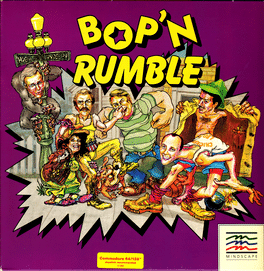
In Bop N' Wrestle, players take the role of wrestler Gorgeous George who finds he is the only one in the position to clean the mean streets from various thugs and loonies. Gameplay involves walking through the streets and taking out any enemies that get in the way. Kicks and punches are your basic moves at first, but as the game progresses, new moves and attacks become available, and new enemy types to beat up as well.Star Paws
1987
Star Paws
1987
The game's plot involved captain Rover Pawstrong (a dog in a space suit) in his adventures on a planet, attempting to eat 20 Space Griffiths (essentially chickens). Gameplay involves the player's character running back and forth on a side-scrolling planet surface, attempting to catch the griffith. The player finds crates which contain items that the player can use to help catch the bird - or the player can simply try and run and jump on top of the bird, thus catching it. During playtime, there is a time limit by which the bird must be caught (indicated by a roast chicken slowly turning into chicken bones), or else the game ends. At later stages in the game, the player may have to enter some abandoned mines, where the griffith may be hiding.Mean City
1987
Wiz
1987
Wiz
1987
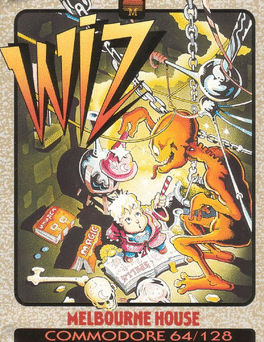
The good land of Midgard and the evil land of Neflheim have long been joined together by a powerful spell, which has long been acceptable, but now the evil is starting to seep through. As a novice Wizard you aim to earn enough points to become a top-level wizard and cast the spell which might blast the worlds apart. Unfortunately, the powerful wizards feel this is too dangerous, and will set out to stop you any way they can.Ghost Hunters
1987
Ghost Hunters
1987
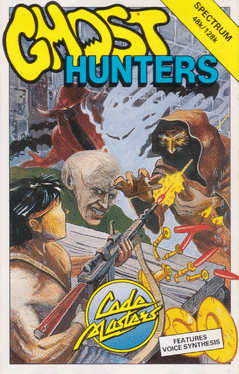
Ghost Hunters is an action game written by the Oliver twins and published by CodemastersThe Tube
1987
Phantom
1987
Phantom
1987
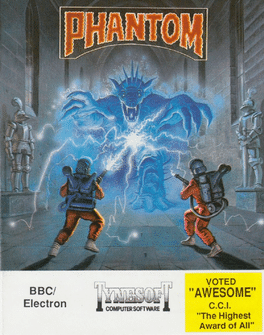
A Gauntlet like action game in which the player is taking the role of an absent minded professor of astrophysics and must destroy ghosts, monsters and transporters that live in the four buildings that the professor has been asked to visit.Frenesis
1987
Invasion
1987
Invasion
1987
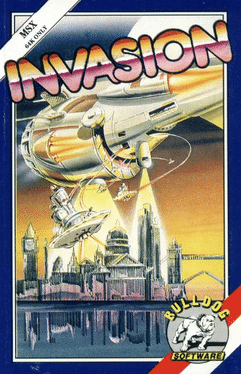
Mobilise your units and prepare for battle. This all action space conflict requires skill, strategy and tactics. You must destroy the weather control station in order to win the battle but every move you make the enemy will counter, and they're waiting for your to make just one fatal slip-up...Red Scorpion
1987
Sceptre of Bagdad
1987
Greyfell
1987
Rabio Lepus
1987
Rabio Lepus
1987
The players move their rabbits left and right in a scrolling scenery of a spaceship, punching and shooting enemies with a laser or carrot missiles. Canned carrots power-up your firepower and punching to defeat the enemies quicker. When a boss enemy has been destroyed, the players move on to the net level.Quarterback
1987
Quarterback
1987
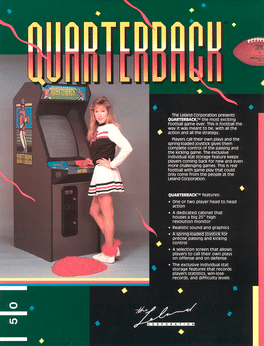
The Leland Corporation presents QUARTERBACK, the most exciting football game ever. This is football the way it was meant to be, with all the action and all the strategy. Players call their owna plays and the spring-loaded joystick gives them complete control of the passing and the kicking game. The exclusive individual stat storage feature keeps players coming back for new and even more challenging games. This is real football with game play that could only come from the people at the Leland Corporation.Final Lap
1987
Final Lap
1987
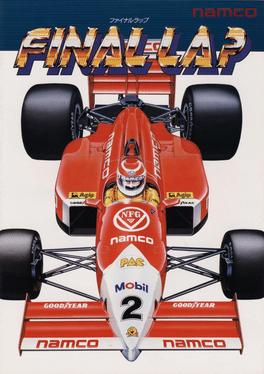
Final Lap is a racing video game produced by Namco,[2] and released by Atari Games for the United States in 1987. It was the first game to run on Namco's then new System 2 hardware, and is a direct successor to Namco's two earlier Pole Position games (1982-1983). Final Lap was the first racing game to allow up to eight players to simultaneously race on the Suzuka Circuit, in a Formula One race. This was, at the time, considered a revolutionary feature and was implemented by linking together up to four two-player sitdown-style arcade cabinets.[2][3] It was also arguably the first racing game to implement "rubber banding" to ensure that less talented players were never too far behind the leader, a concept that would be taken much further by the Mario Kart series.[3] There was also a single player mode, in which the player's score was based on how far the car travelled until time ran out or if the player completed four laps (on default settings; the arcade operator can set the lap number to be as low as three or as hPlump Pop
1987
Milk Race
1987