New Games - Page 13341

Makai Fukkatsu
1987
Makai Fukkatsu
1987
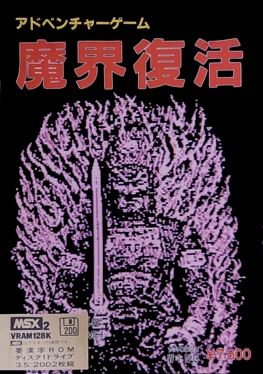
A text-based adventure game developed by Soft Studio Wing released only in Japan. The story begins with the fact that one reporter Akira Kamishiro gets a call from a friend archaeologist - Professor Masunaga. As it turns out, with archaeological research has been stolen valuable artifact - "Divine Stone". At the same time in the nearby village disappears abbot of the local Buddhist temple. Trying to understand what happened, Kamishiro and Masunaga are involved in the chain of mystical events.Fuuun Shaolin Kyo
1987
Fuuun Shaolin Kyo
1987
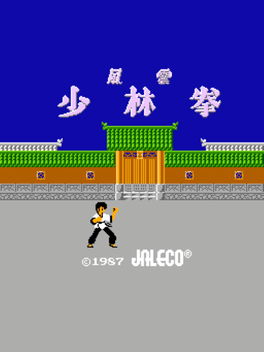
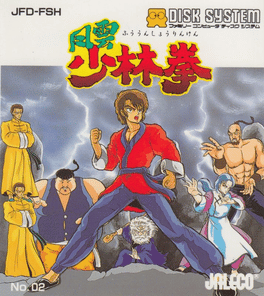
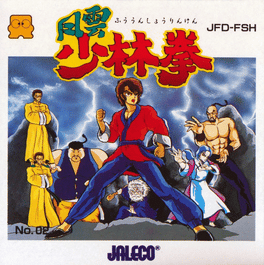
An early fighting game from Jaleco, developed for the Famicom Disk System in 1987.Fuuun Shaolin Ken
1987
Fuuun Shaolin Ken
1987
Fuuun Shaolin Ken is a kung fu fighting game set in ancient China. The player stars as a lone martial artist who sets out in a fighting tournament to defeat thirteen unique masters of their particular martial arts styles. After the first thirteen are defeated, the player will have the chance to fight thirteen more masters but the difficulty of the matches are increased.Fuuun Shourin Ken
1987
Fuuun Shourin Ken
1987
Fuuun Shourin Ken is a 1987 one-on-one fighting game developed and published by Jaleco for the Family Computer Disk System. In 1988, a followup titled Fuuun Shourin Ken: Ankoku no Maou was released, which combined on-on-one fighting gameplay with visual novel cut scenes and choices to determine how the story plays out. This game is commonly mistaken as "Fuuun Shaolin Kyo" throughout the internet. This is not the correct pronunciation of the title in Japanese.Nekketsu Renegade Kunio-kun
1987
Nekketsu Renegade Kunio-kun is the home console port of Nekketsu Kouha Kunio-kun for the Family Computer. The game was first released as Nekketsu Kouha Kunio-kun, but has since been localized under the new title of Nekketsu Renegade Kunio-kun.Hokuto no Ken Part-2
1987
Hokuto no Ken Part-2
1987
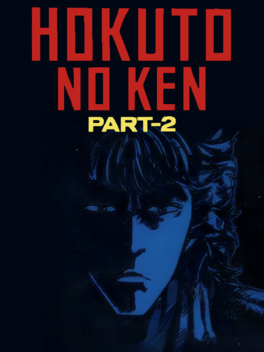
Hokuto no Ken 2: Seikimatsu Kyuuseishu Densetsu is a side-scrolling action game for the Family Computer released by Toei Animation on April 17, 1987. It served as a tie-in to the anime series of the same name, being released a few days after the airing of its fifth episode. A version for the Nintendo Entertainment System was released by Taxan in North America under the title of Fist of the North Star on April 1989, making it the earliest Hokuto no Ken tie-in product released outside Japan. Before release, the NES version was shown in the Summer Consumer Electronics Show in 1988 under the title of Ken the Great Bear Fist, Toei's proposed localized title for the series. Because the game was produced at the same time as the Hokuto no Ken 2 anime series entered production, certain plot details differ from both, the manga and anime. Most notably, the renegade Gento Kō Ken masters from the anime, Taiga and Boltz, co-exists as enemy characters alongside Jakō's sons from the manga, Jask and Sheeno, while Bronza, a charaRygar
1987
Rygar
1987
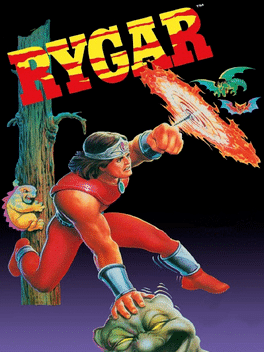
star 7.2An open-world action-adventure game for the Nintendo Entertainment System that features a barbarian warrior with a distinctive "diskarmor" weapon. It is distinct from the original 1986 Arcade game Rygar, which saw numerous home console ports.Morita Kazuo no Shogi
1987
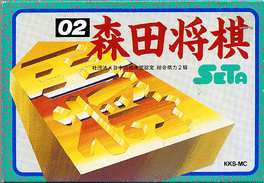
A Famicom Shogi game developed by Random House and published by Seta. Morita Kazuo no Shogi ("Kazuo Morita's Shogi") is a Shogi game from Random House. The game's namesake, Kazuo Morita, is a famous Japanese Shogi player that had previously been attached to several Shogi games prior to this one. Furthermore, Random House (not to be confused with the famous book publisher) is his development company. As well as playing regular Shogi against an AI opponent, the player has a few options regarding the set-up of the pieces. There is a mode where they place all the tiles on the board themselves, in case they wish to continue an existing game or maybe replay a famous match at its turning point.Higemaru Makaijima: Nanatsu no Shima Daibouken
1987
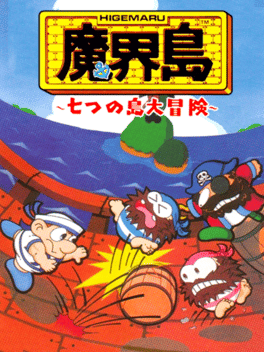
Higemaru Makaijima (魔界島 七つの島大冒険 Makaijima Nanatsu no Shima Daibōken?, lit. Hell Island: Great Adventure of 7 Islands) is an action-adventure game developed for the Famicom and MSX home computer, and released by Capcom in 1987. It is a sequel to a 1984 arcade game developed by Capcom known as Pirate Ship Higemaru. Neither the arcade game, nor this adventure adaptation were released outside Japan, although a prototype exists for a canceled North American NES release, where it was to be renamed "Makai Island". In Higemaru Makaijima, the hero from Pirate Ship Higemaru named Momotaru must now pilot his own sailing vessel around the ocean surrounding seven islands. His goal is to find the greatest treasure. To do this, he must collect the keys which open the dock gates to each of the islands by invading several pirate ships and defeating the captain on board in combat. The gameplay on these pirate ships are taken directly from the arcade predecessor, with some small modifications. Once Momotaru hasIgo: Kyuu Roban Taikyoku
1987
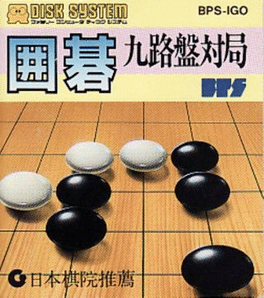
A Japan-only Go game developed and published by Bullet-Proof Software for the Famicom Disk System. Igo: Kyuu Roban Taikyoku ("Go: 9 Row Grid Boardgame") is a Go video game that was originally released for the Famicom Disk System on August 11, 1987 in Japan. It was the first Famicom game developed by Bullet-Proof Software: a development studio operating out of Hawaii that would later be responsible for Nintendo's version of Tetris, among other games. This version of Go is better suited for beginners, as it contains simpler 9x9 grids rather than the regulation 19x19. Igo: Kyuu Roban Taikyoku has a credit for Edge Computing on its title screen; it is assumed some of the game's coding was taken from Edge's C64 game Micro Go.Exzisus
1987
Exzisus
1987
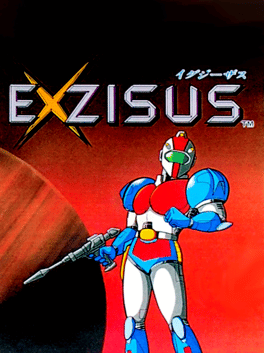
Exzisus was produced by Taito in 1987. Taito released 403 different machines in our database under this trade name, starting in 1967. Other machines made by Taito during the time period Exzisus was produced include Arkanoid - Revenge Of Doh, Double Dragon, Dr. Toppel Tankentai, Flying Shark, Hishou Same, Great Gurianos, Inspiration Baseball, Tokio, Storming Party, and Soldier Of Light.Rush'n Attack
1987
Rush'n Attack
1987
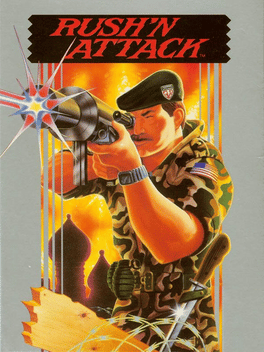
star 7.9The NES port of Rush'n Attack, a run & gun shooter by Konami, also known by the title Green Beret, in which the player takes the role of a soldier infiltrating a military base.Relics: Ankoku Yousai
1987
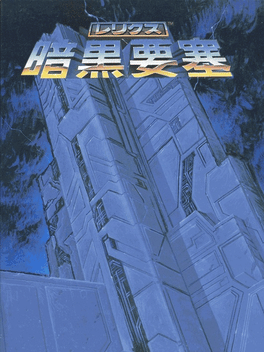
At some point in the early history of earth, the forces of darkness known as HELL were at war with the forces of light known as HEAVEN, and the took this battle to our planet. The HELL forces quickly enslaved human beings, and the earth was cast in darkness and despair. Somewhere on the planet, a fortress was built to harness the power of the sun in order to defeat the forces of HELL, should they ever come to our planet, but it fell into ruin after centuries of neglect. The Shining Princess of HEAVEN was captured and imprisoned on the top floor of this fortress. Also inside are the spirits of the Holy Warriors of Light who have the power to defeat the forces of HELL. However, they are asleep and unable to awaken. Earth's only hope is you, a being who has sacrificed his body in order to inhabit the fallen bodies of the departed. To succeed, you must use each body to obtain the key words which are found in, and used to open, the dungeons of the fortress.Cocona World
1987
Cocona World
1987
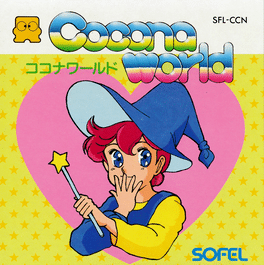
You control a young witch who wanders throughout various parts of the kingdom. There are many animal inhabitants to interact with, some of which are good and some of which are evil. There are also a number of activities to perform and mini-games to play. Over time, the witch will request that certain activities be performed. If they are not performed within a certain time period, the player receives a penalty. Over time, the character's mood and strength will drop. If both of these are never restored and drop to zero, the game is over. This game was only released in Japan, and has never been translated into English.Hi no Tori: Houou-hen
1987
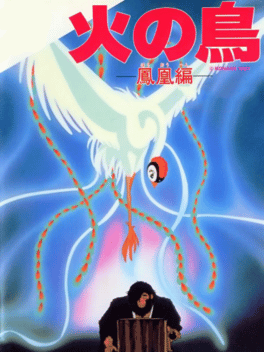
Phoenix is about reincarnation. Each story generally involves a search for immortality, embodied by the blood of the eponymous bird of fire, which, as drawn by Tezuka, resembles the Fenghuang. The blood is believed to grant eternal life, but immortality in Phoenix is either unobtainable or a terrible curse, whereas Buddhist-style reincarnation is presented as the natural path of life. Hi no Tori is an Action game, developed and published by Konami, which was released in Japan in 1987.Super Hang-On
1987
Super Hang-On
1987
Arcade Sharp X68000 PlayStation 3 Commodore C64/128/MAX ZX Spectrum Wii Sega Mega Drive/Genesis Atari ST/STE Mac DOS Amiga Amstrad CPCstar 7.4Super Hang-On is a 1987 motorcycle racing arcade game by Sega, and the sequel to the acclaimed Hang-On. A version of this game, in the full simulated-motorcycle cabinet used by the original Hang-On, was released in 1991 as Limited Edition Hang-On. It was also released for the Sega Mega Drive, Commodore Amiga, Atari ST, Macintosh, ZX Spectrum, Amstrad CPC and Commodore 64 in 1989. Super Hang-On was also released for the Sharp X68000 computer in Japan. The game also appeared on several Mega Drive compilations, namely Mega Games I (bundled with the console as Mega Drive Magnum Set), and Sega Genesis Six Pack. The arcade version was released on the Wii Virtual Console in Japan on September 14, 2010 and later for the other regions on May 3, 2012. A stereoscopic 3D version was released for the Nintendo 3DS eShop in Japan on March 27, 2013 and in North America and Europe on November 28, 2013.Marchen Veil
1987
Marchen Veil
1987
The king of the Country of Forest in Felix sent out a proclamation all throughout Felix announcing that he was seeking a suitable young man to take his beloved daughter as a bride. Many suitors responded and were subsequently put through a large variety of trials by the king. In the end, the decision was narrowed down to two suitors. One was the prince of the Country of Lakes in Felix, and the other was a wizard who had used his powers to transform himself into a handsome young man. The princess' heart was set upon the prince of the Country of Lakes, and the two proclaimed their love for one another with an oath. However, after learning about this, the wizard transformed himself into the shape of the prince in order to take the princess for himself. He placed a curse upon the prince and transported him far from Felix, to the other end of the world.Apple Town Monogatari: Little Computer People
1987
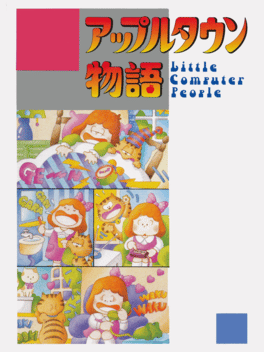
A version of Little Computer People for Nintendo's Family Computer Disk System version, published in Japan by DOG (a subsidiary of Square). Based on the original game by Activision. Unlike previous versions of Little Computer People, the playable character is a girl wearing a pink dress and bow in her hair. The rooms of the house are also in a different configuration, featuring an outdoor balcony on the top floor. When the game is first played, a name for the character is chosen at random from a preprogrammed list. There are no winning conditions on this game you basically watch and interact with the girl in various ways. However, Apple Town Story lacks many of the features found in other versions of Little Computer People.Combat School
1987
Combat School
1987
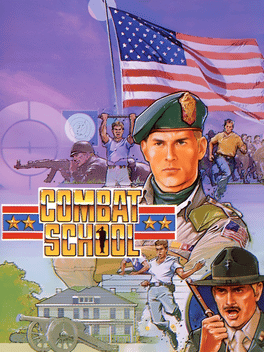
star 6.9Combat School, is a 1987 arcade game produced by Konami where the player takes control of a military recruit who is undergoing basic training at a United States Marine Corps Recruit Training also known as a Boot Camp.Profanation
1987
Profanation
1987
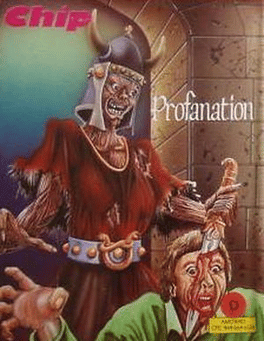
Profanation is an action game, where the player controls a fearless adventurer on his way to the mystical doors leading to hell. Entering a devilish castle with his only friend, a superb rifle, the adventurer should find a door on the level, collecting the treasures and eliminating their guardians such as bats, blobs of slime, zombies, insects and giant flies. The found door transfers the adventurer to the next level. When the adventurer is collided with an enemy, he is transferred to the most recent stored position on the level without one of his lives. Losing all the lives leads to the end of the game.