New Commodore C64 128 Max Games - Page 203

Worms United
1996
Zong
1996
Zong
1996
The most super-amazing Arkanoid-like game on EITHER side of the Andromeda cluster! Great 256-color VGA graphics with true shadows and a hundred full-screen backgrounds! 8-channel digital sound and music with any Sound Blaster compatible card.War 3010: The Revolution
1996
An alien race named Kyllen has enslaved humanity. On the planet Joyec, rebels managed to take the Kyllen by surprise and seize one of their battle fleets. The player must now guide their efforts in trying to throw over the Kyllen. War 3010 is a turn-based strategy game in which players move spaceships over a grid-map. There are different types of ships, such as Fighters, Marauders or Destroyers, that differ in movement range and weapon power. Weapon power is also divided into long and short range, i.e. a ship that is very good at long range combat may have poor close ranged weapons etc. During combat, the following actions can be chosen from a menu: Movement, Attacking, terrain information, unit information, a map of the battlefield, overview of all units, including those of the enemy; and an option to scout planets for technology. When an attacking unit is within range of an attacked unit, the attacked unit will always counter-attack (if it isn't destroyed first). In later missions it becomes possible to scout plStars!
1996
Nobunaga's Ambition: Tenshouki with Power Up Kit
1995
Nobunaga's Ambition: Tenshouki with Power Up Kit is an expanded version of the historical strategy game Nobunaga no Yabou: Tenshouki, where players attempt to unify Japan during the Sengoku period. This edition adds new scenarios, additional officers, gameplay events, AI improvements, and in-game editing features that expand the strategic options available in the original release.Godzilla: The Atomar Nightmare
1995
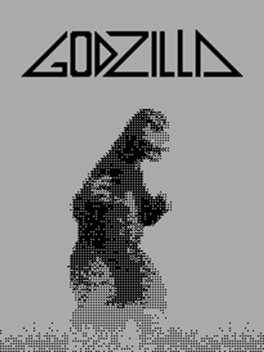
Godzilla: The Atomar Nightmare is a 1995 strategy video game for the Sinclair ZX Spectrum developed by Leszek Daniel of the Austrian game development studio Tiger's Claw.Claim to Power: Der Machtkampf
1995
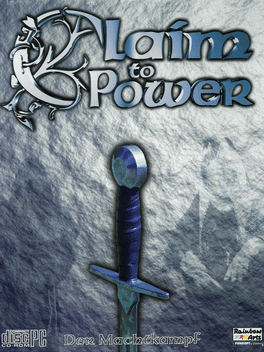
A strategy game, taking place in the Middle Ages, that similar to the classic board game Risk.Space Marines
1995
Worms
1995
Worms
1995
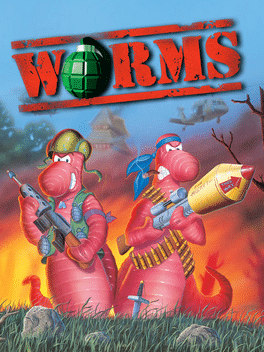
Worms combines the best elements from the very best games ever created. It requires great thought, strategy and elements of sheer outrageous fortune. It provides the players with an almost infinite range of playing possibilities. It does take a little while to get into the swing of things however and despite everyone’s insistence that you should not need to read a game manual to be able to play it. Worms can be played by 1-16 players at the same time - it’s a turn based game so you`ll only need one machine - but prepare to be at odds with your loved ones, get ready to shout abuse at your best friend and be willing to exact unadulterated terror on those who plot to hurt your worms.Proliferation
1995
Proliferation
1995
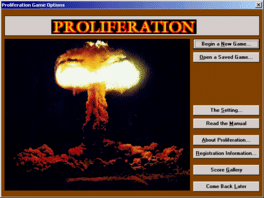
Proliferation is a formerly-shareware World War III strategy game for up to six players, human- or computer-controlled. Nuclear weapons, both tactical and strategic, have proliferated throughout the nations of the world, and the five largest nuclear powers, after failed efforts to militarily compel the smaller nuclear-armed nations to disarm, have plunged the world into global war. You take the role of one of the five major nuclear powers, seeking to extend your sphere of influence and eventually become the dominant power.Silent Steel
1995
Silent Steel
1995
Silent Steel is a full-motion video submarine game with a branching storyline where players choose from one of several dialogue options, leading to different plots and outcomes.The Doonesbury Election Game Campaign '96
1995
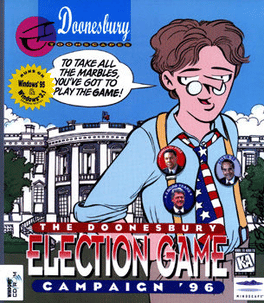
Manage a presidential campaign in the 1996 election in "the most comprehensive and challenging election strategy game ever designed." Pair such unlikely opponents as George Wallace and Shirley Chisholm, or the actual matchup of Bob Dole, Ross Perot and Bill Clinton. Even choose candidates from the past like JFK -- 60 different candidates at your disposal. Staff your campaign with such Doonesbury characters as Zonker, Duke, Lacey or even Mike.The Civil War
1995
The Civil War
1995
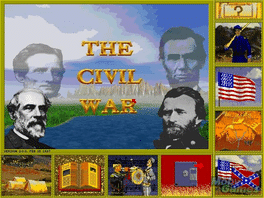
This old-school turn-based strategy game covers the American Civil War from the years 1861 to 1865. Play as the North or South, and take over a certain amount of cities of the opposing side before the war ends.Bubble Crack
1995
This Means War!
1995
This Means War!
1995
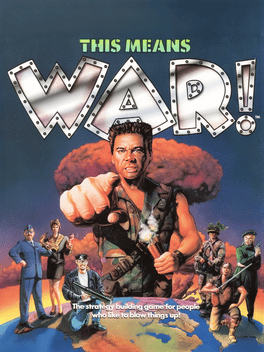
This Means War! is a post-apocalyptic real-time strategy game where players command UN forces in a world devastated by a virus that destroyed most computer technology. As the UN's primary strategist, you manage resources and armies while battling over remaining technological assets across the wasteland. The campaign features diverse adversaries including a religious extremist, an Australian survivalist, and an aristocratic opponent, each presenting unique strategic challenges as you fight to control the scarce technology and territory in this dystopian setting.OOG: The Object Orientation Game
1995
This is a computer version of Tangram. Tangram is an ancient Chinese puzzle with just a few geometric shapes (to be exact, one square, one parallelogram and five triangles of varied sizes). Move and rotate these pieces to build a goal shape (squares, polygons, profiles,...). The program has dozens of pre-made goals, but you can create and save your own. If you are stuck, the program can help you by placing a piece of your choice in the correct position.Warlords II Deluxe
1995
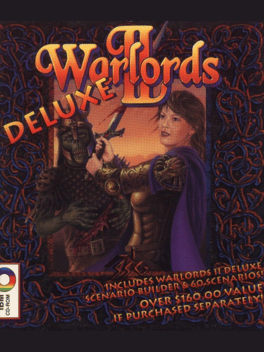
Warlords II Deluxe
1995
Warlords II Deluxe is an eight player game of conquest and empire. Different worlds are provided as a stage for your ambitions, and as a test of your capabilities. In the quest for final victory, you will assemble vast armies, conquer and loot mighty cities, undertake perilous quests, make and break alliances and wield magical artifacts of great power. Warlords II Deluxe is a sequel to the best selling Warlords II and boasts a wide range of additions and improvements. As well as the game itself, Warlords II Deluxe contains an improved version of the Warlords II Scenario Builder and a number of new scenarios.Space Empires II
1995
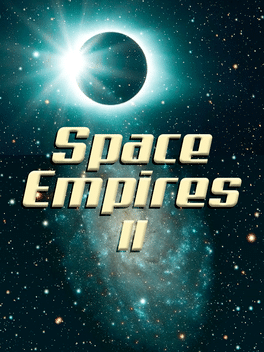
Space Empires II
1995
Explore the galaxy, discover and colonize new planets to acquire enough resources. Design your ships, choosing from different hulls, weapons, shields, and several devices. Once you advance with technologies, new systems will be available, and you will have to update your designs.