New Commodore C64 128 Max Games - Page 205

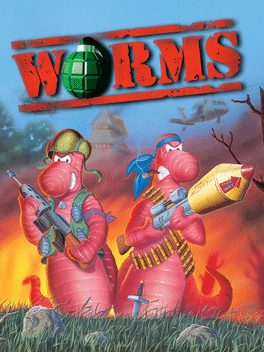
Worms
1995
Worms
1995
Amiga CD32 PlayStation 4 Super Nintendo Entertainment System Sega Mega Drive/Genesis PC (Microsoft Windows) PlayStation 5 Mac DOS Amiga Atari Jaguar Sega Saturn PlayStation PlayStation Portablestar 7.7Worms is a turn-based strategy game that combines tactical decision-making with elements of randomness. Players control teams of worms and take turns using a wide range of weapons and tools to defeat opposing teams, resulting in varied gameplay outcomes. The game offers numerous possible strategies and scenarios, contributing to high replayability. While the basic mechanics are simple, players may require some time to become familiar with controls, weapons, and tactics. Worms supports both single-player and multiplayer modes. Team17 planned on producing Worms for the Virtual Boy back in 1995. Though after a few weeks, they cancelled this plan due to the lack of interest of the publisher and the expected failure of the Virtual Boy.Romance of the Three Kingdoms IV: Wall of Fire
1995
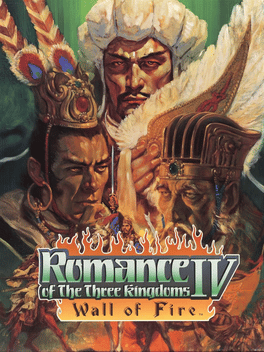
Romance of the Three Kingdoms IV: Wall of Fire (Sangokushi IV in Japan) is the fourth game in Koei's Romance of the Three Kingdoms series. Wall of Fire was the first game for the Playstation & Saturn consoles and the last in the series to be released on PC in the U.S. until Romance of the Three Kingdoms XI.Shin SD Sengokuden: Daishogun Retsuden
1995
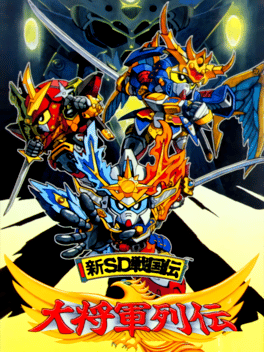
A turn-based strategy game based on Shin SD Sengokuden, an anime spin-off of an anime spin-off.Shin SD Sengoku-den: Daishogun Retsuden
1995
Shin SD Sengoku-den: Daishogun Retsuden is a Strategy game, developed and published by Bec, which was released in Japan in 1995.Konpeki no Kantai
1995
Konpeki no Kantai
1995
Konpeki no Kantai is a Strategy game, developed by Access and published by Angel (Bandai), which was released in Japan in 1995.SD Gundam Winner's History
1995
SD Gundam Winner's History is a turn-based strategy game, with some action elements, part of Gundam franchise. Player controls a small army of robots and fights against enemy's army. Battles take place in various environments: space, atmosphere or planet's surface. Player has to occupy specific points and factories. These produce new work and larger space ships. Battle between robots is a duel 1:1 - robot can operate automatically or be manually controlled. Larger space ships can bombard enemy from safe place. Game has campaign, player can play on single map, and against other player.Solid Force
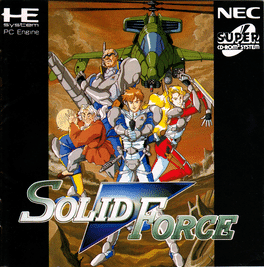
1995
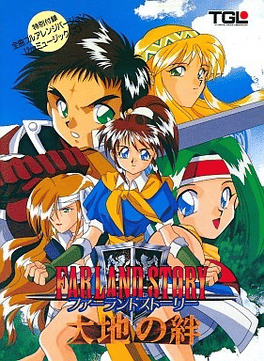
Farland Story: Daichi no Kizuna
1995
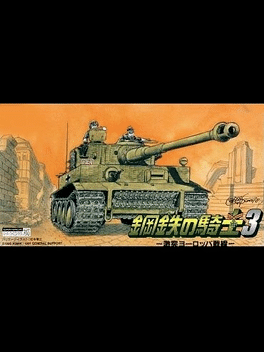
This Farland Story game (chronologically the fifth in the main series) tells a story which is not directly connected to the adventures of Arc and his friends (told in the first three games). In this game, you control Kushna, the 17-year-old princess of Sardis. Two important people wish to marry her: the young Shacliff, prince of the neighbor kingdom Rulphan, and the count Geruda. However, the princess feels she is too young to marry anybody, and escapes the castle, dreaming to find a quiet place where she could practice martial arts. The situation changes somewhat when she accidentally meets prince Shacliff himself and discovers he is in fact quite a nice fellow. And meanwhile, horde of monsters invaded the castle, and there are rumors about a rebellion... Although it has a completely different story line, this Farland Story game plays and feels exactly like its predecessors. Once again, you control a party which you can freely move on the battle terrain in turn-based mode. You first assign commands to all your paKoutetsu no Kishi 3: Gekitotsu Europe Sensen
1995
Koutetsu no Kishi 3: Gekitotsu Europe Sensen is a Strategy game, developed by Dual and published by Asmik Ace Entertainment, Inc, which was released in Japan in 1995.Kidou Senshi Gundam: Cross Dimension 0079
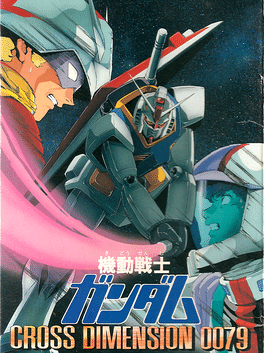
1995
An isometric strategy game published by Bandai in 1995, it depicts events from the early Mobile Suit Gundam fiction from the perspective of Amuro Ray before switching to a secondary set of characters midway through.Go! Go! Mile Smile
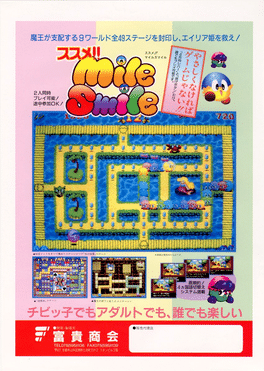
1995
Go! Go! Mile Smile
1995
You are trying to collect the treasures from a maze. You can move safely around the perimeter but when you go into the maze you leave your egg. To return quickly to your egg, push the button.War 2410
1995
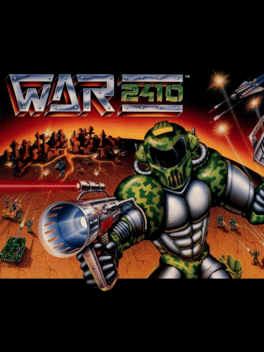
War 2410
1995
In the year 2003 geneticists tried to create the perfect soldier. Something went wrong however, and three new life forms turned against their creators: Brutally savage Orcs, cybernetic androids called Cromes and genetically enhanced human soldiers code named M.A.R.S. Players take control of a secretly assembled force and must try to restore order. War 2410 is a turn-based strategy game in which players move various units, such as mechs, tanks, troops or planes over a grid-map. Units differ in movement and attacking range. Some ground units cannot attack air units and vice versa. Terrain also affects combat as some types of terrain, like trees or buildings improve a units defense. Attacked units always counterattack as long as the attacker is within range. The goal of most missions is to destroy all enemy units, while it is sometimes necessary to capture the enemies' bases. Units cannot not be improved or modified and every mission starts with all units already in place.Advanced Civilization
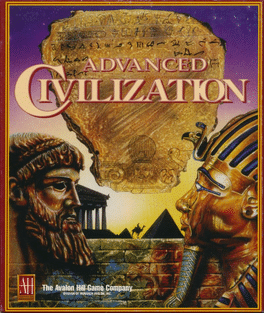
1995
Advanced Civilization is a game of skill for two to seven players. It covers the development of ancient civilizations from the invention of agriculture circa 8000 B.C. to the emergence of Rome around the middle of the third century B.C. Each player leads a nation of peoples over a mapboard of the Eastern Mediterranean and Near East as they attempt to carve a niche for themselves and their culture.Lemmings 2: The Tribes
1994
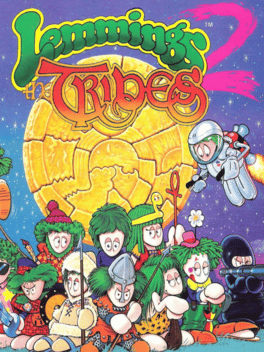
The Game Boy Port of Lemmings 2: The Tribes is a major downgrade due to the much less powerful hardware, and the support of only a d-pad makes controlling this game a challenge. The graphics are much worse and the view is much smaller. The music also gets rescored for the game boy soundchip which only supports basic chiptunes.Desert Trek
1994
Desert Trek
1994
The sequel to Camel. Can you make it across the entire desert, keeping one step ahead of the cannibals?Tetris
1994
Tetris
1994
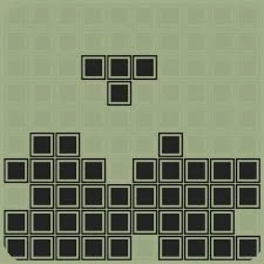
A Tetris clone released built-in the Hagenuk MT-2000, a mobile phone from Denmark released in 1994. The objective of the game is to use the pieces to create as many horizontal lines of blocks as possible. When a line is completed, it disappears, and the blocks placed above fall one rank.Millennium Auction
1994
Millennium Auction
1994
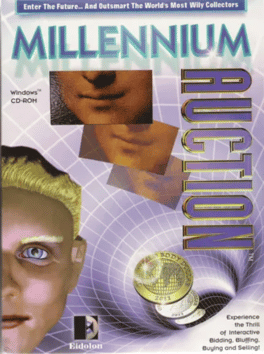
Welcome to the best auction game around. Millennium Auction pits you against a group of bidders all trying to get the best deals without buying something that has no resale value. After picking your character, you proceed to your first auction. Take the time to examine what items will be in the auction (you can see what everything looks like and read about the items as well) and then do some research. Talk with the other bidders to see what they like or don't like. Check the newspaper, radio, and more as you see what items might be worth something when trying to sell them later. Is it worth getting Bill Clinton's Saxophone? Will you be able to make a profit on it if you bid on it? Your research will help you make that decision. Items available to bid on in the game include many real items such as the Mona Lisa and Starry Night paintings as well as fake items that can still be worth something in this game.Romance of the Three Kingdoms IV with Power Up Kit
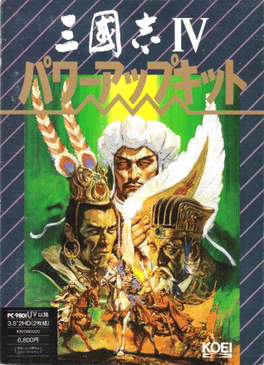
1994
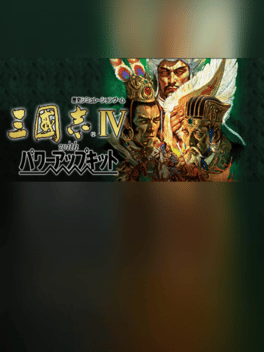
"Romance of the Three Kingdoms Ⅳ with Power Up Kit" was released in 1994 as an expansion to the 4th release in the series. About 450 officers appear in the game and "Frontier Tribes" have been added as a diplomatic element. In battle, in addition to the standard field and castle battles, we also include final battles inside the castles and large weapons like chariots and catapults.