New Hack And Slash Beat Em Up Games - Page 30

Hakai-ou: King of Crusher
1998
You are a Japanese salary man, normal in every way... except that you've just been bitten by an evil space insect, turning you from a regular man into a rage-fueled monster. Destroy anything you can to fill your dopamine gauge, and reach the end of the stage to continue your transformation from a normal human into an enormous kaijuu monster, all the while avoiding the police and the military trying to stop you.Legend
1998
Eojjeonji Joeun Iri Saenggil Geot Gateun Jeonyeok
1997
Eojjeonji Joheun Il-i Saenggil Geot Gateun Jeonyeok (which roughly translates to "A Night Where Good Things Are Bound to Happen") is a Korean-made beat-em-up based on the comic book by Myung Jin Lee. The protagonist of the game is a rebellious teenager named Namgoong Gunn. On the way to his new school, where he hopes to forget his rather violent past, he spots a beautiful girl, and immediately afterwards his wallet gets stolen. Following the thief, Gunn gets involved in a struggle against a powerful criminal syndicate.Dark Judgement
1997
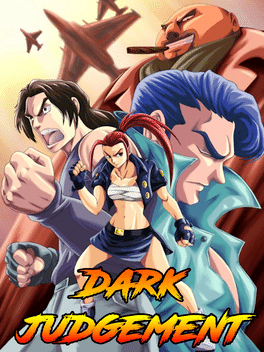
Dark Judgement
1997
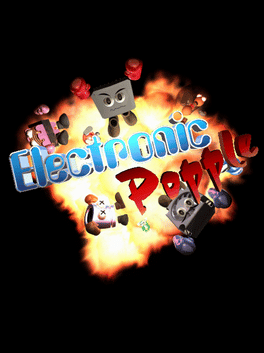
Dark Judgment is a classic "me against the neighborhood" video game for your PC! If you enjoyed the beat 'em up of the 90s, surely you have a good time playing it.Electronic Popple
1997
Crows: The Battle Action For Sega Saturn
1997
Crows: The Battle Action is a beat-'em-up for the Sega Saturn. It is a 2D beat-'em-up based on the Crows manga series, where characters have super-deformed heads. Published by Athena Co., it appears at first glance heavily inspired by Technos ' own hot-blooded Kunio/Nekketsu beat-'em-ups, going for River City Ransom 's fighting style and super-deformed looks in particular. As it turns out, it's no coincidence; a look at the credits reveals that quite a few former Technos employees worked on it, including executive producer Teruo Ishikawa, the composers, and about half the graphics team. Most notably, the person in charge of the visuals was Kouji Ogata.MageSlayer
1997
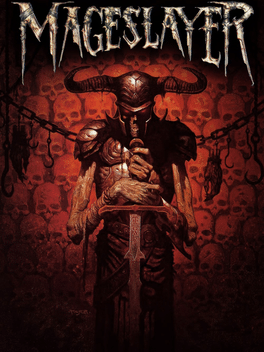
MageSlayer
1997
A millennium has passed since the stronger Mageslayer clans betrayed Lord Thane and the Clan of Knowledge. Now Lord Thane is ready to take revenge on the clans that refused to help him against the mages. He's gathered the relics of the StarStone and placed them under the protection of his minions. But his enemies have joined forces and sent the best warrior of each of the four remaining clans to fight back. In this top-down 3D action game you play the role of any of the warriors chosen among the remaining clans.Panzer Bandit
1997
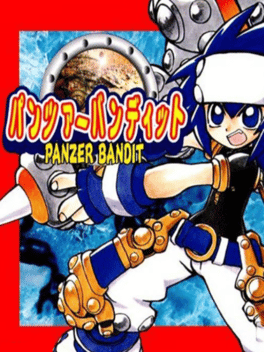
Panzer Bandit
1997
Full of magic and mecha fighting action takes place in a different world turns. Set in 2D with depth of field, with a comical action Ri Gemasu melee battle finishing moves and colorful quirky characters who are in disarray. In addition to story mode, and up to four people can play simultaneously mode also comes with VS.Fantastic Four
1997
Fantastic Four
1997
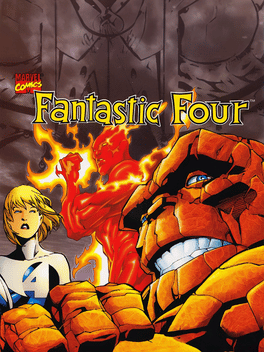
The Fantastic Four video game, released in 1997 for the PlayStation, is a beat 'em-up action game based on the Marvel Comics superhero team. Developed by Probe Entertainment and published by Acclaim Entertainment, the game features playable characters Mr. Fantastic, The Invisible Woman, The Human Torch, The Thing, and She-Hulk, each with unique abilities. A version for the Sega Saturn was planned but ultimately cancelled. Players engage in combat, solve puzzles, and navigate obstacles across various levels, drawing from the rich lore of the Fantastic Four comics.Mad Stalker: Full Metal Force
1997
Mad Stalker: Full Metal Force is a PS1 remake of Mad Stalker: Full Metal Forth. It adapts the system so it’s closer to Panzer Bandit, also released by Fill-In Cafe in the same year. With the revamped controls, the action is much, much smoother. Like Panzer Bandit, there’s an auto guard when the controls are left in neutral, and you can also deflect enemy attacks by hitting them at the same time. Dashing and boost jumping have been assigned their own separate buttons, too. A few other things have been added as well, like an “overdrive” power gauge that can be discharged for more powerful maneuvers. Enemies also regularly drop health restoratives, whereas the previous versions only provided them at certain points in the stages. The sprites here are all the same, but the backgrounds are now 3D, and look entirely different. Despite the visual makeover, however, the stages and bosses are all still pretty similar. The music has been rearranged, though, with some tracks taken from a Mad Stalker soundtrack album rMobile Suit Z Gundam: Zenpen Zeta no Kodou
1997
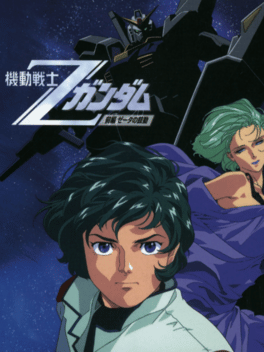
A 2D side scrolling action game set in the Mobile Suit Gundam Zeta universe.The Great Battle VI
1997
The Great Battle VI
1997
The Great Battle VI is an entry in Banpresto’s Compati Hero series, a crossover action game title involving the characters from Kamen Rider, Ultraman, and Mobile Suit Gundam.The Incredible Hulk: The Pantheon Saga
1997
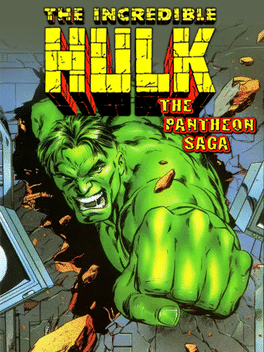
star 3True to the comic books, the Hulk relies on no other weapons than his massive muscles to punch, kick and crush his enemies. When he has accumulated enough gamma energy, he may use powerful special moves like a Vortex Spin or the Floor Hammer. Rare bonus items also allow the Hulk to summon one of the four Pantheon team members Atalanta, Ulysses, Ajax and Hector to assist in the thick of battle.Schbibinman Zero: Shockman Zero
1997
A Super Famicom game in the Schbibinman/Shockman series, first released as a (view-limited) downloadable game via the Broadcast Satellaview satellite service in Japan and later re-released in cartridge format, many years after the Super Famicom lifespan, in 2017. In 2024, the game was announced for an European and American release, published by Retro-bit, with an all-new official English translation for the first time.The Crow: City of Angels
1997
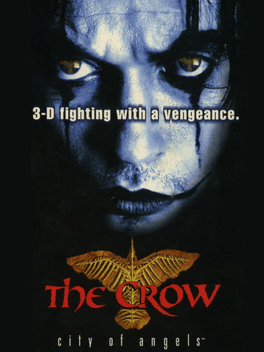
star 1.9The Crow: City of Angels is a 3D fighting game in which the player wanders from screen to screen, fighting everybody they come across with a wide variety of kicks and punches that vary based on your proximity to your foe. There is also a large range of weapons including pistols, shotguns, knives, pool cues, pipes and steel drums.Water Margin: The Tales of Clouds and Winds
1996
A light shines from the depths of the earth; heavenly spirits and earthly fiends arise. The blood of the people runs cold, and heroes tremble in fear. Vengeful forces seek to destroy the heroic outlaws of Mount Liang. A tale of immortal deeds now begins, let all listen and take heed. Water Margin: A Tale of Clouds and Wind is a Sega Genesis Beat'em up which was first exclusively available only in China, Taiwan and Hong Kong markets mostly, during the late 90's, being recently re-released for Genesis and Windows by Piko Interactive.DragonHeart
1996
DragonHeart
1996
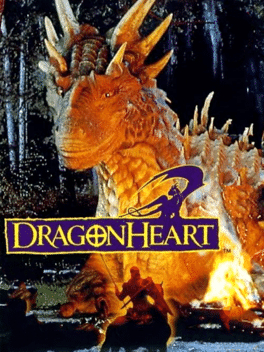
star 5.7Dragonheart is based on the 1996 fantasy film of the same name. The player controls Bowen the dragon slayer, through eight levels fighting many dragons and encountering characters from the film, such as Gilbert, Kara and King Einon. The exploration is presented in a 1st-person-view and the battles are presented in a side-scrolling view. The player can get information about the current quest from peasants that are found in the many villages and houses throughout the game. The battles resort only to two buttons, one to attack and other to defend.Weekend Warrior
1996
Weekend Warrior
1996
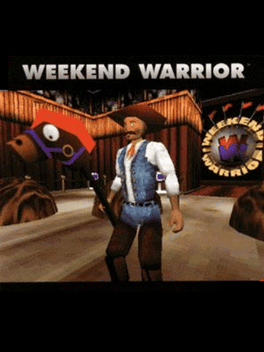
You're a player in the most action packed and intense game show ever aired: Weekend Warrior. All you can do to defend yourself is slug at your opponents with your handy "swing thing."Batman Forever
1996