New Arcade Games - Page 256

Infodroid
1986
Yabba Dabba Doo!
1986
Yabba Dabba Doo!
1986
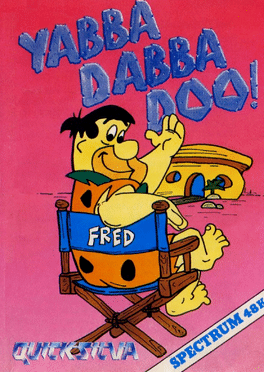
In Yabba Dabba Doo the player has to help Fred win Wilma's heart. To do this he must build a house by collecting rocks and putting them in the right place. There are obstacles to this, small rocks get in the way, turtles bite your ankles and pterodactyls drop rocks on you too. Also while you're away neighbours will pinch bits. Once the house is built, you have to get Fred a car so that he can get to the quarry to work, thus earning enough money to hire a dino crane to put the roof on. Progress is measured by points, these are gained as you build the house, get to work and finally find Wilma.Superman: The Game
1986
Superman: The Game
1986
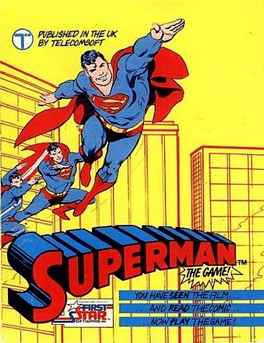
star 2Superman is a video game released for home computers. The plot has Superman going after Darkseid.Trailblazer
1986
Trailblazer
1986
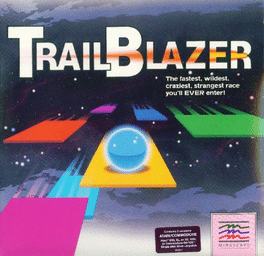
Atari 8-bit Commodore C64/128/MAX ZX Spectrum Atari ST/STE PC (Microsoft Windows) Commodore 16 MSX2 Amstrad CPC MSXstar 7An imaginative action game in which you must guide a ball-shaped craft through a succession of levels. These have a patchwork-quilt type display, with holes to avoid, and squares of various colors, which affect the craft's speed, both within its power potential and into warp, as well as a control-reverser and lots of holes. You can jump and thus avoid these holes, although you have a limited number of them for each level, and it's possible to adjust the speed through joystick or keyboard control. You also face a time limit on each of the levels, although your time is boosted every time you complete one.9 Classic Card & Board Games: No. 1
1986
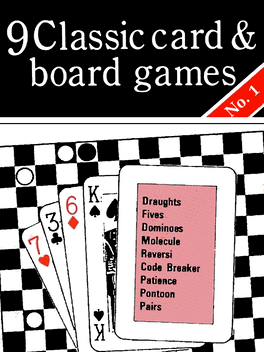
This compilation includes some previously published type-in games. Some of the games were slightly altered. The games included are: – Draughts – Fives – Dominoes – Molecule – Reversi – Code Breaker – Patience – Pontoon – PairsHive
1986
Firestorm
1986
Firestorm
1986
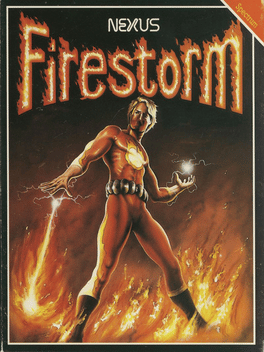
Firestorm is a top-down shooter, but the game requires a bit of thinking. The titular hero is able to create destructive fire-balls, control computer memory banks and move inanimate objects with the power of telekinesis. He must rescue his girlfriend, who is imprisoned in criminal organization's citadel. This citadel is a big maze, and the game has 12 levels.Captain Kelly
1986
Hollywood or Bust
1986
Fungus
1986
Boulder Dash III
1986
Boulder Dash III
1986
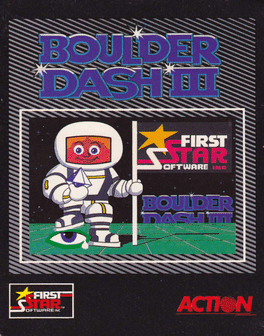
Boulder Dash 3 (1986 – Apple II, C64, Spectrum, PC) – monochrome space-themed graphics and poorly designed levels made this a critical failure.[3]Arkanoid
1986
Arkanoid
1986
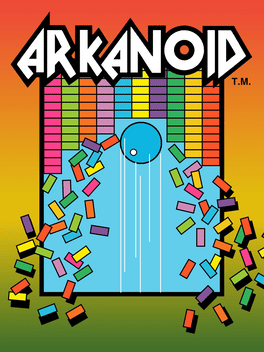
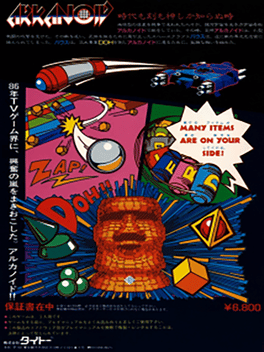
star 8.8NES port of Arkanoid. The original Breakout concept involves controlling a bat at the bottom of the screen and using it to catch and direct a ball so as to hit all the bricks which are arranged at the top of the screen. It was unpopular for over a decade, before Taito revived it with some new ideas in this arcade game. The game's plot redefines the bat as a Vaus spaceship, the ball as an energy bolt, and the bricks form a mysterious wall stopping the ship from progressing to safety. By the mid-80s, power-ups were popular in most types of arcade games, and Arkanoid features them. They are caught by positioning the bat below them as they fall (meaning that you risk missing the ball if you go for them at the wrong time). The power-ups include lasers (which are mounted to each side of the ship and allow you to shoot out the blocks), a catching device (so as to be able to fire the ball off at a different angle every time you hit it) and one that slows the bolt down.Arkanoid
1986
Balloon Fight
1986
Balloon Fight
1986
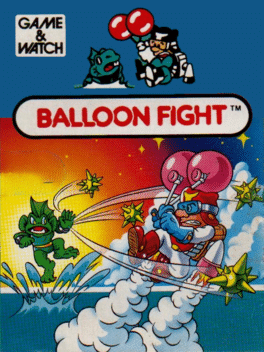
Balloon Fight is a Crystal Screen and New Wide Screen Game & Watch game released in 1986 (CS) and 1988 (NWS). The game is similar to the NES classic Balloon Fight, particularly its Balloon Trip mode. The model number for the Crystal Screen version is BF-803, while the model number for the New Wide Screen version is BF-107. The BF in the model numbers stands for Balloon Fight.Stunt Copter
1986
Ghostbusters
1986
Ghostbusters
1986
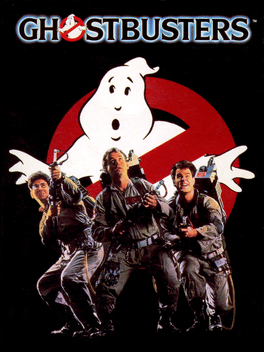
Ghostbusters is an action game that features an overhead-view and a side-view. From Ghostbusters HQ, the player must monitor a map of midtown Manhattan for "ghost alarms", as well as for casual, roaming spirits, and plot a route to the alarmed area. Once the route is plotted, the player then controls the purchased Ghostmobile as it drives through traffic. Here, the player is able to capture casual ghosts on the way if they are en route. When the haunted location is reached, the game switches to a side-view. Two of the Ghostbusters will take position, activate their proton beams, and toss a trap to the ground. The player must then use the two Ghostbusters to attempt to lead the ghost(s) over the placed trap. Once activated, the trap springs to capture any ghosts directly above it. A successful capture will earn the player money, which can then be used to purchase new Ghostbusters vehicles and new modifications for it. An unsuccessful capture will see the ghost fly away (after nastily sliming one of the Ghostbusters)Thin Ice
1986
Thin Ice
1986
You play Duncan the penguin, who enjoys skating on thin ice-- especially around the other penguins. The goal of this game is exactly that; to skate around the other penguins, dunking them into the frigid water while consuming tasty shrimp cocktails (to make him go faster). Duncan has to watch out for the evil seal and polar bear, who both like to bat Duncan about! If you can manage to sink all the penguins, you move onto the next level-- where even more penguins await to be dunked.Climber
1986
Climber
1986
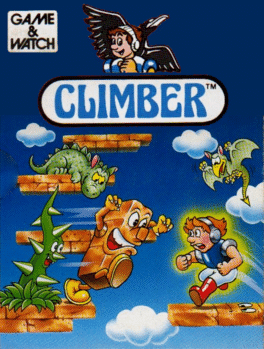
Climber is a Game & Watch video game released in the Crystal Screen format in 1986 and the New Wide Screen format in 1988. The game was never released in Japan, and an estimated 250,000 of the New Wide Screen version were produced by Nintendo. The model number for the Crystal Screen version is DR-802, while the model number for the New Wide Screen game is DR-106. Some speculate that the game is based on the Ice Climber NES game, though this is unconfirmed. In Climber, you are a child known as Climber who, with the help of Lord Meiji's teachings, jumps across platforms trying to get to the top of Block Mountain while avoiding enemies and platforms that move. The enemies are the Blockmen, which walk and turn into block platforms when they reach a gap; Eyerom, birds that fly and get in the Climber's way; and thorny plants, which are obstacles in the way of Climber's movements. In each set of 5 levels, the first 4 ends with a bonus game where Climber has 2 chances to time his jump to catch Hentori, the bonus bird. OnFood Fight
1986
Food Fight
1986
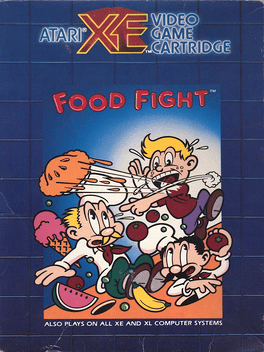
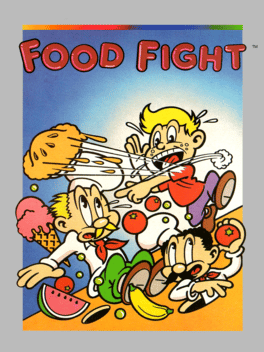
You play as Charley trying to eat an ice cream cone. But first you must avoid the chefs that are out to get you: Angelo, Zorba, Oscar, and Jacques. Avoid the food thrown at you by the chefs to get the cone. You can also throw your own food at the chefs to slow them down.Food Fight
1986
Food Fight
1986
You play as Charley trying to eat an ice cream cone. But first you must avoid the chefs that are out to get you: Angelo, Zorba, Oscar, and Jacques. Avoid the food thrown at you by the chefs to get the cone. You can also throw your own food at the chefs to slow them down.