New Nintendo 64 Games - Page 83

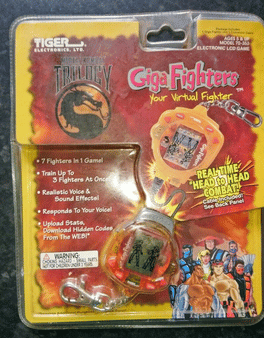
Mortal Kombat Trilogy: Giga Fighters - Your Virtual Fighter
1998
Giga Fighters Mortal Kombat Trilogy is a handheld electronic game.Dragon Ball: Final Bout
1998
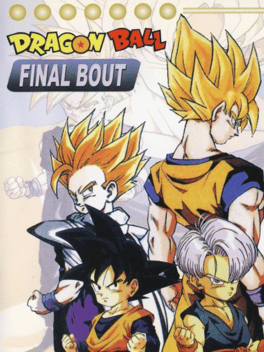
Dragon Ball: Final Bout is an unlicensed fighting game developed for the Sega Mega Drive. A re-release of the game was done two years later in 2000, but it's unknown if this re-release has any difference from the original 1998 release.Net Fighter
1998
Net Fighter
1998
An early online multiplayer fighting game released on SegaSoft's HEAT.net Service, now defunct.Fighters Megamix
1998
Fighters Megamix
1998
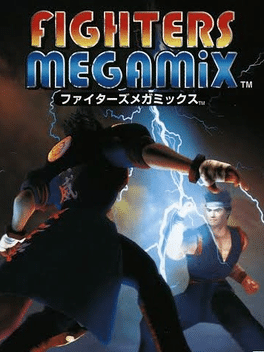
Virtua Fighter 2 was full of many brand new gameplay elements implemented into the realistic fighting engine of the first Virtua Fighter. The Virtua Fighter series has been heralded before as the fighting game with most involving gameplay. In Fighters Megamix, another game has been added, a game called Fighting Vipers. Fighting Vipers has drastically different gameplay than the more popular Virtua Fighter 2. Instead of being sophisticated, Fighting Vipers is simplified to appeal to a wider audience of video gamers and was meant for "casual" gamers. Mixing a simplistic video game and a sophisticated video game must have been difficult. But Fighters Megamix manages to do so by offering many options. The most important option available is the choice of having Fighters Megamix run under the Fighting Vipers style of gameplay or the Virtua Fighter 2 style of gameplay. Other options are unlockable while playing the game. One good thing about mixing two games into one is that the game would include more selectable charaPsychic Force 2012
1998
Psychic Force 2012
1998
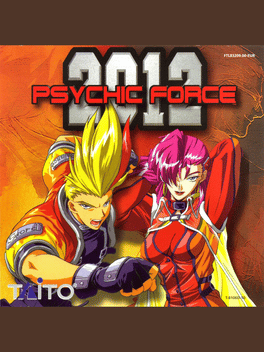
Psychic Force 2012, the sequel to Psychic Force, is a one-on-one fighting game with a twist. The matches take place inside a giant floating cube. You are able to fly, using your psychic abilities, around a 3D arena with six walls. Each of the ten available characters, Might, Regina, Wendy, Emilio, Setsuna, Patty, Gudeath, Genshin, Carlo, and Gates, are controlled with three buttons: guard, weak attack and strong attack. The effect varies with the distance. Next to the regular life meter, there is also a power meter. By using special moves, the meter is drained and your moves are limited. It is possible to recharge, and the capacity of the power meter expands when you lose a lot of health. Additionally, each fighter has its own unique moves, energy attacks and a weapon, which they use, mid-flight, to pummel their opponent. There are three main game modes: training, versus and a story mode using static anime-inspired images and in-engine cut scenes to tell the story. The story centers around two groups of psychics wSmall Soldiers: Globotech Design Lab
1998
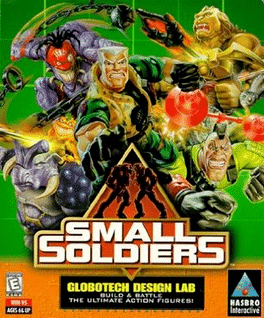
Small Soldiers: Globotech Design Lab is a 1998 PC strategy/action game based on the film Small Soldiers. In it, you can either design and build your own squad of soldiers or choose from pre-built characters. The two teams are the Gorgonites or Commando Elite. You choose specific parts you want your soldiers to have, such as arms and legs. You can also choose what kind of computer chip controls the soldier, what kind of voice they have and what weapons he will carry. After you create your soldiers, you then battle the opposite team. It was published by Hasbro Interactive.Cyber Troopers Virtual-On Oratorio Tangram
1998
star 9.2Cyber Troopers Virtual-On: Oratorio Tangram is the first of three major revisions to Cyber Troopers Virtual-On: Oratorio Tangram, a sequel to Cyber Troopers Virtual-On. M.S.B.S. Ver. 5.2 was released for Sega Model 3 arcade hardware and is thought to have been exlusive to Japan.The Queen of Heart '98
1998
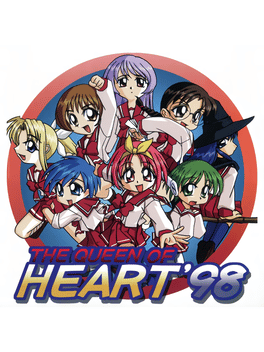
The Queen of Heart '98 is a 2D one-on-one fighting game and the first game in the Queen of Heart series. The player can choose one of 10 female characters and fight against the others. The game features characters from the Leaf visual novel game To Heart. Each girl has her own special moves and unique abilities. It features anime-style graphics and supports multiplayer.Samurai Shodown!
1998
Samurai Shodown!
1998
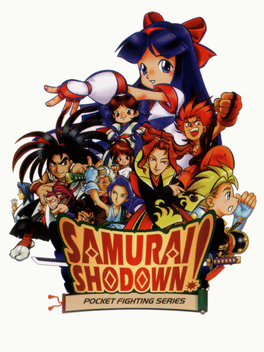
Iza To! En Garde! Dude! Twelve of the mightiest samurai, ninja, knights, and warriors from Japan, France, the United States, and China lock swords in NEO GEO's SAMURAI SHODOWN. With blades, bare knuckles, rage, and various Methods of Mayhem, fight your way to the final battle with Satan's Shogun. Use all powers at your disposal to get a head!The King of Fighters '98: Special Edition
1998
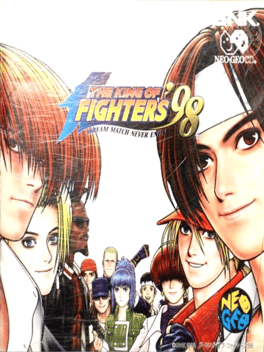
The King of Fighters '98 takes a break from the Orochi plot line and instead is presented as a "Dream Match" game where the KOF roster duke it out for the top spot. Most of the characters from the past four years return, thus providing the player with a very large roster containing 38 characters. Many of the characters have been altered in an attempt to make the game balanced regardless of the player's choice of fighter. Rugal Bernstein is provided as a non-secret character for the first time in KOF '98, and several regular characters have hidden "alternate" versions that may also be used in-game.Mobile Suit Gundam: Char's Counterattack
1998
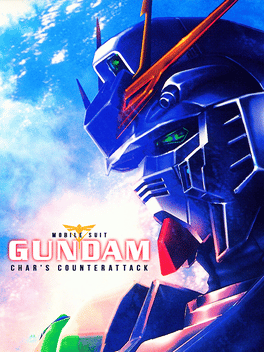
Action video game published by Bandai in 1998, for the PlayStation. Released as part of the 20th anniversary of the anime Char's Counterattack.JoJo's Venture
1998
JoJo's Venture
1998
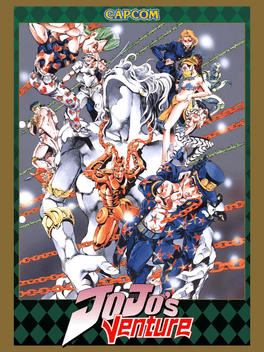
star 6.9JoJo's Bizarre Adventure is a fighting game developed by Capcom based on Hirohiko Araki's Japanese manga of the same title. The games were developed by the same team who are responsible for the Street Fighter III series. It was originally released in the arcade in 1998 on the CPS-3 arcade system; this version was known outside Japan as JoJo's Venture. An updated version of the game was released in 1999 as JoJo's Bizarre Adventure: Heritage for the Future (ジョジョの奇妙な冒険 未来への遺産 JoJo no Kimyō na Bōken Mirai e no Isan?), becoming the sixth and last game released for the CPS-3 board. Console ports for the PlayStation and Dreamcast were also released that year. A high-definition version of the game was released on PlayStation Network and Xbox Live Arcade in August 2012.[1] The game combines Capcom's trademark anime-inspired graphics, as seen in the Darkstalkers series, with the colorful characters and events of Hirohiko Araki's creation, resulting in a highly stylized and detailed visualMortal Kombat 4
1998
Mortal Kombat 4
1998
Mortal Kombat 4 is 1 vs 1 fighting game, similar to the other Mortal Kombat games, but this is first game in series with 3D characters models. The player can choose from 15 different fighters at the start (and several unlockables later on). Many fighters from earlier games in the series make a comeback (like Scorpion, Sub Zero, Liu Kang, Sonya Blade, Johnny Cage etc.) while other new fighters join in, like Shinook (who is the main evil character in this game), Fujin, Jarek, and Kai. Goro returns as a boss.Fighting Layer
1998
Fighting Layer
1998
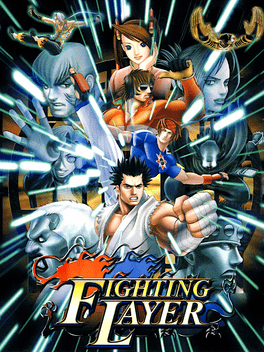
The gameplay system is similar to that of the Street Fighter EX series (also developed by Arika), such as canceling supers into other supers, and universal guard-break attackPower Quest
1998
Touryuu Densetsu: Elan Doree
1998
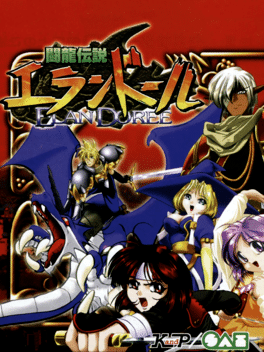
Touryuu Densetsu: Elan Doreé is a fantasy-themed 3D fighting game; it is notable for its dragon-based, aerial combat mechanics. It was originally released in arcades on Sega’s ST-V hardware in November 1998 and later ported to the Sega Saturn in 1999.Capcom Generations 5: Street Fighter Collection 2
1998
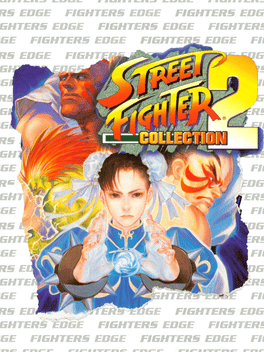
Capcom Generations: Street Fighter Collection 2 contains the first three versions of the original Street Fighter II. Some minor changes are made to gameplay, compared to the arcade versions of the games. A Collection mode is also featured where the player can view strategies, character profiles and artwork specific to each game, some which become available after meeting certain requirements. Capcom Generations 5: Street Fighter Collection 2 includes: - Street Fighter II: The World Warrior - Street Fighter II: Champion Edition - Street Fighter II Turbo: Hyper FightingGoiken Muyou II
1998
Goiken Muyou II
1998
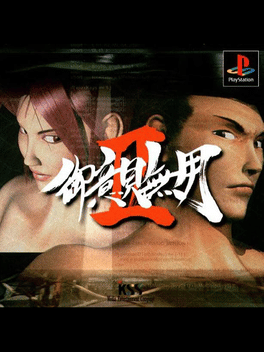
Goiken Muyou 2 is a 3d fighting game that features 10 characters (male & female ones) and different game modes (story mode, arcade, vs, tag team, etc). Programmed by ex-members of the Virtua Fighter team, this game has a yankee style, biker gang feel to it with characters varying from high school students to a yakuza type gangster via a wrestling-loving English teacher. The title means 'your opinion is worthless'. Fair enough.King of Fighters R-1
1998
King of Fighters R-1
1998
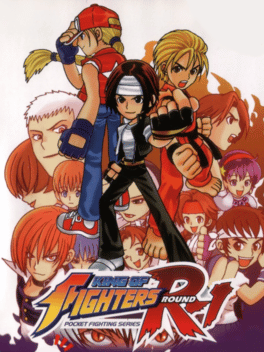
The King of Fighters: R1 marks SNK's first time bringing the KOF series onto a handheld... and what better system than their own Neo Geo Pocket to do just that? 14 of the most well known KOF characters make their appearance in KOF: R-1, along with some recognizable backgrounds and gameplay features based on The King of Fighters '97. Players can choose from "Extra" & "Advance" play modes similar to KOF '97, and most characters play closely to their original versions.Dead or Alive ++
1998
Dead or Alive ++
1998
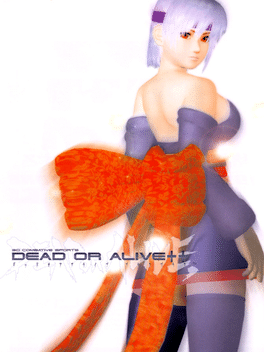
Dead or Alive ++ (Plus Plus) is an updated version of Dead or Alive released in 1998. It includes new characters, improved graphics, and unlockable costumes. The updated version also features remixed stage designs.