New Platform Games - Page 256

Bonk's Adventure
1989
Bonk's Adventure
1989
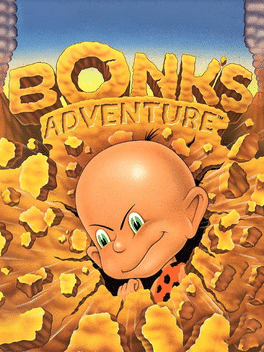
star 6.3Bonk's Adventure was developed by Red Company and Atlus and released on the TurboGrafx-16 in 1989 before being ported to the NES, Game Boy and Amiga. It is a 2D platform game that became quite popular, with subsequent remakes and sequels spawning from the game. It was later included in Nintendo's Virtual Console service as well as the PlayStation Store.Magical Tree
1989
Psycho Fox
1989
Psycho Fox
1989
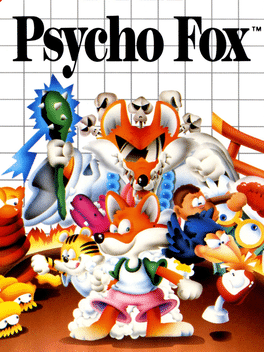
star 6Psycho Fox must get to the right hand side of the level. However, there are many enemies in the way. He can use a Shinto stick to change into characters/animals like a hippopotamus, a monkey or a tiger, each of which has its own special ability. The hippopotamus is slow and cannot jump very high, but can punch through special destructible blocks in the game world. The monkey can jump higher than the other creatures and the tiger can run faster. Psycho also has an ally named Birdfly, who can be used as armor or as a boomerang. If Psycho is hit while carrying Birdfly, Birdfly goes away and the player does not lose a life.Doraemon: Meikyuu Daisakusen
1989
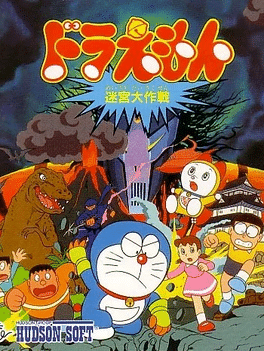
Meikyu Daisakusen is an action puzzle game viewed from an overhead perspective. Each stage consists of a maze filled with various enemies and items. You must collect all of the keys on the stage to open the exit door while avoiding or eliminating enemies. Your primary method of dealing with enemies is to dig holes; if an enemy walks into a hole, they are momentarily trapped and you can then fill the hole to kill the enemy. The game is a conversion of the 1987 Nichibutsu coin-op Kid no Hore Hore Daisakusen, which also saw a modified Famicom version called Booby Kids. An unmodified conversion was released in North America as Cratermaze.Mystic Defender
1989
Mystic Defender
1989
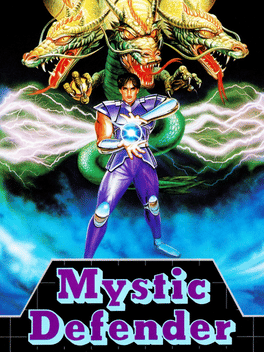
Mystic Defender is a two-dimensional action video game released for the Sega Genesis system. The players only means of defense in the game is the use of magical spells that the player can acquire during game play (by picking the power up). Players start with a single shooting ball of energy that can be charged to fire one powerful shot, but players can also acquire a spiritual flame that can be pointed in straight and diagonal directions and when charged can reach good distances and a spherical power that launches ricocheting spheres around the screen that multiply when fully charged. Aside from these powers, players can also use a screen-clearing power that summons a three-headed dragon that destroys all enemies and fired shots on screen. The game is a port of the Japanese game Kujaku-ou II, removing the anime license.Disney's DuckTales
1989
Disney's DuckTales
1989
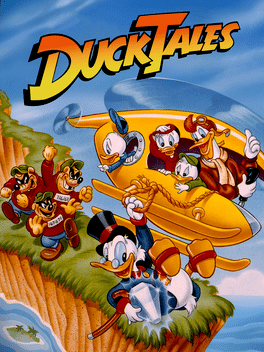
star 8.3DuckTales is a platform game developed and published by Capcom and based on the Disney animated TV series of the same name. It was first released in North America for the Nintendo Entertainment System in 1989 and was later ported to the Game Boy in 1990. The story involves Scrooge McDuck traveling around the globe collecting treasure and outwitting his rival Flintheart Glomgold to become the world's richest duck. Produced by key personnel from the Mega Man series, DuckTales would go on to sell over a million copies worldwide on each system, becoming Capcom's best-selling title for both platforms. The game was praised for its tight control, unique and non-linear gameplay and bright presentation, and is often regarded as one of the best titles for the NES, appearing on numerous "Best of" lists.Monster Lair
1989
Ghouls 'n Ghosts
1989
Ghouls 'n Ghosts
1989
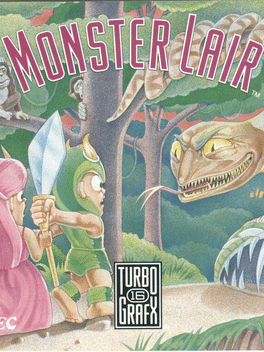
star 7.9Ghouls 'n Ghosts is a side-scrolling action platform game developed by Capcom and released as an arcade game in 1988, and subsequently ported to a number of other platforms. It is the sequel to Ghosts 'n Goblins and the second game in the Ghosts 'n Goblins series.Jinmu Denshou Yaksa
1989
Jinmu Denshou Yaksa
1989
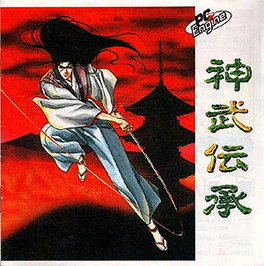
A pseudo-3D third-person rail shooter of the Space Harrier mold. It had multiple developer credits and is exclusive to the PC Engine. Jinmu Denshou is an action game in which the player character marches towards the horizon while enemies fly towards him. It looks and plays like Sega's Space Harrier, its clear inspiration, though a major difference is that the main character is a samurai-like figure who is usually limited to attacking incoming enemies with his sword. After an upgrade, he is able to fire projectiles and he can also charge up an attack and unleash it to cause a significant amount of damage. The game has a few superficial platforming elements as well. Development of the game is credited to three separate teams: obscure TG-16 developers Manjyudo, Wolf Team (better known for their Tales series) and Goblin Sound who were responsible for the music.Don Doko Don
1989
Don Doko Don
1989
The players are bearded dwarves who must defeat various enemies by using a mallet to stun them. Players can pick stunned enemies up and throw them at other enemies to destroy them. Destroyed enemies leave behind fruit which can be collected for points. Once all enemies are destroyed play proceeds to the next level which is generally more difficult. Throughout the game, various power-ups can be collected, which represent potions, hammers, or books help the players' character speed up, receive more power, or kill in different ways. In certain screens various secret levels can be accessed.Strider
1989
Strider
1989
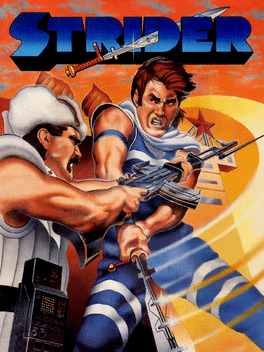
star 7.9The Striders are a global organization of infiltration specialists who work to combat villainy and keep the world safe. From their orbital space station, the Blue Dragon, they are able to quickly reach anywhere in the world.Tashiro Masashi no Princess ga Ippai
1989
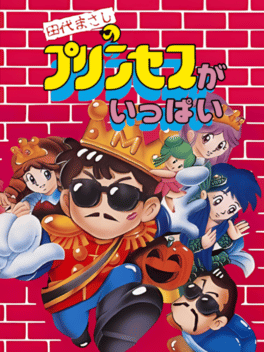
The story is about the hero Masashi Tashiro who has to rescue the four princesses in distress. One happy ending and four unhappy endings were used in the game; becoming one of the first video games to have multiple endings. The game was not very successful, but it started appearing frequently and getting high prices on online auction sites like Yahoo! after 2000, when Masashi Tashiro was arrested and convicted several times in connection with voyeurism and drug abuse.Valis II
1989
Valis II
1989
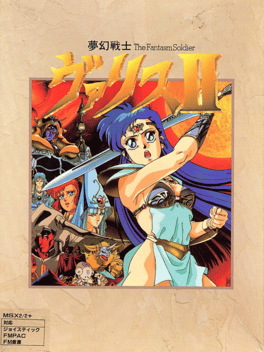
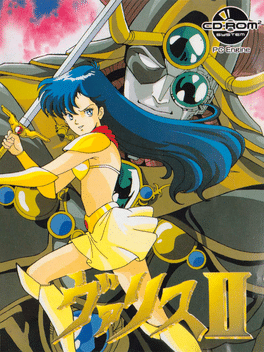
star 6.6Valis II has the same basic plot as its computer counterpart: Rogles, the tyrant of the magical world Vecanti, was defeated, and a new emperor named Megas is terrorizing its inhabitants. It's up to the Japanese schoolgirl Yuko to take on her persona of the Valis Soldier and vanquish Megas. Gameplay-wise, this version differs from the computer releases significantly. Though it has six stages that end with the same boss enemies, its level design, layout, and many regular enemies are different. This release also completely removes two key gameplay features of the computer version: the ability to equip different weapons and armor, and the flying side-scrolling shooter stages.Hard 'n' Heavy
1989
Hard 'n' Heavy
1989
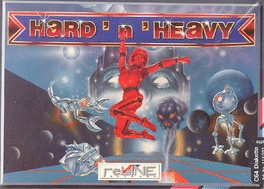
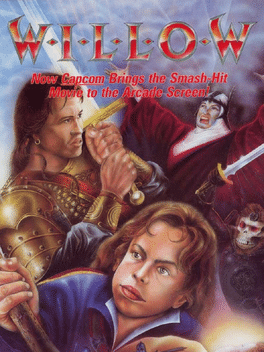
The odd robot couple, Heavy and Metal, both have a slight glitch in their operating systems. Instead of working in the Lithium-Mines on Mars, they are running through underground caverns, searching for adventure, thrills and a new high score.Willow
1989
Monster Party
1989
Monster Party
1989
star 6.9Walking home from a baseball game one evening, Mark gazed up at the misty sky. Suddenly, a blazing star plummeted to earth with a blinding light. When Mark regained his sight, a mysterious creature was standing before him. The creature told an eerie tale about his home planet, the Dark World, where evil monsters were terrorizing the helpless population. He was searching the galaxy for a warrior capable of freeing them from their terrible plight. The creature explained that Mark's bat was the perfect weapon for defeating the evil monsters. Mark considered the creature's proposal for a minute, then agreed to undertake the dangerous mission. After all, he thought, it sure beats going to school!Holy Diver
1989
Super Mario Land
1989
Super Mario Land
1989
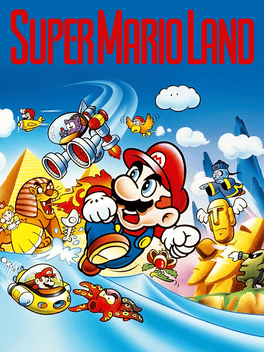
star 7.4Super Mario Land is the first Mario's outing on the Game Boy. It is a side-scrolling platformer much in the vein of the previous Super Mario Bros. This time, Mario must save Princess Daisy, rather than Princess Toadstool, from her kidnapper Tatanga, a mysterious spaceman. The game follows largely the same formula of its aforementioned predecessor, with Mario defeating enemies by jumping on them and collecting coins and power ups by hitting floating blocks, with each world leading up to a boss fight which is defeated using by collapsing the floor. A unique feature of this installment is two scrolling shoot-'em-up levels, the first of which Mario pilots a submarine, and the second an aeroplane.A Week of Garfield: Garfield no Isshukan
1989
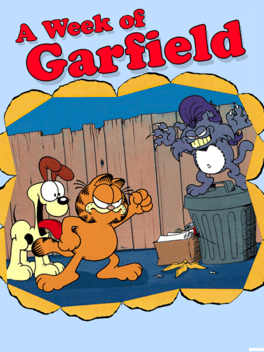
A Week of Garfield is a 1989 Family Computer title based on the comic character Garfield. It was only released in Japan due to issues with using the Garfield license in North America and Europe. It is the third video game to be based on Jim Davis' Garfield Comics The game is a sidescrolling action game in which enemies can be mice, spiders, birds and other assorted animals. Garfield's default attack is a low judo-style kick when he is standing on his hind feet. Several power-ups are limited by how many Garfield can pick up. A time limit prevents players from wandering through the level in search of power-ups.