New Arcade Games - Page 133

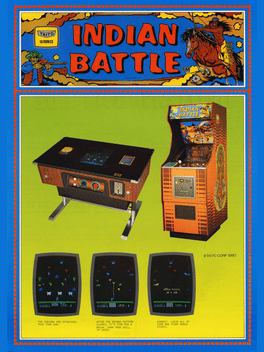
Indian Battle
1980
Indian Battle
1980
The player takes control of a cowboy battling Native Americans. There are three types of enemies including the Indian footman, Indian on horseback and Buzzard. Arrow and tomahawk projectiles can also be shot for points. Enemies on the same plane such as scorpions cannot be shot and limit where the player can move the cowboy. Obstacles such as cacti and rocks block the cowboy's line of fire. One hit from an enemy or projectile takes a life away. The player is required to kill a set number of enemies to progress to the next level.Mad Alien
1980
Terranean
1980
Manhattan
1980
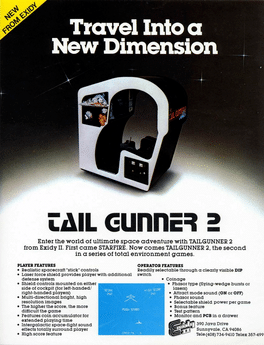
Tail Gunner 2
1980
Tail Gunner 2
1980
Tail Gunner 2 is the sequel to Cinematronic's Tail Gunner, produced after Exidy purchased the original developer Vectorbeam. It is essentially the same game as Tail Gunner, but produced in a deluxe sit-down cabinet.Lupin III
1980
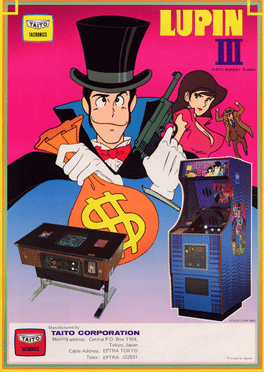
Lupin III
1980
You play Lupin, a character who is trying to get money for his sweetheart. You try to take up to two of the six bags from the top and get them to the bottom without getting caught by an enemy. If an enemy gets too close or you are surrounded you can teleport, but there is no telling where you will end up -- you could end up in a worse spot than the one you escaped from! After you have gotten all six money bags, you go to meet your sweetheart, but she tells you to get her more money and you proceed to the next level. If you lose all your lives you will be shown being dragged off to jail.Killer Comet
1980
Zero Hour
1980
Zero Hour
1980
Zero Hour is a top view shooter where you control a spacecraft in multiple directions and try to blast and destroy three alien ships at the top of the screen. As you blast them, you will encounter meteors falling down the screen which can be avoided or shot, and other alien ships dropping bombs. If you hit a meteor, alien ship or its bombs then you lose one of three lives. Once the three aliens have been destroyed and the screen cleared of meteors and aliens then you move to a bonus screen. Your ship falls down the screen and you have to land on a landing pad for a bonus score. Two players can play and each player takes it in turns when the other player is killed.Space Cyclone
1980
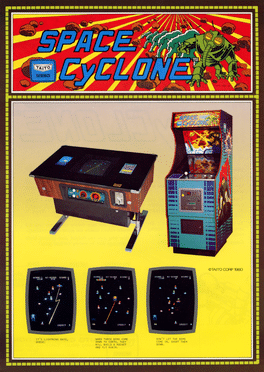
Megatack
1980
Megatack
1980
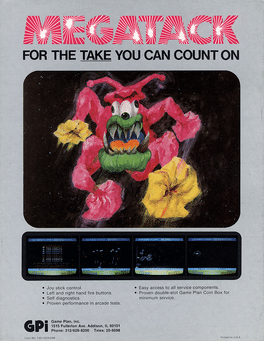
In the first part of each wave, space monsters descend from the top of the screen towards your ship, dropping bombs as they go. If they reach the bottom of the screen, they will start hopping towards your spacepod if they catch your spacepod, they'll eat it. In these rounds, your spacepod fires in three directions simultaneously straight up, and 45 degrees to either side. The eight types of monsters shown in the score table attack in the order shown for the first eight waves (i.e. wave 1 is all 100-point monsters, wave 2 is all 200-point monsters, etc.) wave nine is a mass attack of all eight types, and waves ten and up are randomly-chosen from the first nine types. Each space monster round contains a total of 25 monsters, though only eight will be on the screen at any one time. The second half of the wave starts out with a spinning space ring that drifts around the screen, growing in size if you shoot it, it splits into two smaller rings that go off in different directions and start growing again. If any ring reaSpectar
1980
Spectar
1980
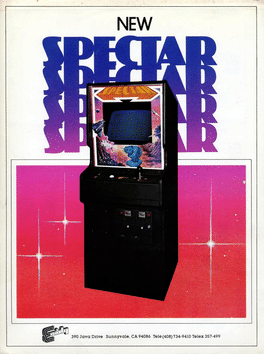
Spectar, released by Exidy in 1980, is the follow-up of Targ. Gameplay is apparently unchanged, you control a vehicle called Whummel into a 9x9 grid maze, chasing down, and being chased by, the alien invaders. Targs have evolved into the more dangerous Rammers, and Spectars appears more often, shooting at player's ship. You use a 4 way joystick to guide your vehicle in the maze, and a pushbutton to shoot at enemies. Up to two players can alternate in gameplay. The most noticeable difference from his predecessor is that to complete a level you must now collect all the gems in the maze, in a Pacman-like game. Rammers and Spectars continue to appear from flashing pods, so you cannot rest and plan your course easily, or you will be overwhelmed by the alien force. Graphic is highly improved compared to his predecessor: the maze now has barricades that must be avoided or can be used as a shielding against the enemies, and has ten environement settings, changing from the "square-block town" of Targ to a city, a forest,Space Firebird
1980
Space Firebird
1980
Space Firebird is a 1980 arcade game published by Gremlin Industries, Inc. It is a "slide and shoot" shooter, similar to titles such as Galaga.Polaris
1980
Red Baron
1980
Warlords
1980
Warlords
1980
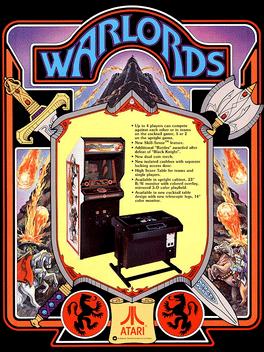
star 5.3Warlords is an arcade game released by Atari, Inc. in 1980. The game resembles a combination of Breakout and Quadrapong (an early Atari arcade game) in the sense that not only can up to 4 players play the game at the same time, but also the "forts" in the four corners of the screen are brick walls that could be broken with a flaming ball. Warlords uses spinner controllers for player control, and came in both an upright 2 player version and a 4 player cocktail version. The upright version uses a black and white monitor, and reflects the game image onto a mirror, with a backdrop of castles, giving the game a 3D feel. The upright version only supports up to two simultaneous players, which move through the levels as a team. The cocktail version is in color, and supports 1-4 players. 3-4 player games are free-for-all's where the game ends as soon as one player wins. 1-2 player games play identical to the upright version.N-Sub
1980
N-Sub
1980
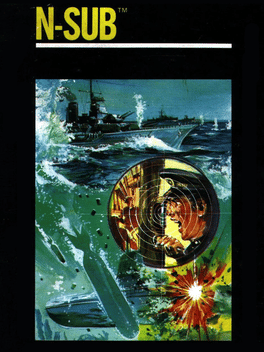
N-Sub is one of the earliest naval video game titles. The object of the game is to maneuver an on-screen submarine, the "N-Sub," with the joystick and sink the enemy fleet with torpedo fire in the Cobalt Blue Sea. Torpedoes can be fired vertically or horizontally by means of two separate 'FIRE' buttons and 3 torpedoes can be fired in rapid succession by keeping the button depressed. The enemy ships attack the N-Sub with missiles, torpedoes and depth charges. One round is over after the attack by the enemy fleet of twelve ships (No. 1 Fleet Black, No. 2 Fleet Blue) and the loop attack by the enemy destroyer. Enemy attack gains in ferocity with each new round. Bonus points are awarded if the fleet of twelve ships and the destroyer are destroyed. One extra N-Sub is added if players attain high score. The game is over when all of a player's N-Subs are sunk.Stratovox
1980
Stratovox
1980
Men are lined up the right side of the screen and alien ships fly out, swirl around the screen and eventually try to grab the men. This was one of the first all color graphics games and might be the first one that used speech. Some of the phrases are "Help Me! Help Me!", "Very Good", "We'll be back" and "Lucky!"Pulsar
1980
Phoenix
1980
Phoenix
1980
star 8.4In this shoot 'em up the player has to fight off four assault waves consisting of different enemy types until he reaches a huge UFO. After destroying the protective plates guarding the UFO's pilot in his cockpit the player can kill the pilot. The game starts anew with harder enemies.Berzerk
1980
Berzerk
1980
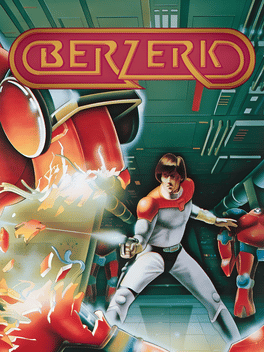
star 7.2Maneuver your humanoid through the electrified mazes of robot filled rooms. You many kill off the first group of robots but initial success does not mean survival...future groups begin firing at your! Added danger lurks when Evil Otto enters. He can jump the maze walls and squash you if you linger too long!