New Arcade Games - Page 137

Galaxian
1979
Galaxian
1979
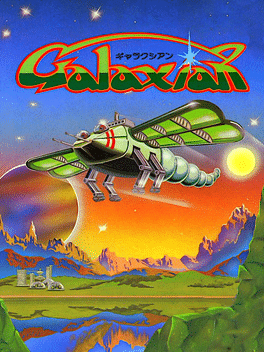
star 8.2Galaxian is a shooter arcade game developed by Namco in 1979. It was released by Namco in Japan and a few months later by Midway Games in North America. The game was developed to compete with Taito Corporation's Space Invaders, released a year earlier, and featured a similar space theme. The player controls a space ship in the bottom part of the screen and shoots at enemies descending from the top of the screen. The game was received very well by the public and has continued to be a game with a competitive community to this day. It was followed by a successful sequel called Galaga in 1981 and two less known sequels called Gaplus in 1984 and Galaga '88 in 1987. Galaxian was one of the most popular games in the golden age of arcade video games.Space Chaser
1979
Space Chaser
1979
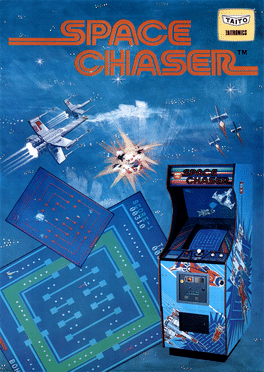
Collect all the dots in the maze without colliding with (or being collided by) the missile. You can use your speed boost as long as you have fuel left. If the missile gets behind you on a long stretch it will speed up and the only way to avoid collision then is to turn a corner.Rich Man
1979
Monkey Magic
1979
Monkey Magic
1979
Monkey Magic is a video game released in arcades by Nintendo in 1979. It is a Breakout clone and one of Nintendo's earliest arcade games. Some sources claim that Ikegami Tsushinki also did design work on Monkey Magic. Players control a paddle to hit the ball at a large number of blocks shaping a monkey's face. Players can also earn different numbers of points by catching blocks that fall, as well as hitting the ball in different places.SF-HiSplitter
1979
SF-HiSplitter
1979
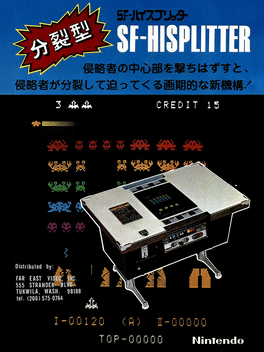
A special version of Space Fever called SF-Hisplitter was released the same year and features aliens that are double the width of the standard variety, which can either be destroyed completely or split into two smaller aliens depending on where they are shot. This version is in color, and the shelter blocks are visually distinct from the monochrome version.Barrier
1979
Barrier
1979
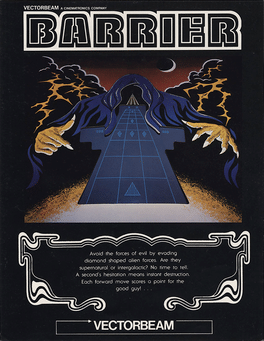
Barrier is a maze arcade game using vector graphics released by Vectorbeam in 1979. In this very basic game, players move a small triangle around on the grid, while attempting to avoid the diamonds that are also moving around on the grid. Reaching the end of the grid teleports the player back to the front of the grid to gain points. The game is played on a 3x9 grid that is displayed at angle to make it appear to be in 3-D. The game was sold to Vectorbeam by Cinematronics.Field Goal
1979
Field Goal
1979
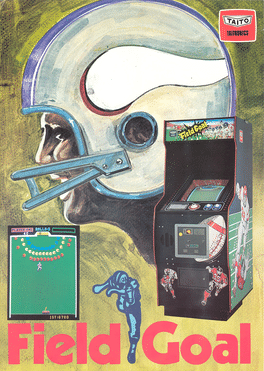
A football/Breakout-style arcade game made by Taito. Despite its name it is less of a football game and more of a Breakout variant, with the player represented by a paddle and the opposing team guarding the goal and at the top of the screen. The game is controlled with a paddle, like most Breakout variants.Deluxe Space Invaders
1979
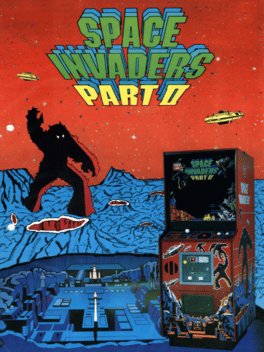
star 4.9Originally called Space Invaders Part II in Japan, this is the first sequel to the coin-munching hit Space Invaders. This game is notable for introducing the concept of a cut-scene.Bomb Bee
1979
Bomb Bee
1979
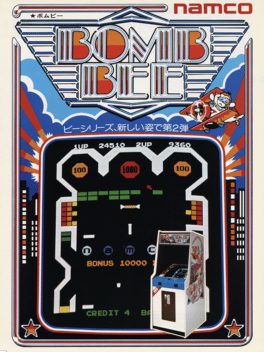
It is the sequel to Gee Bee, which was released in the previous year. The objective of the game is to use two paddles to bounce a ball which flies around and hit the colored bricks above it with the ball. When the bricks are cleared out of the side sections, it will turn that same side's pop-bumper into 100 points instead of 10.Straight Flush
1979
Color Space Fever
1979
Color Space Fever
1979
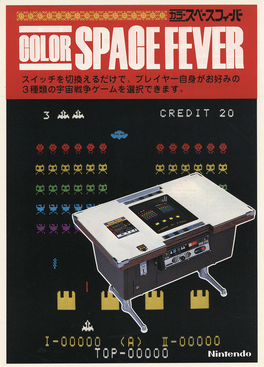
A colored version of the original monochrome Space Fever released a few months earlier.SOS
1979
Atari Baseball
1979
Safari Rally
1979
Safari Rally
1979
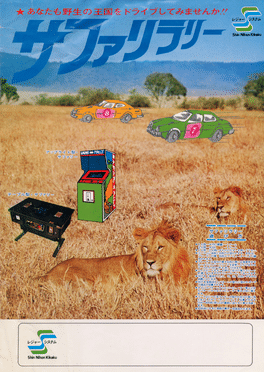
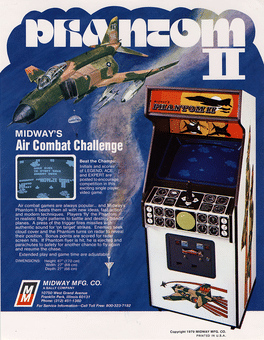
A maze game where the player guides a car through a maze-like forest collecting coins while avoiding an enemy cars and snakes.Phantom II
1979
Phantom II
1979
A vertical air combat game where the player controls a jet fighter and battles enemy aircrafts in the sky.Dodgem
1979
4 Player Bowling Alley
1979
A black and white bowling game for up to four people. Players roll a multi-colored trackball to simulate throwing a bowling ball down the alley. Attempt to knock down all the pins.Star Fire
1979
Star Fire
1979
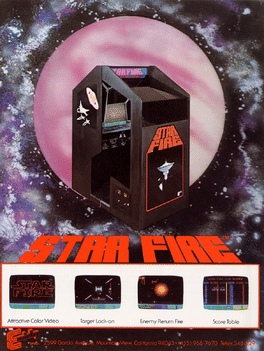
Star Fire is an early color game programmed by David Rolfe with graphics designed by Ted Michon and Susan Ogg. It was released by Exidy in 1979. Star Fire is a first-person space shooter where your mission is to seek out and destroy enemy spacecraft while avoiding incoming missiles. If a number of elements of Star Fire seem similar to Star Wars, your eyes are not deceiving you. Star Fire was originally designed as a Star Wars game, with the eventual hope that either a license would be purchased or that they would change enough of the elements to avoid any legal entanglements. Originally, the authors had hoped that Midway would pick up the game for distribution, but they passed and instead Exidy purchased the game and released it. Star Fire was the first game to come in an environmental cabinet, designed by Michael Cooper-Hart. Even more importantly from a historical perspective, Star Fire was the first game to keep a high score list where the player could enter his or her initials. Prior games had tracked the conAtari Basketball
1979