New Arcade Games - Page 81

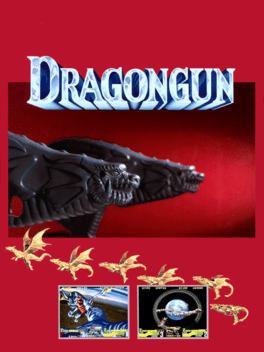
Dragon Gun
1992
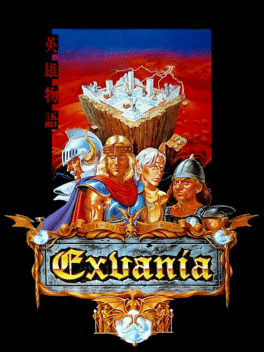
Exvania
1992
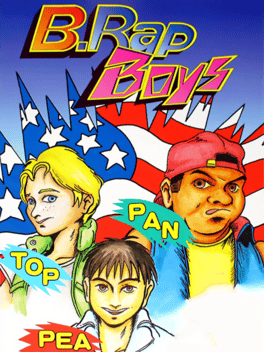
B. Rap Boys
1992
B. Rap Boys
1992
A side scrolling beat 'em up. 3 characters, one on a skateboard, one on a bike and one on roller skates fight various enemies. Features a large amount of sampled voices and several rap songs.New Atomic Punk: Global Quest
1992
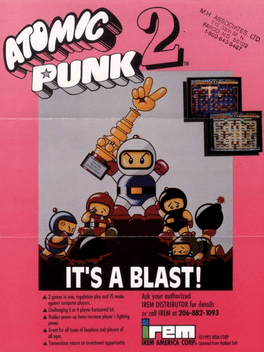
New Atomic Punk: Global Quest is a 1992 video game released by Irem under license from Hudson Soft for arcades. It is part of the Bomberman series. It was the second Bomberman game to be released for arcades, preceded by Bomberman (1991), which was also released by Irem.Squash
1992
Squash
1992
Squash lets players participate in squash matches playing against a computer opponent or with two players. The general rules are followed. The character can be steered around the court and two buttons are used: one for a hard shot and another for a light one. When hitting the ball the direction of the shot can also be determined. When a shot seems out of reach it is possible to perform a type of dive, but this has a recovery time usually long enough to miss the next shot when it returns. The players cannot collide or hinder each other. There are eight characters to choose from, each from a different country. The first player to score nine points wins the game. A single credit is not necessarily sufficient to complete an entire game. After too many faults an additional credit is required to continue playing. When a serve takes too long a clock appears. Games consist of a series of matches against an opponent who becomes more difficult with each match.Asterix
1992
Asterix
1992
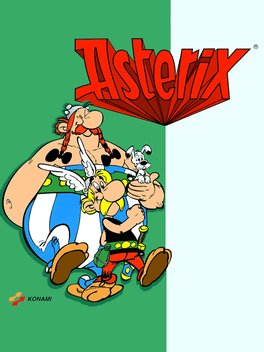
star 6.8Asterix is a horizontal-scrolling beat'em up arcade game released in 1992 by Konami. It is based on the French comic series Asterix and Obelix. The player fights as either Asterix the Gaul or his best friend, Obelix, as they take on the 'might' of the oppressive Roman Empire. Asterix includes a variety of humorous fighting moves, which are demonstrated in the game's attract mode. The artwork and feel of Asterix remains true to its French source material, and the game's many humorous touches (such as the way defeated Legionnaires crawl away) will be instantly familiar to fans of the comic-book and cartoon series. Bonus levels - such as the chariot race that awaits at the end of the first level - introduce different gameplay elements to provide a break from the fighting.Fixeight
1992
Fixeight
1992
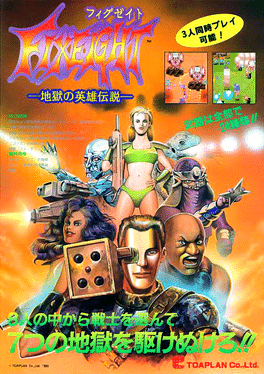
Fixeight is a run-and-gun arcade game made by Toaplan in 1992. It is the Spiritual Sequel to "Out Zone." The plot is rather simple: Your character is sent to the alien planet Fortune to destroy it, and with it the Gozzu invasion of our universe. As a follow-up to Out Zone, Fixeight fixes many of the problems that its predecessor had. The main gimmick of the game are the eight unique characters, each of which have different weapons in their arsenal.Saboten Bombers
1992
Saboten Bombers
1992
A multi-level platform game where the player controls a cactus that has to dodge and defeat its enemies.Riding Fight
1992
Riding Fight
1992
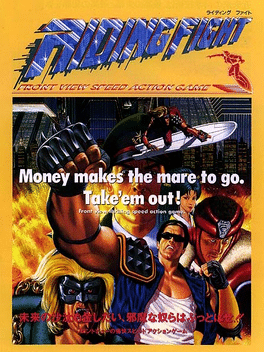
Burn and Keith are bounty hunters, two men ready and willing to take on the advanced crime of the cybernetic future in exchange for cold, hard cash with the use of their hoverboards.Funky Jet
1992
Funky Jet
1992
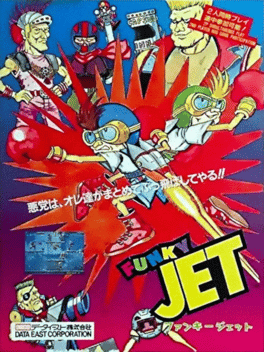
In the beat 'em-up game Funky Jet you control one of two characters equipped with a jetpack, a goggle pilot head and boxing gloves. There are six stages to choose from that increase in difficulty. The goal of the game is to clear the screen of all enemies that are standing on several platforms by flying around and hitting them with your gloves. Time bonuses and bonuses for clearing a stage are rewarded when clearing the screen. To complete a stage you have to clear several screens and defeat bosses and numerous smaller enemies. The game can be played solo or with a friend.Golden Axe: The Revenge Of Death Adder
1992
star 7.4Golden Axe: The Revenge of Death Adder is a side-scrolling arcade hack 'n' slash game released in 1992 by Sega. It was the first 32-bit game in the series. It still remains an arcade exclusive as of 2010. The player characters are Goah the giant, Stern the barbarian, Dora the Kentauride, and Little Trix, a young elf lad who carries a pitchfork. None of the characters from the first game are playable, although Gilius Thunderhead from the first game rides on Goah's back. The main enemy is once again Death Adder.Boogie Wings
1992
Boogie Wings
1992
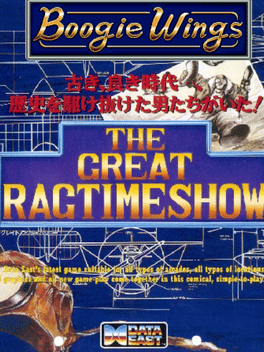
Boogie Wings (known in Japan as The Great Ragtime Show (ザ・グレイト・ラグタイムショー?)) is a side-scrolling shooter arcade game released by Data East in 1992. The game contains unique gameplay, along with many nonsensical or comedic themes not present in other games of the genre, but was never ported to other consoles because of its relative unpopularity in arcade centers.Diet Go Go
1992
Diet Go Go
1992
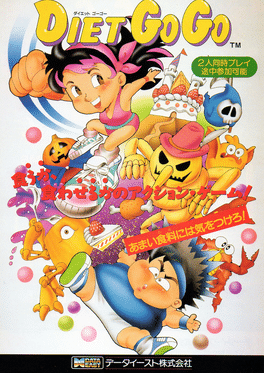
Diet Go Go was produced by Data East in 1992. Data East released 149 different machines in our database under this trade name, starting in 1980. Other machines made by Data East during the time period Diet Go Go was produced include Mutant Fighter, Boogie Wings, Aaron Spelling, Hook Pinball, Lethal Weapon 3, Death Brade, Checkpoint, Wolf Fang, Joel Silver, The Pinball, and Joe & Mac - Ikusae Genshizin.War of Aero
1992
War of Aero
1992
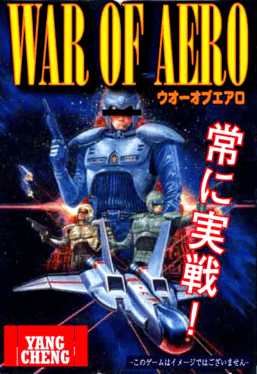
War Of Aero was produced by Yang Cheng in 1993. Yang Cheng released only 1 different machine in our database under this trade name.BRap Boy
1992
BRap Boy
1992
B. Rap Boys was produced by Kaneko in 1992. Kaneko released 33 different machines in our database under this trade name, starting in 1982. Other machines made by Kaneko during the time period B. Rap Boys was produced include Bakuretsu Breaker, Nexzr, Fujiyama Buster, Shogun Warriors, Gals Panic II, Berlin Wall, Magical Crystals, Air Buster, Gals Panic, and DJ Boy. Add by LennuxTaito Cup Finals
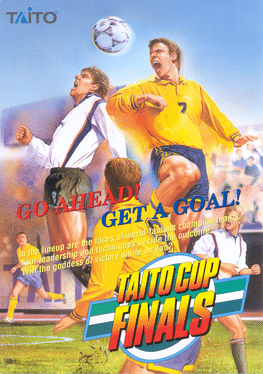
1992
Danger Express
1992
Mini-Vaders
1992
Galactic Storm
1992
Galactic Storm
1992
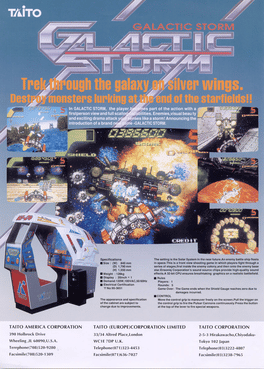
Galactic Storm is a chase-view shooter in the same vain as Galaxy Force or Taito's own Night Striker. The player controls a spaceship equipped with a shield to withstand multiple hits, in addition to the standard shot there is a also a more effective special weapon in limited supply available. After taking off, the player flies on a predetermined course with some limited maneuvering room through the stages, facing of against waves of enemies (giant robots for example). At the end of a level, a stronger boss enemy awaits. Once this obstacle has been defeated, the ship's shields get recovered to some extent and the player can continue the flight through various environments, including for example the wide-openness of space, planetscapes covered with trees, and narrow tunnels.Koutetsu Yousai Strahl
1992
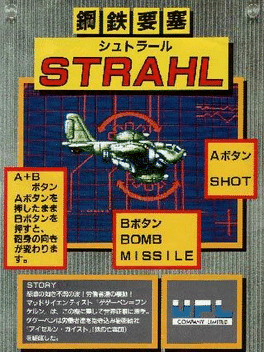
The game takes place in modern times where a great depression has swept over the world. Amidst the depression and its riots of jobless workers, a mad scientist starts his plan of world domination. Taking command in the titular fortress orbiting Earth, the evil Doctor Gegeben Funkerun uses his own robots, flying fortresses and mercenaries to wreak havoc across the globe until all his demands are met. Assisting the attacked and weakened governments, workers across the nations help develop a series of jet fighters called the Aizerun Geist to use against the forces of Dr. Funkerun and save the world. Before each stage begins, players are given a choice of weapons to purchase at a hangar for the Aizerun Geist. There are four weapons within three tiers to choose from including Main Attack, Sub Weapon and Bomb. Of the Main Attack the player can choose Twin Shot, Laser, Heavy Laser and the Charge Shot. Of the Sub Weapons, players can choose additional firepower, Homing Missiles, Shielded Options or an energy barrier. Play