Most Popular Atari 2600 Games - Page 19

AstroBlast
1982
Wolfenstein VCS: The Next Mission
2006
Wolfenstein VCS: The Next Mission is a updated version of the game Wolfenstein VCS, which was a modified version of the game Venture.Thwocker
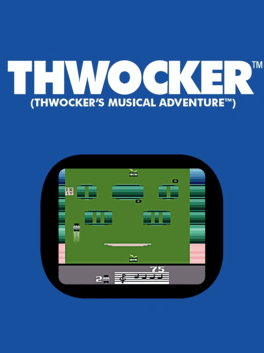
An unfinished Atari 2600 game that was later released as part of various Atari game collections and Microsoft's Game Room. The player controls a small man (or creature?) that does not stop rhythmically bouncing, though the player can control the height of the jumps. The object is to collect the correct musical note, displayed at the bottom of the screen, while avoiding floating musical instruments. Once the correct notes have been collected, a large note must be acquired near the top of the level. Grabbing that large note starts a song, during which the player can collect the remaining musical notes and instruments on screen for extra points.AtariAge Holiday Greetings 2007: Stella's Stocking
2007
AtariAge's 2007 holiday cart titled "Stella's Stocking" is a collection of minigames developed by a rather large staff as a promotion for the AtariAge.com holiday sale.Space Treat
2002
Space Treat
2002
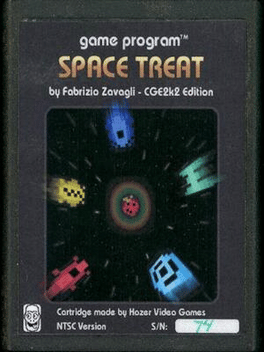
In Space Treat, you control a ship that must reach the top of the screen, collect the tasty treat located there, and get it back to its base at the bottom.Obelix
1983
Obelix
1983
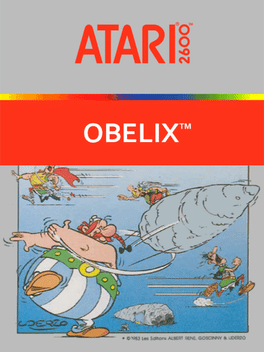
Obelix is a game where you simultaneously play as Asterix and Obelix maintaining their favorite Gaulish sport of thumping the living daylights out of Roman soldiers. The objective of the game is to help Asterix stun Roman soldiers simply by running into them, and they turn white from blue, while you command good ol'Obelix to throws his oversized Menhirs down at stunned Romans with a splat.This Planet Sucks!
1998
This Planet Sucks!
1998
This Planet Sucks is Greg Troutman's first game for the Atari 2600 and is based on the Taito arcade game Lunar Rescue. Your goal in This Planet Sucks is to rescue colonists trapped on the planet's surface, while avoiding the asteroid belt between your mother ship and the colonists. In addition to fighting gravity and avoiding the asteroids, care must also be taken not to squash the poor colonists you're trying to save! And to make matters worse, the asteroids turn into enemy ships after rescuing a colonist!SCSIcide
2001
SCSIcide
2001
SCSIcide is an original, fast-paced homebrew game released back in 2001 by Joe Grand of Pixels Past. In SCSIcide you play the role of a hard drive read head. As the different colored bits scroll by on the hard drive platter, you need to quickly read them in the correct order before you suffer a buffer underflow. As you complete each level, the data scrolls by more and more quickly! How far can you go? If you're a fan of Activision's Kaboom!, then you'll love SCSIcide.2003 AtariAge Holiday Cart
2003
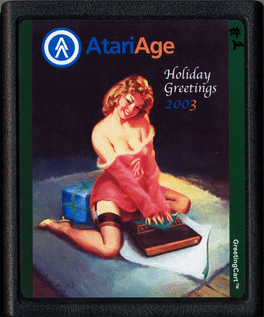
The 2003 AtariAge Holiday Cart was created by Andrew Davie and given out to anyone purchasing $50 or more from the AtariAge Store during the 2003 holiday season. The cart displays an image seen below and flips horizontally every few seconds. This was just a demo for Andrew Davie's script to display higher resolution images.Philly Flasher/Cathouse Blues
1983
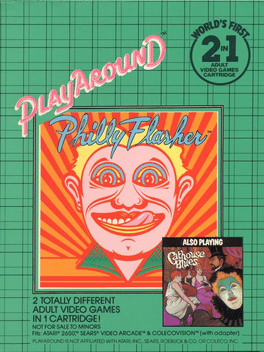
Philly Flasher / Cathouse Blues is a 2-in-1 "adult" game cartridge released for the Atari 2600 by PlayAround.Crazy Balloon
2005
Crazy Balloon
2005
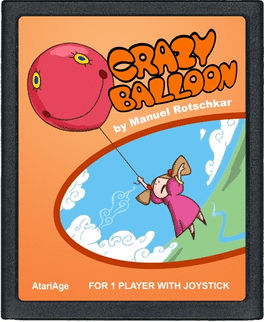
Crazy Balloon is a homebrew Atari 2600 adaptation of the 1980 arcade game, challenging players to guide a fragile balloon through narrow mazes. The gameplay focuses on careful movement and timing across arcade-inspired stages recreated for the consoleReindeer Rescue
2006
Reindeer Rescue
2006
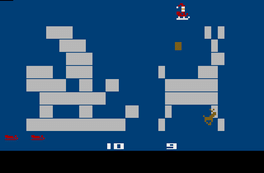
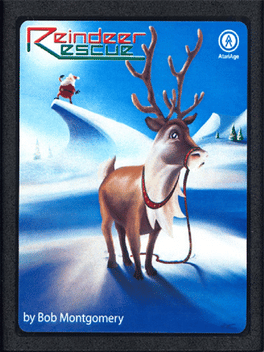
Reindeer Rescue is the "unlimited" release of the 2005 Holiday Cart. Reindeer Rescue is an original homebrew game written by Bob Montgomery, author of the captivating homebrew game Go Fish! In Reindeer Rescue you must help Santa rescue his lost reindeer in a journey that has you starting at the North Pole, racing through frozen tundra, ice caves, suburbia, and the big city! But Santa is not the athlete he used to be (1943 state champion in 400m)--he has grown a little...girthy...around the middle. His doesn't have quite the energy he used to, and if it drops too low he'll fail in his task! Along the way Santa will encounter many objects in the air and on the ground--some will help and some will hinder, so be careful! Reindeer Rescue features in-game artwork by Nathan Strum, and included a beautifully illustrated label and manual by Dave Exton, whose brush graces many homebrew games.SwordQuest: AirWorld
2022
SwordQuest: AirWorld
2022
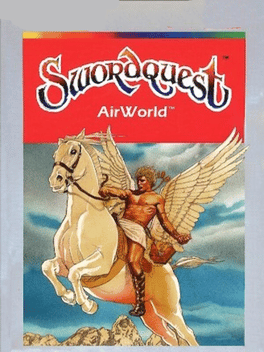
The fourth and final game in the SwordQuest series. Ever since the glorious history of this franchise with it's comics, merchandise, and competitions, the story sadly never got it's conclusion back then with the 3rd entry: Waterworld, being considered the last... until now! The Atari and Digital Eclipse Heavens have opened up to finally allow us to experience the 4th and Final Entry! Ascend into the the heavens in Swordquest: AirWorld! The game finally release 2022 as part of the Atari 50: The Anniversary Celebration.Smurfs Save the Day: Handy Smurf
1983
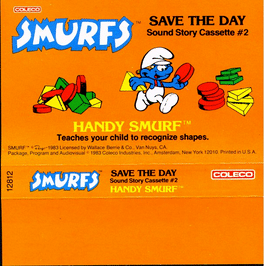
A Smurfs game for the Atari VCS Voice Module. Teaches about shapes.Seaweed Assault
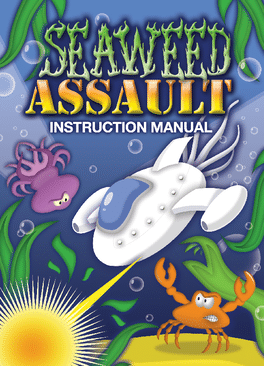
A new game by AtariAge. Players have to collect seaweed whilst avoiding hazards.Birthday Mania
1984
Birthday Mania
1984
This extremely rare game was sold in the U.S. state New Jersey by Personal Games Company. The company marketed it as a great birthday gift. About ten copies of the game were sold. The cartridge was sold with a three folded manual sheet. The cartridge has a red label with blue balloons on it and an empty space to write your name on. Each game is personalized to the boy or girl celebrating his or her birthday. When the game loads up it shows his or her name on the opening screen. The basic object of this game is to blow out candles as they fall toward you.Racquetball
1981
Racquetball
1981
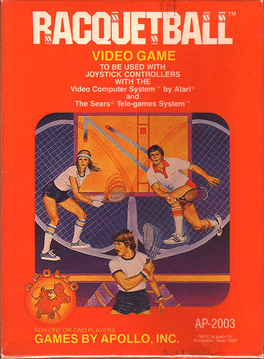
To serve, press the red button. You hit the ball by moving your player to where the shadow of the ball is about level with your feet. The racquet will swing automatically. When you serve, the ball must hit the front wall before it hits the floor. Your opponent can then hit the ball before it lands on the floor or he can let it bounce but you can only let it bounce once. It cannot bounce twice. You serve every time until you miss. If you are serving and your opponent misses, you get one point. You can only get points on rounds where you serve. First player to twenty-one points, wins.Return to Haunted House
2005
Homebrew sequel to the 2600 classic, that was included later on official Atari compilations such as Atari Flashback 2 and Atari's Greatest Hits.