Most Popular Atari 2600 Games - Page 9

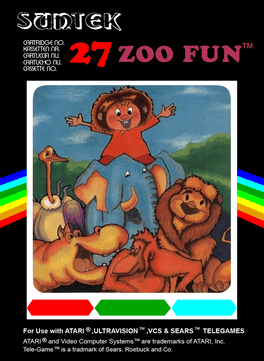
Zoo Fun
Incomprehensible game about collecting zoo animals. The game is based on the code of Panda Chase from Home Vision (you can still see the little panda heads when you run out of time).Surf's Up
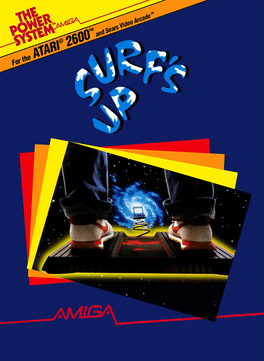
Surf's Up was the third and last game to make use of Amiga's JoyBoard controller. While Amiga's second game Off Your Rocker was sold in limited quantities through Pleasant Valley Video, Surf's Up was never completely finished and sold in stores, most probably because the gameplay was just not interesting enough.Monstercise
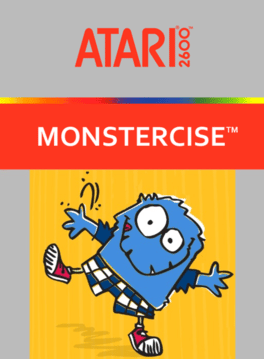
The only known version of Monstercise is rather incomplete, and much like Grovers Music Maker, there's actually very little gameplay involved. The screen displays a group of monsters doing what appear to be Jumping Jacks. At the bottom of the screen is a blue blob (which is assumed to be Cookie Monster) holding a spotlight. Pressing the # or * buttons on the Kids Controller will cause Cookie Monster to move left or right, and when you get underneath a monster the spotlight will shoot a beam and highlight the monster. Once the monster is highlighted, you can control his (its?) head, arms, or legs by pressing the the keys on the keypad. Each body part seems to have two different actions (three if you count not doing anything). The head can blink or nod up and down, the arms can either flap or pump up and down, and the legs can kick out or squat. After awhile the whole thing begins to look like a creepy exercise video, which may be where the name came from. According to the copyright message this game is part of the CThe Music Machine
1983
The Music Machine
1983
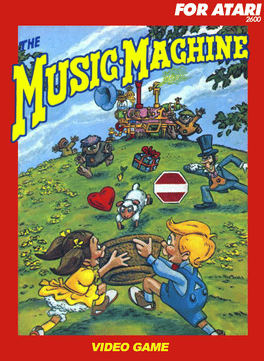
In this game, you play as Stevie and Nancy. The Music Machine moves back and forth at the top of the screen, dropping symbols that represent good qualities (Fruits of the Spirit). You have to catch these in you basket. Once you have caught one of each of the other symbols, then the heart (representing love) comes down. You MUST catch the heart to end the round and go to the next round. If you miss the heart, you lose a life. Just under the Music Machine is Mr. Pims. He tries to mess you up by dropping down his assistants, the Pudgeons. If you catch a Pudgeon, you lose a life.S.A.C. Alert
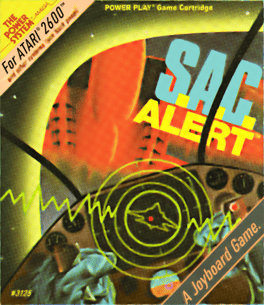
Both a NTSC and PAL prototype version have been found and the game appears to be complete. It was originally planned to be a cassette game for the Power Module peripheral, and is one of the games designed for use with The Joyboard controller. It was later planned to be one of four games on the fifth Power Play Arcade cart. According to a press kit, this was to be a first person flying simulation with a true 'through the cockpit' viewpoint and featuring both land and sea game variations. Catalog description: 'You're guiding your plane through a routine surveillance mission when suddenly, you're surrounded by enemy bombers and fighters. But they've seen you first. And you'd better think fast. You squeeze off a few rounds, just to let them know it isn't going to be easy. You pull back hard on the stick, and head straight for the sky. It's not going to be easy for you either...'MegaBoy
1991
MegaBoy
1991
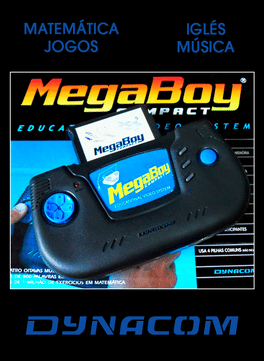
This is the educational cart for the MegaBoy console, a handheld Atari 2600 clone. It contains 16 games plus the contents of the MegaBoy compact. This console was released in Brazil and many were sold to schools.Hard Head
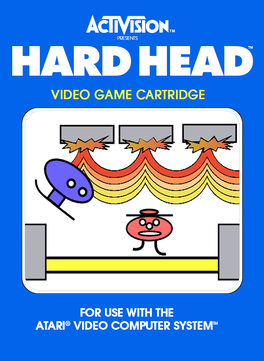
Along with UAG#1/SCRMNN this mysterious prototype was found in a salvage yard in 1998 by Ben Liashenko. For many years we did not know the name of this game since the label that once existed had long since fallen off. However in 2017 another copy of this game appeared on Ebay UK complete with a label. We now know that the game is called Hard Head. Hard Head plays somewhat like Atari's Save Mary. However this time instead of building a tower by dropping bricks from the top of the screen, you must bump blocks from the bottom of the screen.Going Up??
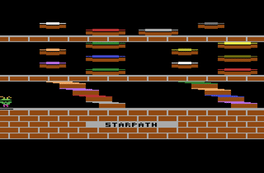
Talk about your unknown prototypes. Going-Up?? came suddenly out of the blue when it was dumped and quietly released by Digital Press. This previously unknown game by Starpath caused quite a stir when the first screenshots were released.Spider Maze
1982
Spider Maze
1982
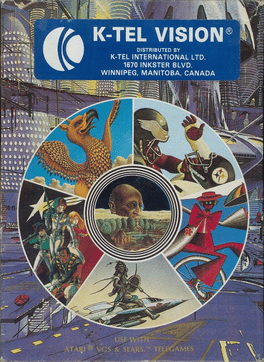
This rare game from K-Tel Vision was probably sold exclusively in Canada. It is easier to find in PAL format, as it had more distribution overseas. Game play is similar to Donkey Kong. The player controls an "adventurer" and has to reach the treasures the evil octopus hid away. Each level consists of a series of platforms that are interconnected by ladders. The only action the player can take besides moving around is pressing fire to make the hero jump. This is necessary to get across the gaps between some of the platforms. At the same time, the player has to avoid the smaller octopi as well as clouds of poison gas which move around the screen randomly. Once the player reaches one of the treasure chests at the top of the screen they won the level and a new round starts. Game can also be played by two players in an alternating fashion.Lasercade
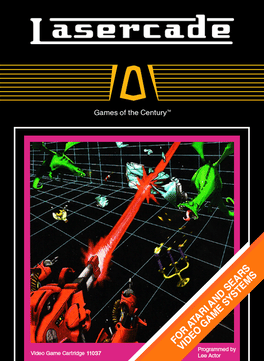
The first thing you're bound to notice upon booting Lasercade is how nice the graphics look. It's hard to believe that the 2600 can do a 3/4th perspective shooting game, but Lasercade is the proof. The goal of the game is to shoot all the targets in the upper section of the screen before time runs out (that's original). However, while you can just start shooting willy nilly, you should probably take a second to look at the funny little targets in the middle section of the screen. In the middle section of the the screen there are three rotating mirrors. As you may have guessed, these mirrors can play havoc with your laser if you're not careful. If you shoot a mirror while it is facing you, it will reflect the laser back at you and you will lose some time and be momentarily stunned. However if you shoot the mirror while its back is to you, you can destroy it so it won't bother you until the next round. While this may sound a bit complicated, it's often best just to ignore the mirrors and shoot at the targets themselvKyphus
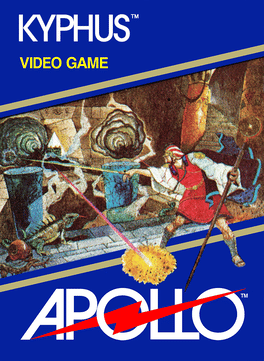
Over the years Apollo has released some strange games. From the airline luggage simulator Lost Luggage to the egg throwing antics of Wabbit, Apollo was never afraid to release something different. Therefore it's no surprise that when a new unknown Apollo prototype surfaced, it featured some interesting gameplay. However Kyphus may be the strangest game from Apollo yet... Looking a little like a cross between Racquetball and Space Cavern, Kyphus is an odd game in which the player must maneuver a dumpy looking guy through a pseudo-3D maze of rooms avoiding what appears to be a glowing cloud that shoots lasers, while being followed by a multi-colored robot that just might be a monkey in disguise. Like I said, this game is weird!. Unfortunately, this prototype is very incomplete. There appears to be no collision detection, few sounds, and almost no gameplay. The only thing one can really do in this prototype is to move run from room to room, although with no collision detection implemented there is no threat from the rLooping
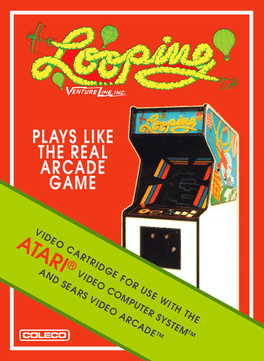
Based on the obscure 1981 Venture Line coin-op of the same name. It's unknown why Looping was never released since the game seems to be finished and was even advertised. One reason may be the high difficulty of the game which really takes away most of the fun. As the game title suggests, this game involves looping. By looping I mean that your plane can only move in circles instead up the normal up, down ,left, right movement of most games. By pushing up or down, your plane will begin to arch and start its loop (pushing left and right has no effect). Normally this wouldn't be a huge problem, but your plane also moves very VERY fast, so it's quite easy to crash into the ground or another obstacle before your can complete your loop. One interesting thing to note is that if your plane hits the top of the screen it will nosedive straight down. While at first this may seem like a major inconvenience, it can be used to your advantage if you're crafty enough. The cart, box and manual are reproductions from 2003.Stunt Cycle
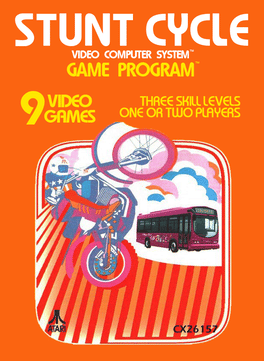
In 1980, Atari programmer Bob Polaro began to develop a Stunt Cycle port for the Atari 2600 using full color graphics. By the time it was completed, Atari had decided to turn it into a television tie-in game for the Dukes of Hazzard franchise instead. This game never progressed beyond the prototype stage and was not officially released. Bob Polaro independently released 50 copies of Stunt Cycle in 2003.Sweat! The Decathlon Game
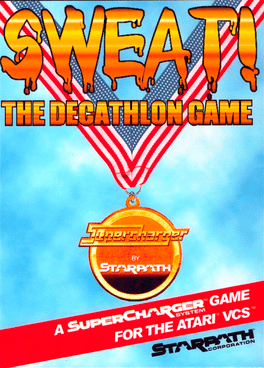
Sweat! is an unreleased game that was to be Starpath's version of Activision's Decathlon for the Supercharger cassette-based peripheral add-on. Given the fact that the Supercharger allowed for more memory and larger games, Sweat! probably would have been an amazing game had it been completed. Of course this never happened as the video game market was crumbling rapidly and people weren't spending money on regular video games, much less games that required special hardware. It was around this time that the financially troubled Starpath merged with Epyx. Most of Starpath's programmers transferred over to Epyx and used Sweat!'s game concept to create Summer Games.Squoosh
Squoosh is an unfinished prototype of an action game from Apollo. From it's appearance, it seems to have something to do with smashing grapes with a giant press.Stunt Man
1983
Stunt Man
1983
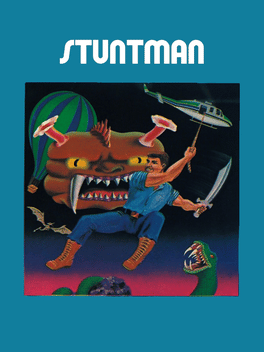
Stuntman is broken down into three timed stages. The first stage has the stuntman climbing ropes in order to get to a helicopter while also dodging flying birds. The second stage has the stuntman climbing ropes again but now arms him with a sword and requires him to defeat the flying devilfaces before he can make his escape. The third stage has the stuntman climbing ropes again dodging enemies, but he must also grab a hold of all of the balloons on the stage before he make his getaway. The stages then repeat in this order two more times with the later stages increasing the challenge by adding more enemies. After completing the nine stages, the game repeats at the next highest speed level. There are six speed levels in total and the desired speed level may be chosen from the beginning also.Ixion
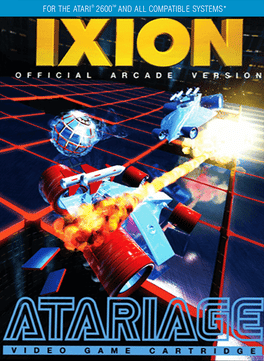
Ixion is a port of the unreleased 1983 Sega coin-op of the same name, Ixion is an interesting game that doesn't seem to play like anything else in the 2600 library. Your goal in Ixion is to grab the five white squares scattered across the screen and spell the word Ixion before your time runs out. At the start of each level only certain squares are visible, and to get around more easily you must first reveal the missing squares. To reveal the missing squares, the player must move a brown sphere over an empty square. This sphere is normally stationary, but it can be moved by shooting or ramming into it. This sends the sphere bouncing around the screen, revealing squares and destroying enemies in its travels. After a short time of bouncing around the sphere will stop, requiring the player to move it again to reveal more squares. Learning how to move the sphere where you want is the key to mastering Ixion. Also moving around the game grid are enemy drones, which will attempt to destroy your ship. Unfortunately, their sI.Q. 180
1983
I.Q. 180
1983
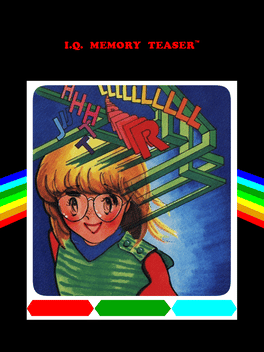
The title screen shows us 25 letters of the alphabet (where did the Z go?) and 5 symbols, representing little figures. If you press F1 to start, you will see the first screen with all the letters and symbols randomly presented and numbered from 1 to 30. If you move the blinking cursor with your joystick down (in the direction of the red arrows), the second screen will appear with the same letters and symbols also numbered 1 to 30, but in a different order. You will also be confronted by a horrible tune. While the tune is playing, you will have to memorize the positions of the letters and symbols of both the screens by looking at their corresponding number (use your joystick to move the cursor in the direction of the arrows to let the other screen appear) or just write down the thirty letters and symbols of one screen on a piece of paper. When the tune stops, all the letters and symbols of both screens will change into little squares and a timer will count down from 1000 to 0. You have to memory match the same letteGuardian
1982
Guardian
1982
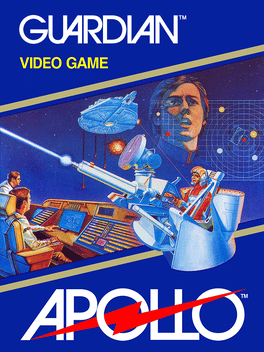
Guardian is an arcade action game for one or two players. In an intergalactic war, an enemy ship called Dromeda is attacking your home planets and you need to defend them! The planets are located at either the top or the bottom of the screen, and are defended by a shield. Dromeda is in the middle of the screen, and will be launching explosive devices at the planets. You control a spaceship which is the last hope to save the planets. Unfortunately, your ships lasers are unable to reach Dromeda, so you you must shoot the explosives as they come in. If you miss any explosives, they will destroy part of the shield. If a large enough hole forms, an explosive could get through and destroy an entire planet. The game ends when all of your planets have been destroyed.Mole Hunter
1983
Mole Hunter
1983
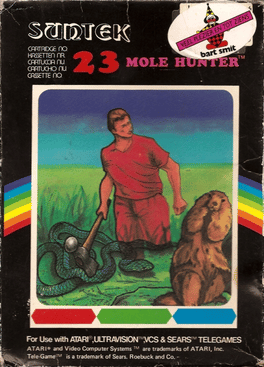
Mole Hunter is a whack-a-mole-style game for the Atari 2600. You control a man with a hammer, who seems to be in the desert, and is surrounded by holes. Periodically the holes will light up and then some sort of rodent appears popping out of it, and you need to smash him back down to his burrow. If you don’t hit him in time, then he will escape and run around the screen trying to bite you. Hitting a rodent gives you 100 points and if he touches you then you will lose points. You also have to be careful not to fall down a hole as you run around the screen, if you do, then you will lose one of your 3 lives. You are given 20 minutes to get the highest score possible. When the times run out, or you lose all 3 lives, it’s game over.