New Games - Page 11751

Cycling Manager 4
2004
Gooka: The Mystery of Janatris
2004
Gooka - The Mystery of Janatris is a sequel to the game called just Gooka which was released in 1997 for the fans of adventure games. Both games are based on books by Richard D. Evans. Once again, the player is taken to the strange world on the planet of Janatris. Once again, Gooka is the main hero of the day. Once again, he finds himself in trouble.World Championship Snooker 2004
2004
World Championship Snooker 2004 is a sports video game developed by Blade Interactive and published by Codemasters. The game features Career, Quick Play and Trickshot modes. It also includes eight-ball, nine-ball, and blackball pool.World Poker Championship
2004
Challenge World Poker Championship is a single player poker game. In this game the player pits their poker skills against twenty AI players, each with a different playing style. There are four poker variants, 7 Card Stud, 5 Card Draw, No Limit Texas Hold 'Em, and Omaha Hold 'Em. The player must prove they are good enough in six tournament rounds to be able to progress to the final championship round.Formula Challenge
2004
Formula Challenge
2004
Formula Challenge is a formula 1 game aimed at beginners. There are two single player modes: quick race and championship. The championship consists of ten races with two qualifying laps and up to ten laps and each. The number of laps is adjustable. Unlike other formula 1 games the handling and physics simulation is action oriented. The not licensed tracks are set in Europe, America, Africa and Asia.Balloon Duel
2004
Balloon Duel
2004
Balloon Duel was based off the 1984 NES game Balloon Fight, though it has taken some features out and introduced new ones.Tsuki ha Higashi ni Hi ha Nishi ni: Operation Sanctuary
2004
Naoki Kazumi is a boy whose parents died in an accident five years ago, and his memory went along with it. Since he had nowhere else to go, he lives with his cousin Matsuri Shibugaki and her parents. Every morning before school, he is awakened by his childhood friend, Honami Fujieda, who keeps telling him that he is not a child anymore, but still comes to wake him up. These usual, ordinary days seem to stretch on forever, until one day up on the school's rooftop, while Naoki is taking a peaceful nap, out of nowhere, a girl falls out of the sky. This girl, called Mikoto Amagasaki, comes from 100 years in the future, and she went back in time with the intention of finding her brother. When Mikoto sees Naoki, she mistakes him for her brother.Deep Water
2004
Deep Water
2004
Deep Water is a single player action shooter game set in a post-apocalyptic world where the atmosphere has changed after an unspecified disaster. You now take on the role of a young man named El Shipak who hunts sea monster for a living. Six months ago Shipak has sighted a special monster and he is now obsessed with hunting it down. Gameplay includes sailing around the oceans with El Shipaks boat. In the Oceans are floating harbors where supplies like fuel and ammo can be bought to hunt down the monster. Here the player can also buy better guns and upgrade his ship. At the harbor the player can also take on missions. Missions usually involve sailing to a certain area and gunning down enemies from the deck of your ship. Maneuvering the ship and fighting off the enemies can’t be done at the same time. If fighting enemies the player can move freely across the deck of the ship.Paparazzi
2004
Paparazzi
2004
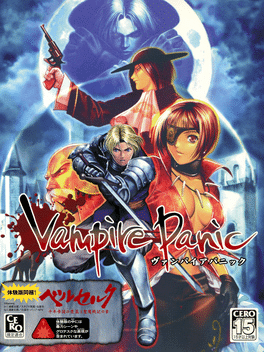
Take photographs of models in one of the few Simple 2000 games that got a release outside of Japan where it is known as The Camera Kozou.Vampire Panic
2004
Super Chinese 1-2 Advance
2004
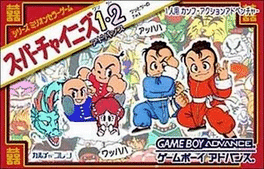
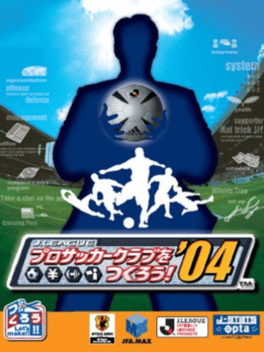
Compilation of the first two Super Chinese games, as well as a bonus game called Super Chinese Labyrinth.J.League Pro Soccer Club wo Tsukurou! '04
2004
The fourth entry in Sega's J-League soccer management simulator.DearS
2004
DearS
2004
DearS for the PlayStation 2 is a dating sim and visual novel game based on the manga by Peach-Pit. You step into the shoes of a character who begins living with the DearS, a group of alien girls. The game includes a map that allows you to explore different locations, interact with the girls, and trigger new events. You play as Takeya Ikuhara, a high school student who, after living alone for some time, now shares his home with two DearS girls, Ren and Tina, who see him as their "master." The game is structured around daily routines, with different actions and locations unlocking based on the time of day and day of the week similiar to the Tokimeki Memorial series.Fighting Angels
2004
Fighting Angels
2004
Simplistic 3D versus fighter with all-female cast and an emphasis on breast physics. Released only in Europe and in Japan as Simple 2000 Series Vol. 55: The Catfight: Joneko Densetsu.Tube Adventures
2004
Tube Adventures
2004
First youtube game in the World. The protagonist Eusebio has lost its memories and now you have to help him to find its way to the bakery.