New Games - Page 11754

Silent Hill 4: The Room
2004
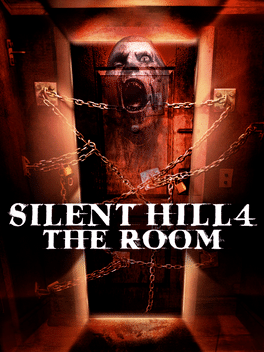
star 7.4Silent Hill 4: The Room is the fourth installment in the Silent Hill survival horror series. The game is similar to the past entries in terms of atmosphere, never letting the player know what's behind the next corner or down the street. Aside from the traditional third-person-view, there is now a first-person mode which is used to control the main character when he is in his apartment. Objects that can be interacted with are highlighted by eyeball icons. The previous games in the series have mostly been about exploring the town and solving puzzles, but this installment has much more combat involved. There are more enemies in a given area, spread in cramped spaces. The main character mostly uses a standard Silent Hill arsenal of weapons, such as the steel pipe, pistol and a golf club.Castle Nevermore
2004
Castle Nevermore
2004
Castle Nevermore is a single-level PWAD for Doom II, designed by Björn Ostmann (Vader) and released in June 2004. The map is themed on a gothic castle, with a detailed design that emphasizes layout and atmosphere. It combines small exterior areas, such as courtyards and gardens, with the deep and complex architecture of the castle.Dwarf Campaign
2004
Dwarf Campaign
2004
A fully voice acted single-player custom campaign for Warcraft III that sends the dwarves of Khaz Modan on a quest to explore the unknown, in hopes of saving their ancestral homeland. The lengthy campaign has three missions where you can choose to play from four difficulty settings and also features custom monsters, scripted events, music and spells. As an added bonus, the stand-alone version of Chapter 3 supports a two-player mode.The Arrangement
2004
The Arrangement
2004
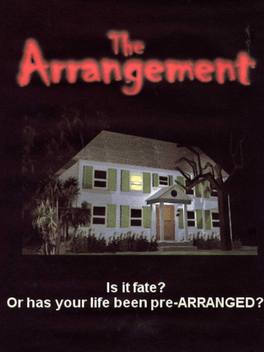
The Arrangement is the second game developed and published by independent developer Michael B. Clark. The story puts you in the role of attorney Richard Sullivan whose life gets turned upside down one fateful day. He has had a great life thus far. With a successful career, lovely home and a loving wife, everything is exactly like he dreamed it could be. Little does he know that his bubble is about to burst! His wife is kidnapped... he must find and rescue her! You play Richard in this first-person, point-and-click adventure. Help him find leads and clues in numerous locales to track down the kidnapper. Solve numerous puzzles using your powers of deduction, logic and wit.Joint Operations: Typhoon Rising
2004
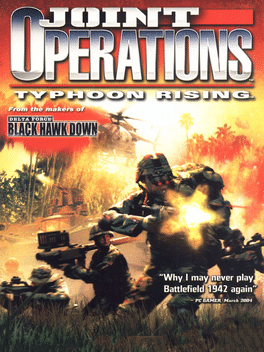
star 7.1Joint Operations is a First Person Shooter, totally focused on online multiplayer mode. The game is set in Indonesia in an hypothetic near future, where a national separatist movement (Rebels) fight against the international pacification force (Joint Operations), and features many tropical locations, characterized by jungle, marshes and archipelagos. The game has five multiplayer modes (Coop, Andavence and Secure, King of the Hill, Deatmmatch and Team Deathmatch), 5 character classes (Rifleman, Gunner, Engineer, Sniper and Medic) and can host up to 150 players in each game.Shadow Ops: Red Mercury
2004
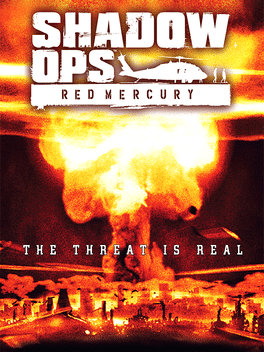
star 5.8Shadow Ops: Red Mercury is an action-oriented first person shooter based on modern military weapons, equipment and tactics, although presented as a "blockbuster action movie" rather than a hardcore realistic military simulation. Players proceed through linear levels while battling terrorists and hostile enemy soldiers in locations spanning all around the globe, such as Syria and France, using an assortment of modern firearms.Power Drome
2004
Power Drome
2004
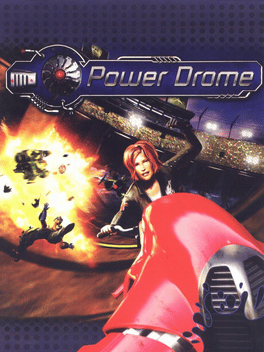
Powerdrome is a futuristic racing game by Michael Powell. Players race jet-engined, anti-gravity bikes called 'blades' around closed tracks; in a manner followed by games such as F-Zero and Wipeout.The Saddle Club: Pine Hollow Gymkhana
2004
Pick a horse, saddle up and take part in the Saddle Club gymkhana.Sonic Character Designer
2004
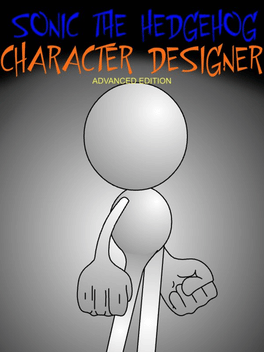
Sonic Character Designer is a Flash-based character creator from 2004 that lets you build custom Sonic-style characters by mixing parts and colorsPsi-Ops: The Mindgate Conspiracy
2004
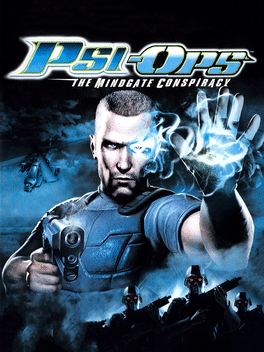
star 7.4Psi-Ops is an action game with a twist: no longer do you have to rely solely on big weapons and explosions to progress through it - you also have the aid of psychic powers to take down army after army of enemy soldiers. In the game you take the role of Nick Scryer, a secret agent who had his face reconstructed and mind wiped clean in order to infiltrate a growing psychic organization calling itself The Movement. Nick, however, is captured, but manages to free himself and continue his mission to stop The Movement, regaining his psychic abilities along the way. The game mixes regular weapons with the weapons of the mind. You'll have access to a series of mind powers, such as Telekinesis (the ability to fling object and soldiers around), Pyrokineses (the ability to set things on fire), Mind Drain (for draining Psi power out of foes' minds) and Remote Viewing (leaving your body behind and exploring the level).Blitzkrieg: Burning Horizon
2004
star 8.1Burning Horizon is the First Offical Expansion Pack for Blitzkrieg, it adds: A New Nation (Japan), New Units, Tanks, Aircraft, Squads, and Artillery, New Single Player Missions in Papua New Guinea, Burma, Singapore and Northern Africa.Jungle Tour 3: Ice Age
2004
The sequel to Jungle Tour 2, this level follows very much the same 'fight for survival' pattern as its predecessor. There's no puzzles, just a huge, icy landscape with plateaus, rocky outcroppings and caves.Moekasu
2004
Moekasu
2004
Among other goodies there are two stories based on the extended world of Moekan's Kirishima route and Tsui no Sora.Junkyard Apocalypse
2004
Junkyard Apocalypse
2004
Junkyard Apocalypse is a fire of action and online platforms made by Scott Cawthon in 2004.Slide-A-Lama
2004
Slide-A-Lama
2004
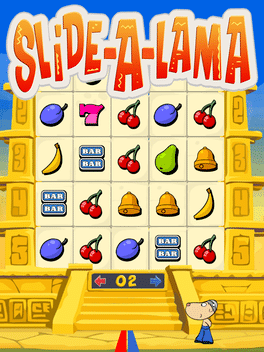
Slide-A-Lama is a two player 2D strategy/puzzle game. The goal is to collect most points by matching at least three tiles of the same type in a five-by-five grid. Players take turns to insert their current tile in one of the rows or columns. If a column is full, the bottom most tiles is crushed, if a row is full, tile falls at the opposite end out of the grid. Once three or more tiles of a kind form a line, the player is awarded points depending on type and number of tiles. With each 60 points of difference between the two players, one of the ten lamas switches the side. The game ends once the first player has all the lamas on their side. The game became popular as a flash game ICQ users could play against their contacts. It later appeared on several mobile platforms and as a website.Galleon
2004
Galleon
2004
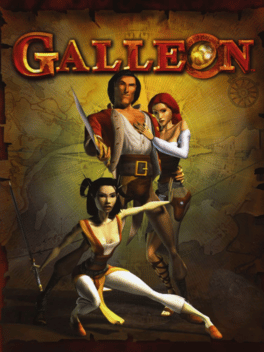
star 7.2Players control Rhama Sabrier who must stop the evil Jabez from wreaking havoc across the seven seas.King Arthur
2004
King Arthur
2004
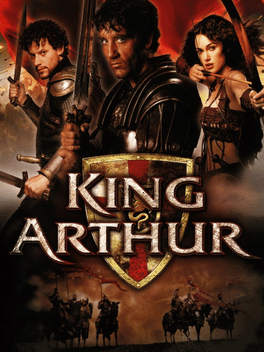
star 6.1Experience the excitement and feel of the Jerry Bruckheimer film, King Arthur as you play through Arthur's world amidst photo-realistic scenery. Players can chose to play as Arthur, Lancelot, Tristan, Bors and Guinevere; each with their own attack moves and combos, and challenge friends through the multi-player combat option. Other game features include well executed horseback combat levels and seamless cutscene to gameplay transitions.99Rooms
2004
99Rooms
2004
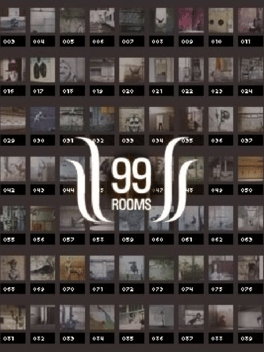
99Rooms is a visual project by Kim Köster, Richard Schumann, Stephan Schulz and Johannes Buenemann. 99Rooms was an exploration point and click flash game that used pictures of the abandoned East Berlin Industrial sector overlaid with Köster's art.