New Games - Page 12285

4-in-1 Version 3
1999
4-in-1 Version 3
1999
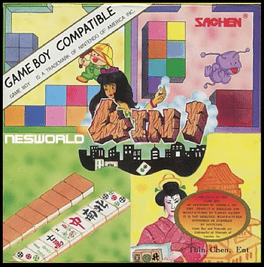
4-in-1 Version 3, also known as Commin 4-in-1, was the third volume of 4-in-1 multicarts made by Sachen. It contains: Taiwan's Mahjong, Japan's Mahjong, Hong Kong's Mahjung, and Store Tris 2.4-in-1 Version 2
1999
4-in-1 Version 2
1999
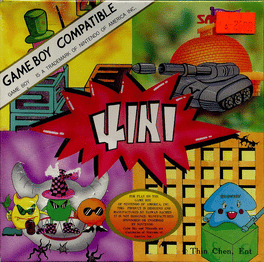
4-in-1 Version 2 was the second volume of 4-in-1 multicarts made by Sachen. It contains: Virus Attack, Electron World, Dice Square, and Trouble Zone.Out of the Park
1999
Out of the Park
1999
1999, the year Out of the Park was released on DOS. Made by Out of the Park Developments GmbH & Co. KG and published by Out of the Park Developments GmbH & Co. KG, this sports game is available for free on this page.Escape
1999
Escape
1999
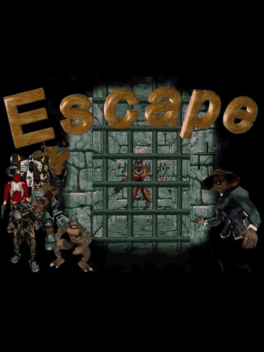
Escape is a single player, shareware, 3D first person shooter. The plot sees the player escape from jail to stop Shao Kang, who is using alien warriors in his attempt to take control of Earth. The ultimate goal is, of course, to kill him. The game is keyboard controlled and has five levels with multiple weapons and power ups to collect.3D Pinball Express
1999
3D Pinball Express
1999
3D Pinball Express is a pinball game from Cosmi. Features 4 fictional pinball machines.Wild Turkey Hunt
1999
Case Closed
1999
Case Closed
1999
Those of you who remember the classic board game Clue will recognize this plot immediately. By invitation only, you and seven others arrive on a secluded island and enter a huge mansion. Shortly after your arrival, your host is murdered and all of you are suspects. Until the murderer is caught, no one can leave the island. In this computer rendition of the game, it is possible to play alone or with multiple teammates. Take turns by rolling video dice and dig for randomly scattered weapons and clues in the mansion’s 12 rooms, which are rendered in 3-dimensional detail. Each of the characters has a personal history with the murder victim. They all have distinct personalities, backgrounds, voices - and motives. Sound effects and video animations add to the realism and the immersion factor in this whodunnit murder mystery. Very replayable, there are 8 separate cases that can be solved resulting in 24 possible outcomes and 9 different endings. If you get through all of those, even more cases can be downloaded.Fengse Huanxiang
1999
Fengse Huanxiang
1999
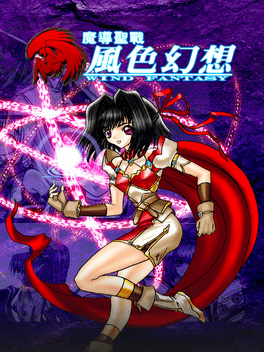
**This game is playable in Chinese only** Once the Earth was inhabited by gods. But as the human race came into the world, the gods decided to leave the Earth, and only three goddesses were left in charge. Under their guidance, the humans developed their science and technology. But the greedy humans did not accept the superiority of the goddesses, and rebelled against them. Since then, the humans find themselves in a continuous war with gods, demons, dragons, and other races. Over a thousand years later, a young girl named Lufia becomes a treasure hunter. She and her friend Anjieni accept missions all over the world, hoping to earn money and to find the ultimate magic spell. Once they received an assignment to fight against a group of pirates. This was just the beginning of a grand adventure during which Lufia will meet people who were directly involved in the great cosmic struggle many years ago...Hyper Tank
1999
Hyper Tank
1999
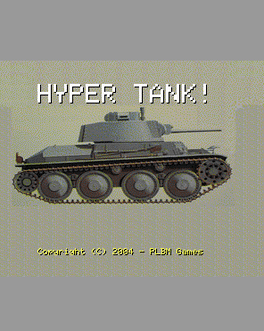
Hyper Tank is a high-performance tank game where your goal is to destroy as many enemies as you can to work your way through each stage to the goal. You may also need to retrieve keys to unlock obstacles in your path, or else find an alternate way around them.Lula Flipper
1999
Lawyer Hunt
1999
NASCAR Road Racing
1999
NASCAR Road Racing
1999
Take NASCAR stock cars off the ovals and onto twisting road course environments. In NASCAR Road Racing, race as or against your favourite NASCAR drivers on 13 custom-designed road courses.GP 500
1999
Styrlitz
1999
Styrlitz
1999
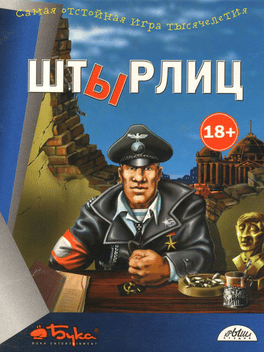
Styrlitz is a comedic point-and-click adventure game. It is a parody of the popular Soviet television series Seventeen Moments of Spring about the exploits of a Soviet spy operating in Nazi Germany under the name Max Otto von Stierlitz. The game contains adult jokes and references.Top Gear Pocket
1999
Top Gear Pocket
1999
Rally race through the city streets, grasslands and sandy terrain against eight other racers (or a friend) to the finish line. The higher you rank at the end of each race, the more new tracks you open up (including tracks full of ice). Time trial mode also allows you to test the time on each track.Miniverse Minigolf
1999
Miniverse Minigolf
1999
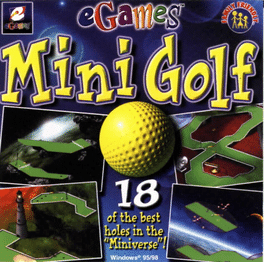
Two 9 hole mini golf courses for 1-4 players. One course is set on "Earth" and features putting through locations such as a construction site, a war zone, and a casino. The other course is set in space and includes a variety of science fiction obstacles like teleporters and laser shields. Players can choose to control their putter by pushing or pulling the mouse and can select one of several different colors for their golf ball.Gubble 2
1999
Gubble 2
1999
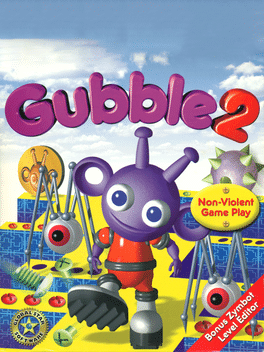
In this sequel to Gubble, you have to break apart different mazes, with different tools. There are many new powerups, and Gubble is on his feet so you have to collect fuel to fly.Championship Manager 3
1999
Take control of any club fron one of 15 major leagues and attempt to guide them to success. - Profile of over 35.000 players, managers and coaches. - Competitions, awards, transfers and disciplinary rules from fifteen countries. - Reserve/youth team option. - Full international simulation.Argentum Online
1999
Argentum Online
1999
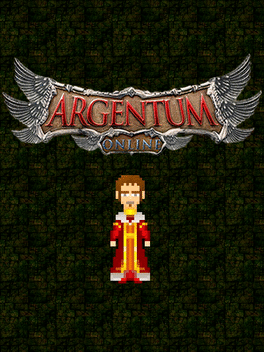
star 7.3Argentum Online is a 1999 Argentinian MMORPG video game. It is available on Microsoft Windows and developed by Pablo Márquez in the city of La Plata. It has the distinction of being the first MMORPG developed in Argentina. A sequel entitled Argentum 2 was at one point in development. The game has had a life outside of the fictional universe, one of the title's gamemasters noted "The fact that the Argentum community has transcended the barrier of pure fiction is for most of the players one of the most positive characteristics of the game. One day the idea of having dinner arose, to meet us all." The developers and fans worked together to create variants and mods of the game, by 2001 four different versions had been made. The game's source code was released in 2003 under the GNU GPL license and can be downloaded from SourceForge. La Nación described it as a "local pioneer" of the RPG genre. Página 12 suggested that the game is an "anarchic" game with no owner and instead a "game of the people".