New Games - Page 12398

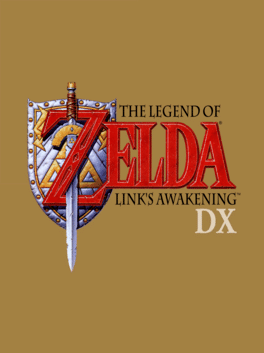
The Legend of Zelda: Link's Awakening DX
1998
star 8.8The Legend of Zelda: Link's Awakening DX is an updated re-release of Link's Awakening with several new additions, the most notable of which being the entire game is now in color.Flowers: Kokoro no Hana
1998
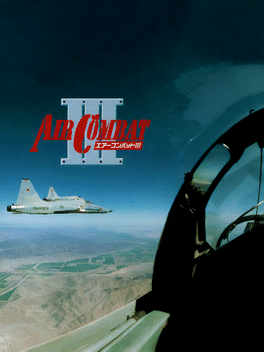
Ryusei Ryousen is a 2nd year high school student. His school has just recently been co-educated from all girls school. There are only three boys in school and a lot of wonderful girls around the hero. Which one will be chosen by the April?Air Combat III
1998
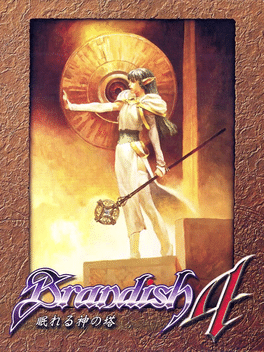
Brandish 4: Nemureru Kami no Tou
1998
Brandish 4 is a rerelease of the fourth game in the Brandish series (previously known as Brandish VT) with improved fidelity and two more playable characters.Fairy Kitty no Kaiun Jiten: Yousei no Kuni no Uranai Shugyou
1998
A Hello Kitty game for the Game Boy Color.Falcon 4.0
1998
Falcon 4.0
1998
star 5Falcon 4.0 breaks the sight-and-sound barrier with its cutting-edge graphics, realism, dynamic campaigns and multiplayer gameplay.V-Rally Edition '99
1998
V-Rally Edition '99
1998
Racing insanity! Over 40 original tracks, 11 official World Rally Championship cars, tracks in 8 worldwide locations, realistic race physics and smooth car handling, diverse terrain such as jungles, canyons, deserts, mountains and more, unstable weather patterns like rain, fog, snow and cloudy. Adjust car performance characteristics to suit varied road conditions. Bonus and hidden cars and tracks to unlock!Doraemon 2: Nobita to Hikari no Shinden
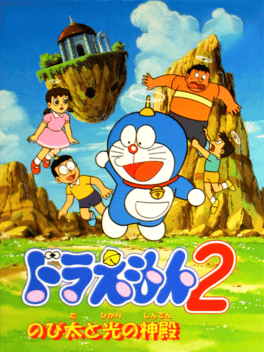
1998
Doraemon 2: Nobita to Hikari no Shinden (Doraemon 2: Nobita and the Temple of Light) is an action game for the Nintendo 64. It was released only in Japan in 1998 . The game is based on the Japanese manga Doraemon and is the second in the Nintendo 64 series, it was preceded by Doraemon: Nobita to Mittsu no Seirei Ishi and followed by Doraemon 3: Nobi Dai no Machi SOS!, all only released in Japan.Gakkou wo Tsukurou!! 2
1998
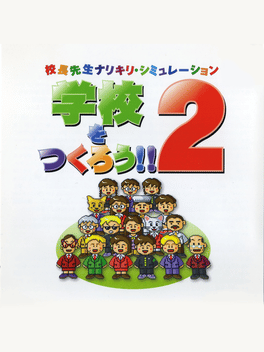
The Gakkou o Tsukurou series places the player in the principal of a school, placing him in charge of management and renovating the school grounds. The player decides everything: The place and the new buildings, the professors, the new places of the school, etc. In this sequel the game features new features like select the uniforms, new class, a lot new school boys and girls, and even enter inside the classroom to select the professor and tell him to teach the boys and girls and improve their stats.Noel 3: Not Digital
1998
Noel 3: Not Digital
1998
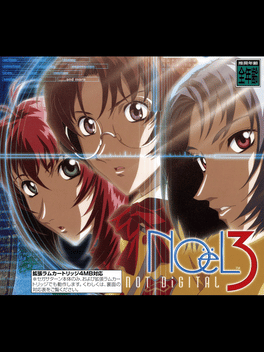
An Special Edition of Noël 3: Mission on the Line, This Special Edition of Noël 3 contains: - the game - a mini-CD single with two tracks: "Yuka kara no Message" and "White Morning" by Mayumi Iizuka (飯塚雅弓)Wonder Trek
1998
Wonder Trek
1998
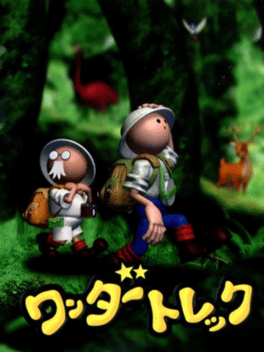
Wonder Trek is a puzzler action game only released in Japan for the PS1. You play as two zoologists: professor Fable and Nick. They are stranded on an island after a plane crash and you and have to find a giant phoenix egg.Tsumu
1998
Tsumu
1998
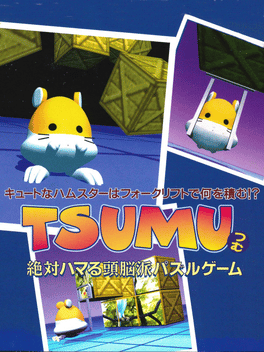
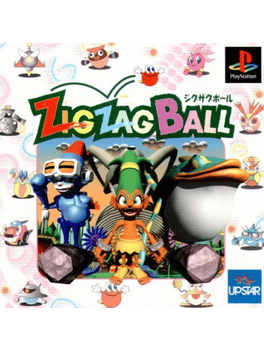
Tsumu is 3D puzzle game where the player, as a hamster, uses a forklift to construct different images.Zig Zag Ball
1998
Zig Zag Ball
1998
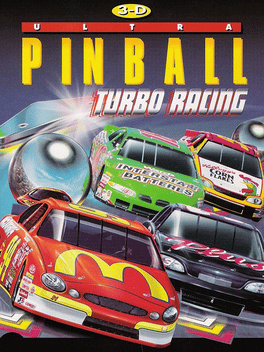
"ZIG ZAG BALL" is a simple ball action game based on Putting Golf, Billard and Pin ball. Enjoy this fantastic and comical game starred by unique characters and ball characters with your family!3-D Ultra NASCAR Pinball
1998
3-D Ultra NASCAR Pinball is, as the name suggests, a pinball game with a racing theme. Unique is that the theme is not only present on the table's background images but that the player actually takes the role of one of four real-life NASCAR drivers. Every race consists of three parts, each represented by one table: preparing, racing and pit stops.NFL Quarterback Club 99
1998
The #1 football game on N64 just got a whole lot better! All 31 NFL teams, 3D rendered stadiums and over 1,500 players. Authentic team playbooks like the 49ers West Coast Defense and Steelers Ground Attack. All-new artificial intelligence developed by New York Jets offensive coordinator Charlie Weis. 250 all-new motion captured animations. Award-winning hi-rez graphics. Create your own players, coaches, teams, uniforms and playbooks!Dodgem Arena
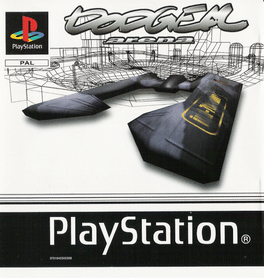
1998
Dodgem Arena
1998
It's AD 2049. Superconducting materials and hi-grade hydrogen fuel have changed the world. Skilled contestants from all over the world participate in the thrilling sport of Dodgem. 'The rewards are low, competition is fierce and it's illegal. But in the end nothing comes close to the extreme thrills of the Dodgem Arena.'Bomberman: Party Edition
1998
star 7.3Bomberman Party Edition, known in Japan and Europe as Bomberman, is a PlayStation version of the 1983 game Bomberman. In addition to vintage graphics for single player mode, an option for enhanced graphics is added. Battle mode is added to this release, which features 8 courses with 3 levels per course. The single player mode is very similar to the 1983 release of Bomberman. The player controls the titular Bomberman in a wide area, full of destructible and non-destructible blocks. The blocks can be destroyed with bombs, and may contain a power up that increases Bomberman's walking speed, the size of Bomb explosions, the number of bombs able to be placed, or the ability to explode your bombs with the push of a button or to walk through walls or bombs. Some power ups are temporary, allowing Bomberman to be immune to bombs or monsters. The point of each level is to destroy each monster, and then locate the door, which is located underneath a random block. After every few levels, the player can play a bonus level.Turok 2: Seeds of Evil
1998
star 6.9Having defeated the Campaigner, Turok throws the Chronocepter into a waiting volcano to destroy it. Unfortunately the blast awakens an even deadlier force - The Primagen. Once again a Turok is tasked with restoring peace to the land and stopping the Primagen from merging Earth with the nether world.The Sub Shop
1998
Powerslide
1998
Powerslide
1998
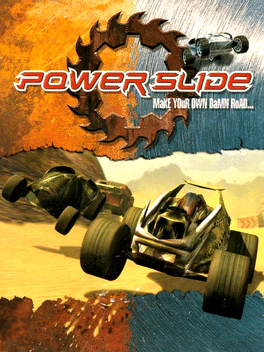
Powerslide is a racing game set in a post-apocalyptic environment. It was the first of the "Powerslide" series and the only one released so far, Powerslide became known for its realistic physics and ground-breaking graphics.