New Games - Page 12443

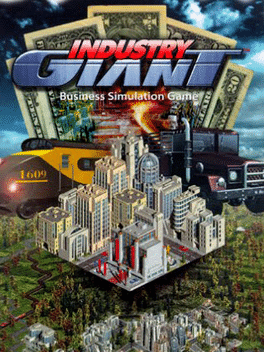
Industry Giant
1998
Industry Giant
1998
star 6Management game that put the player in charge of controlling an industrial group, with the objective of becoming the best industry giant between various competitors. Experience the soaring heights and the shattering depths of being an industrial giant! A factory, a store and some lorries – a simple beginning can be the start of an illustrious career! Build all types of factories, buy your raw materials at a bargain and manufacture the products that will bring you fame and fortune. All you need now is the right advertising strategy – and watch the tills in your newly opened stores fill up. See what you can do in the toy and sports goods industry. Earn your money from jewelry and furniture. And be prepared for the challenges of the computer age. The automobile and electronics industries will make demands on your organizational skills. What is the competition up to? Are they starting to become a nuisance? Then by them out! If you have enough money, that’s it. Or make your companies running more successful thaGT 64: Championship Edition
1998
GT 64: Championship Edition "Grand Tour 64" is a racing video game for the Nintendo 64. Hence its title, it was an official licensed game to All-Japan GT Championship, featuring cars and drivers of the 1997 season. GT and Grand Tour our references to long distance traveling such as in the traditional version of the Grand Tour. It was first released on Super Famicom as Zen-Nippon GT Senshuken. It was also the final game ever published by Ocean Software.Of Light and Darkness
1998
Of Light and Darkness is the creation of an award-winning team that includes game designer Cliff Johnson of Fool's Errand, storyteller David Riordan of Voyeur, writer Ken Melville of Sewer Shark.Rocket Arena 2
1998
Rocket Arena 2
1998
Rocket Arena 2 is one of the most popular Quake 2 mods of all time. It's innovative "multi-arena" maps allows players to choose from up to 10 arenas on a single level, and have matches going on in all of them simulatnously. The refined "pickup" mode introduces players to the fast-paced teamplay style of Clan Arena.NBA ShootOut 98
1998
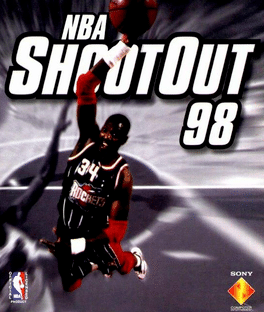
NBA ShootOut 98
1998
NBA ShootOut 98 is the 1998 entry into the popular ShootOut series based on the NBA..Galador: The Prince and the Coward
1998
The Prince and the Coward is a 1998 video game created by fantasy writer Jacek Piekara and video game designer Adrian Chmielarz. It was produced by Polish company Metropolis Software in cooperation with the British Revolution Software. GOG.com re-released it in 2021.Power Stakes 2
1998
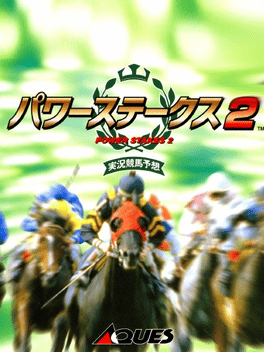
Power Stakes 2
1998
Power Stakes 2 is the third (and last) game in Tose Software game series featuring the new data of the new season over the previous game. The game again features the 3d engine to watch the race in different camera angles that the player select in the game main menu. As new features the game now features the pedigree data and other things.3-D Frog Man
1998
3-D Frog Man
1998
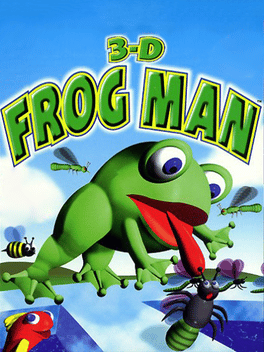
3D Frog Man is a three-dimensional maze game where the frog hero eats bugs and evades evil ghosts. The game features 30 levels, hidden passages, multiple obstacles, and dozens of bonus items.Kidou Senshi Gundam: Gihren no Yabou
1998
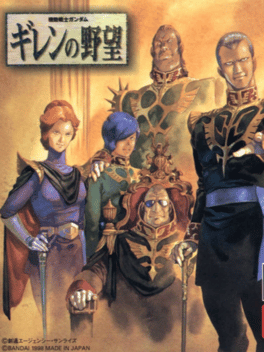
Turn-based strategy game set in the Mobile Suit Gundam franchise, in Universal Century 0079. It adds political and military management to the One Year War, letting the player choose which side to play as The Earth Federation, The Principality of Zeon or any other splinter faction.VR Sports Powerboat Racing
1998
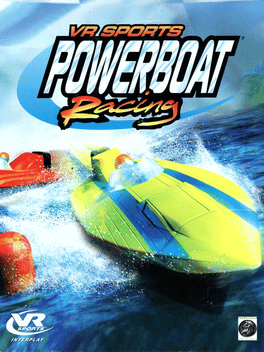
This game represents an arcade-style approach to powerboat racing. Races take place on enclosed circular waterways in easily recognizable locations around the world. There are several types of races, including the standard championship, time trial, practice, and multiplayer modes.Judge Dredd
1998
Judge Dredd
1998
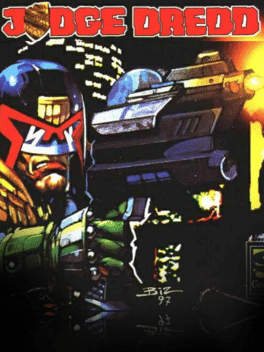
Arcade rail-shooter game that used a Light Gun. Dredd must save the mayor, who is being held hostage by a former judge. Live-action cutscenes were played at the conclusion to each stage. Completing the game unlocked the final cutscene where Dredd resolves the crisis.Ruin
1998
The Sword of Ares for Quake
1998
The Sword of Ares is a 1998 unlicensed total conversion for Quake. The game adds several features not available in vanilla Quakes, such as the ability to switch to a third-person view (which may be a bit buggy) and several selectable player skins. The Sword of Ares was made of free content but was distributed as shareware. It appears that the registered version (as a separate PAK file) was eventually made available by the author as a free download too, as it can be found on PlanetQuake mirrors alongside the shareware release. It is an unofficial commercial total conversion, whether it was licensed by id Software is unclear. The game retailed at $9.99 on their official website.Nanosaur
1998
Nanosaur
1998
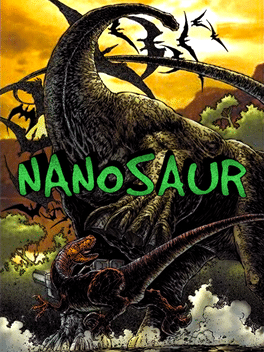
Nanosaur is a third-person action game. The player must find each of the five types of eggs and bring them to time portals. The location of the nearest time portal is always indicated by an onscreen "temporal compass" arrow. The Nanosaur can fly with his jetpack, but the amount of fuel is limited. Pickups with ammunition, health refills, and energy shields can be found strewn about, and fuel can be recharged by standing near gas fissures. For his defense against the wild dino populace, the Nanosaur is equipped with a "fusion blaster" weapon which has numerous attack modes, each using a different type of ammunition. Apart from the dinosaurs, the player must also watch out for other threats such as lava, rolling boulders, or spore shooting fungi.Sakura Taisen 2: Kimi, Shinitamou Koto Nakare
1998
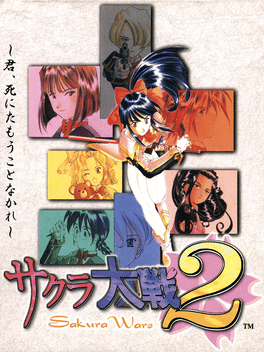
The sequel to the original Sega Saturn system seller (in Japan at least) becomes one of the Saturn's last great hurrahs. Head back to early 1900's Tokyo as Oogami Ichirou, a naval commander who's now become the last line of defense against the demons that stalk the capital. The all-female cast from the original returns in full, joined by two additional members. The grid-based strategy battles from the original are improved with better spell attacks and cleaner graphics, while the "LIPS" interactive conversation sequences feature better production values, color depth and a few additional twists on interactivity.Men in Black: The Game
1998
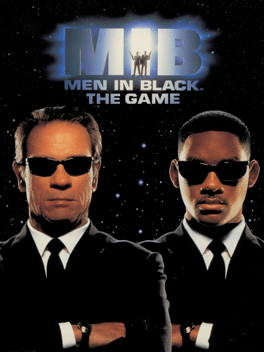
Men in Black: The Game is an officially licensed game based on the 1997 film Men in Black. The plot is unrelated and it is a survival horror game as opposed to being a comedy.Morita Shogi 64
1998
Morita Shogi 64
1998
Morita Shogi 64 is a Japanese virtual board game for the Nintendo 64. It was released only in Japan in 1998. It is the sequel to Saikyō Habu Shōgi, a launch game for the Nintendo 64. The cartridge has a built-in RJ-42 Modem Connection port with which players were able to connect to (now defunct) servers to play against other players all around Japan.Möbius Link 3D
1998
Möbius Link 3D
1998
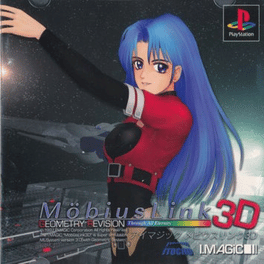
Möbius Link 3D is a turn-based space strategy game featuring 3D graphics. Players take on the role of Alice Schrödinger, commander of the Starfleet Möbius, an all-female fleet fighting its way through a series of missions against a rival imperial navy.