New Games - Page 12445

Hugo: Wild River
1998
Hugo: Wild River
1998
Hugo: Wild River, also known as Hugo 6, is a video game developed and published by ITE for the PC in 1998. As with other classic Hugo games, it was based on the newest scenarios from the TV game shows.Super Famicom Wars BS Ban
1998
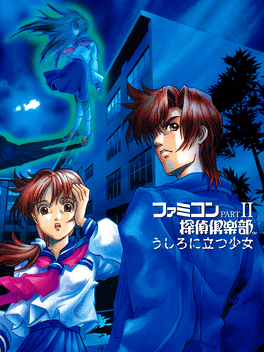
Super Famicom Wars BS Ban is a view-limited Downloadable game for the Satellaview that was broadcast in April, 1998.Famicom Tantei Club Part II: Ushiro ni Tatsu Shoujo
1998
A Super Famicom remake of Famicom Tantei Club Part II: Ushiro ni Tatsu Shoujo, with new graphics and music.ESP Ra.De.
1998
ESP Ra.De.
1998
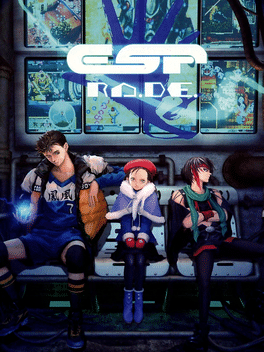
ESP Ra.De. is a 1998 arcade game developed by Cave and published by Atlus. It is the first non-DonPachi game released by Cave. ESP Ra.De. received spiritual prequels in the form of the Espgaluda series; however, ESP Ra.De. is related to the Espgaluda series only by shared name and programmer Tsuneki Ikeda.The Golf Pro
1998
The Golf Pro
1998
The Golf Pro is Empire Interactive's first foray into golf sims. It is a standard 3rd person golf simulation with the addition of the mouse drive system introduced on Maxis's SimGolf and popularized on Sierra's Front Page Sports: Golf. Essentially what this system does is replace the swing bar and use a series of mouse movements and clicks to determine the power, accuracy and direction of the swing.Chill
1998
Brain Drain
1998
Brain Drain
1998
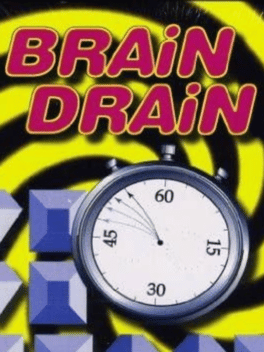
Brain Drain is a puzzle game in which the player has to recreate a pattern, consisting of different symbols like apples or hearts, which is shown in the corner of the screen. The main playing field consists of said symbols, but randomly switched around. The player controls a frame which encloses four of the symbols. When pressing a button, the symbols are rotated clockwise around the frame. Of course the levels have to be solved within a time limit. In the higher difficulty levels, the player also has to deal with so-called special effects which occasionally kick in during play, e.g. some symbols get hidden by "?" blocks, symbols rotate on their own or the controls are reversed. Three power-ups can be earned by completing bonus levels or finishing a level really fast: clock (stops time for 20 seconds), flash (skips the current level) and credit (gives a second try after time has run out). Clock and flash have to be activated manually; credits is applied automatically. Besides the regular playing mode, there is alsBananas de Pijamas
1998
Bananas de Pijamas
1998
Bananas de Pijamas is a pirate SNES hack of Chester Cheetah: Too Cool to Fool, made by Twin Eagles Group. This game was released in April 1998. It is based on a kids TV series by the same name. The TV series name is spelled in Portuguese in the game. When you start the game, it enters 'Level 3' instead of 'Level 1' from Chester Cheetah: Too Cool to Fool.Fighting Vipers 2
1998
Fighting Vipers 2
1998
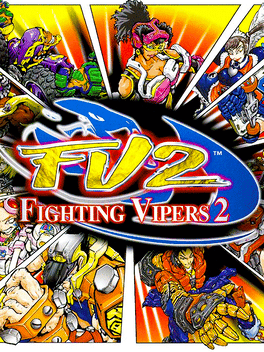
star 4.1The sequel to the innovative Fighting Vipers has arrived and is set to ignite the world of beat 'em ups once again. Revenge has conquered your mind and aggression has poisoned your blood as you take control of a band of 'Vipers', each boasting distinct weapons in a fight to remove dictatorship from the city's Mayor. Fighting Vipers 2 is sure to put your pulse into overload!Motorhead
1998
Motorhead
1998
star 5.9The future of racing is here, and it's called MOTORHEAD. This game allows you to hop in one of 10 streamlined racers and test your skills on eight obstacle-filled courses that wind through urban, desert, and seaside terrain.Rage of Mages
1998
Rage of Mages
1998
star 6Rage of Mages is a PC game that combines role-playing and real-time strategy. Produced by Nival Interactive it was first released in Russia under the name of Allods: The Seal of Mystery. While a role playing game, the game uses a real time strategy game interface rather similar to Warcraft II. First of all, a player chooses between a warrior or a mage for his or her starting character. On his journey he (or she) will meet a few more companions. There will be hirelings available for a fee should a player find any mission too challenging and need reinforcements. Each mission takes place in a game map generally full of enemies. Mission type ranges from rescue to escort to exterminate villains to treasure hunting.Starship Titanic
1998
Starship Titanic
1998
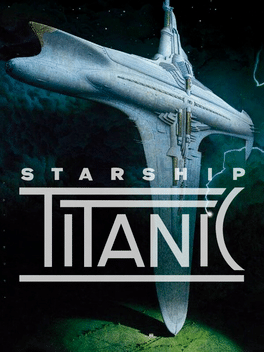
star 8.6From the creative mind of Douglas Adams. The Starship Titanic crashes into your house and takes off with you onboard. Inhabited by malfunctioning robots and a semi-deranged parrot, you must gain control of the ship and pilot it back to Earth.Sonic Doom 2: 'Bots on Mobius
1998
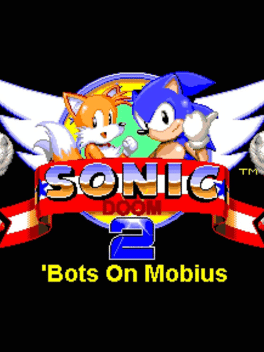
Sonic Doom 2: 'Bots on Mobius is a mod of Doom II with elements from the Sonic the Hedgehog franchise developed by SSNTails.Hammer Champ
1998
Hammer Champ
1998
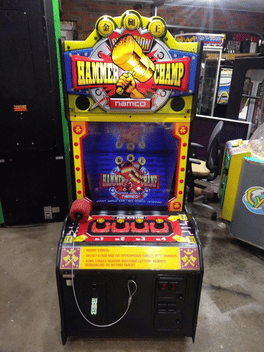
Hammer Champ is a 1998 arcade mechanical game developed and produced by Namco. The player is tasked with completing a score of assorted mini-games using a plush mallet to hit four different buttons on the cabinet.Agapito's Crazy Adventure
1998
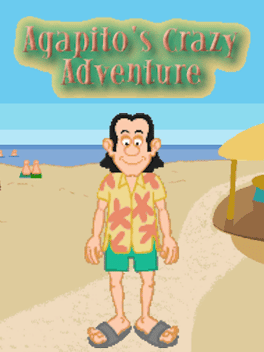
Inside a box with cereal, Agapito finds a voucher for a trip for two to an island in the Pacific Ocean, somewhere between Madagascar and the Antilles. He invites his friend Susan to accompany him, but he loses her on the airport, probably to a "tall blond fellow." He ends up in a cargo plane next to a nose picking gorilla. On the island he will stay in the Paradise Hotel as its only quest. Exploring of the island is done by foot, until he manages to repair an impressive sports car (a Deux Chevaux). From then on the player is able to explore the island and its beaches by using a map. Agapito's Crazy Adventure is a 3rd person, inventory based humorous adventure. There's no real quest, but only a series of situations that have to be solved. Only in the final stage of the game Agapito meets a new girlfriend and some tasks have to be completed before he can have diner with her.Toolkid Creation
1998
Toolkid Creation
1998
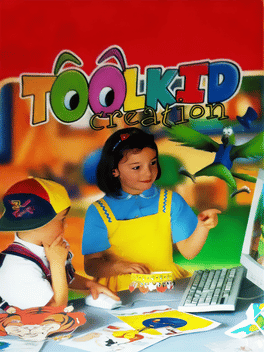
Toolkid Creation from Emme studio is an educational game offering kids a set of activities to create art piece on their computer and learn how to start DIY in real life as well.Alf Jonathan y la piedra de los Valcroix
1998
Alf is invited to the castle of an ancient French dynasty, where he will have to solve many mysteries and puzzles to find the count and unravel the secret hidden in the castle.Alf Jonathan Y la Máscara de Siwa
1998
Alf is on a mission to travel to Egypt and recover a golden mask. To do so, he will have to deal with old acquaintances and a mysterious sect.Rockman X Shùxué Xuànfēng
1998
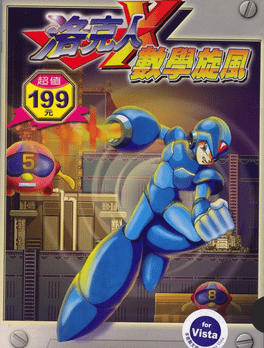
Rockman X Shùxué Xuànfēng is a licensed Mega Man X series video game released for home computer only in Taiwan by Strawberry Software. Rockman X Shùxué Xuànfēng has six challenges where the player faces a Maverick from Rockman X3. Players can register their names and save high scores, with a leaderboard showing the highest score from each player in each games. In five challenges the player uses X to hit (by shooting or touching) a robot with a number corresponding to the answer of the question. There is a time limit of 60 seconds to each question. The boss attacks him if the answer is wrong, and he faces the boss after making 500 points. The stage is cleared after making 1000 points, and the player can print a certificate.Mic
1998
Mic
1998
3 levels, increasing in difficulty and complexity. First, you go through a prison complex before entering an "Anti-Duke" training center where the aliens learn how to fight against Duke. In the finale, you have to find the power plant to shut down the whole installation.