New Games - Page 12447

Uncle Albert's Magical Album
1998
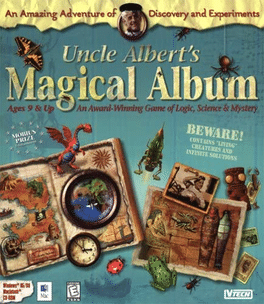
Uncle Albert's Magical Album is the first game in a series based on the fictional character "Uncle Albert". Aimed at ages 7 and up (9 and up advertised in the US release), it consists of a series of puzzles that can be completed in a non-linear order. The player needs to reveal the secret of uncle Albert through a book in his attic. Solving the puzzles opens up new pages that lead to the secret.Rascal
1998
Rascal
1998
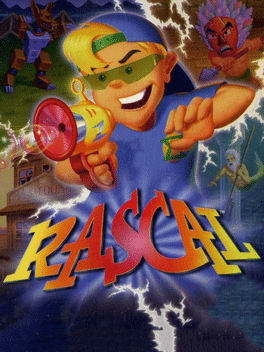
Rascal is an action, platform game. In the game, the player assumes the role of Rascal armed with the Bubble Gun, in a mission through five worlds involving a medieval castle, ancient Aztec ruins, the aquatic city of Atlantis, a pirate ship and a Western town. The player needs only to complete the past level to gain access to the next world. In each past and present level, the player has to find the six pieces of the Time Clock in order to access the Time Bubble at the end and be able to access the next form of that world. Each future level has a boss fight against Chronon. Defeating him in all five gives access to the final world.Densha de GO! EX
1998
Densha de GO! EX
1998
Densha de GO! EX is an expanded version to the original, that adds an additional route to the Arcade version, where a section of the Sagano Line that was skipped in the original is fully playable. A Sega Saturn port was based on this version of the arcade original was also released.Aztec Wars
1998
Aztec Wars
1998
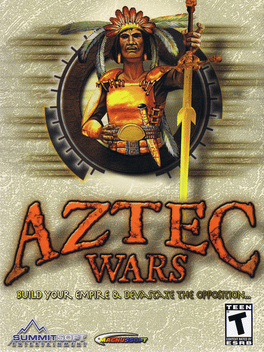
Aztec Wars is a budget RTS game that takes place in an alternate history 17th century Europe where the “Russes” and “Cathayans” must fight back an invasion from the Atlantic crossing Aztecs (who have already conquered France, Germany, and Spain).Area 51/Maximum Force Duo
1998
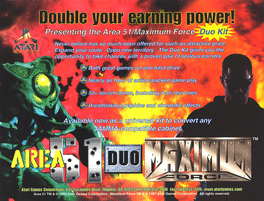
Players can choose to play either of these previously released titles. In the first game, use a light gun to shoot infected human "zombies", aliens and their mothership. In the second game, players shoot terrorists.MLB 99
1998
MLB 99
1998
Go out to the old ballgame in MLB '99. Players can choose from modes like Quick Play, Playoffs, Season, and Home Run Derby. The Spring Training mode allows you to create and develop your own player, who must prove himself in a short minor league stint.Warhammer: Dark Omen
1998
Warhammer: Dark Omen
1998
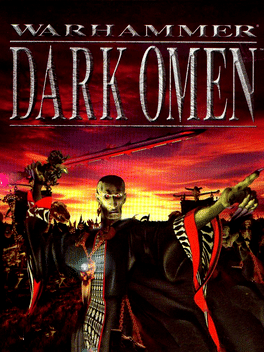
star 7.9This sequel to Warhammer: Shadow Of The Horned Rat is an overhead role playing game in which you play Morgan Bernhardt. The game consists of a series of battles where you view the battle from overhead via a rotatable view. You go through the game managing your army, deciding whether to fight in optional battles, and advancing through a deep and engrossing storyline via a series of conversations played out by talking portraits.World Cup 98
1998
World Cup 98
1998
star 8.5The main feature of the game is the World Cup tournament itself, where the player may use either the actual groups used in the finals, or groups composed of a random selection of the included teams. Each match takes place in a recreation of the venue it was played in the actual tournament. As in the real tournament, group games do not go to extra time or a penalty shootout but knockout matches do.Hexen II Mission Pack: Portal of Praevus
1998
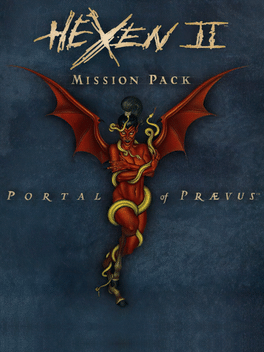
Hexen II Mission Pack: Portal of Praevus, Raven Software's official follow-up to Hexen II, sends players back to the dark medieval fantasy setting of Thyrion, where a new evil has arisen to fill the void left by Eidolon's death.Dark Reign: The Future of War - Rise of the Shadowhand
1998
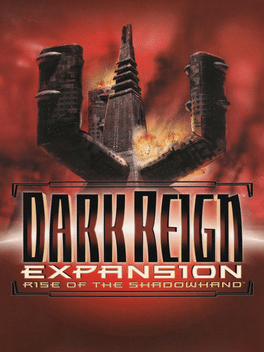
A colossal war between the Imperium and Freedom Guard is annihilating your world. To save your civilization, you must enter the heart of an empire at war. Command over 35 units with specific orders and deploy suicide bombers, hostage takers, saboteurs and more. Use precisely calculated battlegrounds to your strategic advantage and play against a highly responsive and unpredictable AI that detects and adjusts intelligently to your tactics. Vanquish the military powers to alter the destiny of a galaxy.StarCraft
1998
StarCraft
1998
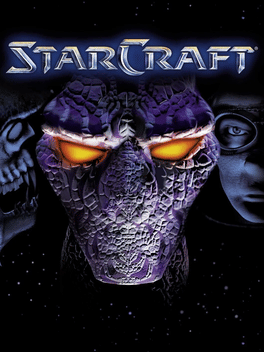
star 8.7StarCraft is a real-time strategy game set in a distant sector of the Milky Way galaxy in the 26th century. Players command one of three species across separate campaigns: the Terrans, resourceful human colonists cut off from Earth; the Zerg, an insectoid swarm that assimilates other species; and the Protoss, a technologically advanced race with powerful psionic abilities. Each species features distinct units, structures, and strategic options. The game includes a story-driven single-player campaign for each faction and competitive multiplayer via Battle.net.Hostile Waters
1998
Hostile Waters
1998
Once more duke finds himself in the middle of a hostile situation, this time aboard a half flooded nuclear submarine, grounded on the rocks in the middle of the ocean on a dark stormy night.Parasite Eve
1998
Parasite Eve
1998
star 7.1Parasite Eve is a survival horror role-playing video game developed and published by SquareSoft (now Square Enix) for the Sony PlayStation console. The game follows the story of Aya Brea, a rookie NYPD officer who becomes embroiled in a series of bizarre and deadly events related to a genetic mutation known as mitochondria. The game combines elements of horror, science fiction, and RPG gameplay, featuring real-time battles, exploration, puzzle-solving, and character development. The game's plot is inspired by the novel of the same name by Hideaki Sena, and its gameplay mechanics were influenced by the Final Fantasy series. Parasite Eve was critically acclaimed upon its release in 1998, and is widely regarded as a classic of the survival horror genre.Nettou Real Bout Garou Densetsu Special
1998
The supreme trial of strength awaits! 19 of Fatal Fury's hottest heroes collide! One year since the fearsome conclusion to "Real Bout", the hungry wolves ready themselves for a new battle, "Real Bout Special" - the paramount pugilistic proving ground!The Ultima Collection
1998
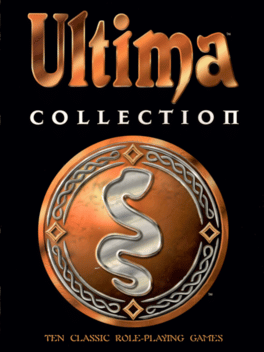
The worlds of Ultima await you in this special collection of 10 games designed by Richard Garriott, also known as Lord British, the creator of the Ultimate series. The Ultima Collection Includes: Utima I: The First Age of Darkness Ultima II: The Revenge of the Enchantress Utima III: Exodus Ultima IV: Quest of the Avatar Utima V: Warriors of Destiny Ultima VI: The False Prophet Ultima VII: The Black Gate Ultima VII Part 2: Serpent Isle Ultima VIII: Pagan Akalabeth * Bonus Software: Akalabeth. The first game Richard Garriott ever designed. Akalabeth became the catalyst that spawned 17 years of Ultima fantasy Role-Playing tradition. * Ultima Atlas This 16 page atlas is a complete compilation of the navigational maps originally packaged with each Ultima game. * Exclusive Interviews. These revealing never-before-seen interviews with Lord British, Richard Garriott's alter ego, offer a perspective on the Ultima series and a first look into the next game, Ultima: Ascension.Auto Destruct
1998
Auto Destruct
1998
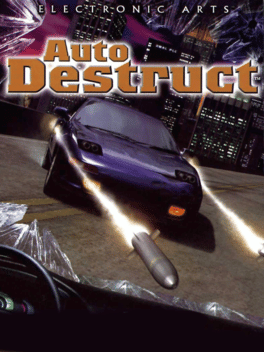
It's the near future and Los Angeles is about to be ravaged by an evil terrorist group known only as the Cult of Lazarus. An underground agency hired by the United States government has requested your assistance as an expert driver. It's also a personal matter to you as Lazarus killed your wife and child. Payback and government service -- what could be better? The game incorporates 3D sceneries full of pedestrians and cross-traffic from multiple camera angles, including an overhead view. Manage resources such as fuel, ammunition and armor while utilizing 12 deadly weapons including machine guns, missiles, plasma cannons, smokescreens, oil slicks and more!Triple Play 99
1998
Triple Play 99
1998
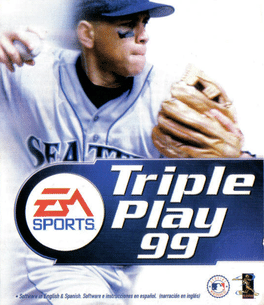
This iteration of EA's baseball simulation adds 3D hardware support, a career mode, and a full-league draft. It features official Major League Baseball statistics and names of all teams and players from the 1998 season. Other modes include single-game exhibition, home run derby, play-off, tournament, season and manager. The new career mode allows you to play multiple seasons. Tournament mode allows you to create a custom tournament with up to eight teams.Pitfall 3D: Beyond the Jungle
1998
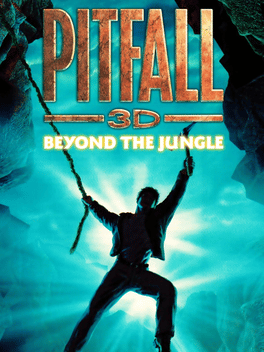
star 5.9Pitfall 3D is a 3D platformer in which players guide Pitfall Harry Jr. (the original Pitfall! hero's son, voiced by B-movie king Bruce Campbell) through a wide variety of settings, ranging from the South American jungle to the ruins of the Moku civilization that lie behind a dimensional rift. Some old obstacles and enemies appear, such as tar pits that can open up beneath Harry and swallow him whole, ever-present scorpions, and old favorites like rolling logs and handy vines, which can be found smattered around the jungle. But there are new dangers as well, including the sinister flying darters, and new wonders to behold, such as gravity-defying lucense. Harry Jr. gets by much the same way his father did -- he can dodge out of the way, jump over obstacles, and take a swing at attackers with his trusty pick-axe. The object is to guide Harry Jr. through 11 levels, trying to discover what happened to the Moku civilization, and finally into a confrontation with the mighty Scourge, who's holding this alternate dimensiHataraku Shoujo: Tekipaki Working Love FX
1998
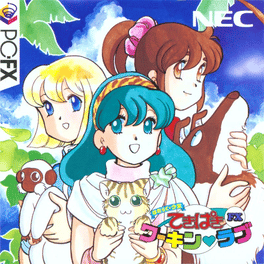
Tekipaki: Working Love FX is essentially an upgraded version of Tekipaki: Working Love for Turbo CD. It adds several scenarios to the main game, which play mostly like a Japanese-style adventure - the player can choose dialogue options or a location to go to. Those scenarios add more background to the personalities of Naomi, Hikaru, and Edalt, the three extra-terrestrial heroines of the game (for example, in one of the scenarios Hikaru's Martian cat escapes from the zoo, and it's the player's job to find him). The PC-FX version of the game also adds an "omake" option, where it is possible to view pictures of the girls.Pokémon Pikachu
1998
Pokémon Pikachu
1998
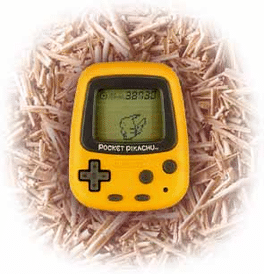
Pokémon Pikachu, also known as Pocket Pikachu in Japan, is a limited series of two portable Pokémon digital pets (similar to Tamagotchi) featuring the famous yellow electric-type Pokémon, Pikachu. Released on March 27, 1998, in Japan (November 2, 1998, in North America).