New Games - Page 12583

Castle Explorer
1996
Castle Explorer
1996
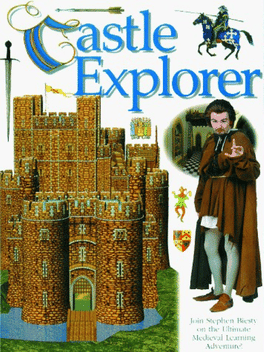
Castle Explorer is a educational adventure game, developed and published by DK Multimedia in 1996. Based on the book by Stephen Biesty, you play the role of a page infiltrating the castle of Baron Mortimer on behalf of the King.Logic Quest 3D
1996
Logic Quest 3D
1996
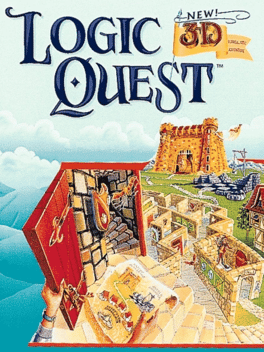
Logic Quest is an educational game focusing on building thinking and problem solving skills. Solve the existing puzzles or design your own 3D labyrinths full of locked doors, puzzles, and perhaps even a robot or two.Weekend Warrior
1996
Weekend Warrior
1996
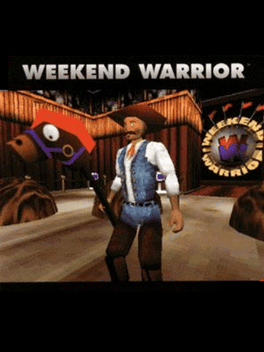
You're a player in the most action packed and intense game show ever aired: Weekend Warrior. All you can do to defend yourself is slug at your opponents with your handy "swing thing."Eggerland for Windows 95
1996
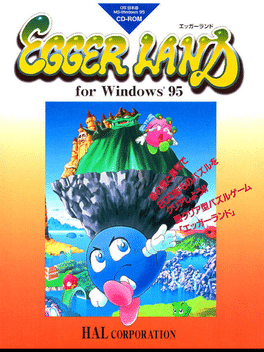
Eggerland entry for PC. Later releases were titled "Revival! Eggerland"PC Collection
1996
PC Collection
1996
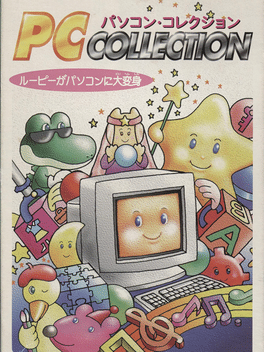
This game is a small collection of ten different mini-game activities. Those activities include a word processor, a paint and illustration program, a music composer, a fortune-telling screen with printable charms, a simple fashion designer, jigsaw puzzles, a crane machine game, animal dress up, a calendar, and an address book. The game came packaged with the Loopy Mouse.Goosebumps: Escape from Horrorland
1996
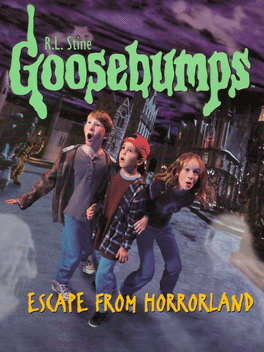
Goosebumps: Escape from Horrorland is the interactive sequel to R.L. Stine's kids' horror novel, One Day at Horrorland. You and Lizzy, her brother Luke, and his friend Clay are once again trapped in Horrorland, a sinister, scary "theme park." When Luke and Clay are captured, you and Lizzy must find them and escape from the park with your lives. However, you must go up against a mummy, a werewolf, Dracula, and many more monsters in order to escape.Logic Pro
1996
XS
1996
Super Skidmarks Data Disks
1996
This package adds a number of new features to the chaotic and thrilling racing game Super Skidmarks. The major additions are 2 new track disks, featuring a total of 12 new tracks (taking the game up to 36), featuring the succession of loops, jumps and crossovers of the original. In addition, the track disks are now fully hard-disk installable (the program and car disks always were). The program disk has been replaced with an updated one, featuring two new difficulty levels and new championships to take advantage of the new tracks.Jinyong Qunxia Zhuan
1996
Jinyong Qunxia Zhuan
1996
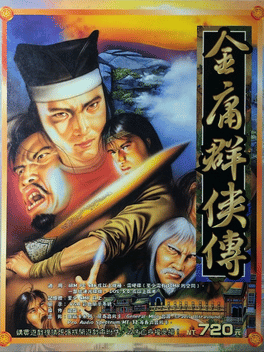
Jinyong Qunxia Zhuan is a semi-humorous RPG set in a world which is populated by familiar characters from different novels by the famous Chinese writer Jinyong. Navigating your hero from isometric perspective, you encounter various characters that will join your party. During battles, you can move your characters on the combat screen within their movement ranges. You can attack with melee weapons when standing near the enemy, or use spells and techniques from a distance. There are no random battles in the game, and most of the battles are pre-set.Jane's Combat Simulations: Advanced Tactical Fighters
1996
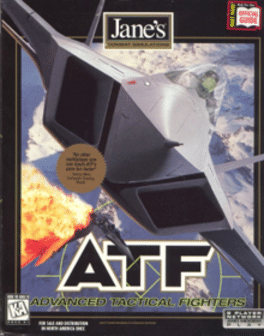
Jane's ATF: Advanced Tactical Fighters is a 1996 combat flight simulator developed and published by Electronic Arts for DOS. It is part of the Jane's Combat Simulations franchise. An expansion pack, NATO Fighters, was released in 1996. A compilation package, Advanced Tactical Fighters Gold, was released in 1997 for Microsoft Windows.Oddballz: Your Wacky Computer Petz
1996
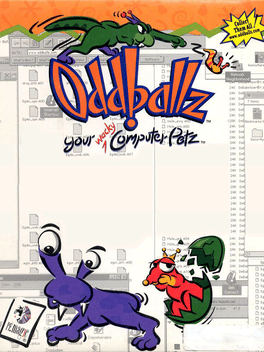
Oddballz is a spin-off from the Catz and Dogz series, from P.F. Magic. This time, as the title states, the pets are wacky creatures, more alien-like than animal. Now they can make their eyes come out of their sockets and literally be scared to pieces, while retaining a comic look and feel (something impossible while dealing with Dogz or Catz). The mechanics are pretty much the same in every game of the series, and here the player also gets to pet them, teach them tricks, punish them or just play around. The Oddballz will respond to each and every move and they can even morph into something else, depending on what the player does. The tools the player can use are also very different from the ones in Dogz and Catz, and also have a wacky feel to them. There are tools like the Robo Pogo, the Gravitron, Seismo Ball, Transformer, Atomic Ball, and the delicious Liqui-Food, for feeding the pets. The company also made additional Oddballz available for download from their site, to add to the starting lot of seven.Surf 'm Up!
1996
Surf 'm Up!
1996
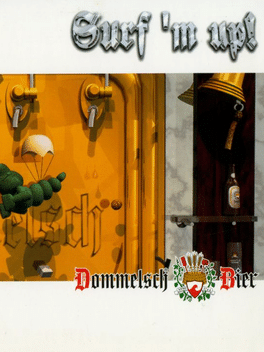
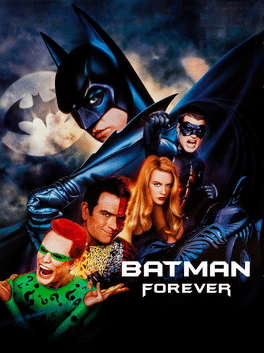
Distributed freely to students, Surf 'm Up is a little Kaboom!-inspired game by Dutch beer brewer Dommelsch. The premise is simple: four cranes of a beer tender are spilling droplets and you, an empty beer glass, must collect each droplet. Controlled by keyboard or mouse, the game is a test of reflexes. Each collected droplet gives 5 points; 45 points will get you to the next section; after three sections you will progress to the next increasingly harder level. Missing too many droplets will cause the beer glass to slip. Watch out for falling sugar cubes, peanuts, matchsticks and darts - you can only withstand them three times. Also beware of a little green caterpillar who tries to hinder your progress in all manners possible. Help comes in the form of a bell announcing 'happy hour'-mode - making your beer glass invulnerable for a couple of seconds. Another help is a sponge appearing from time to time. Jumping on it cleans all spilled droplets. Users were encouraged to save their highscores on a blank disk andBatman Forever
1996
Birthright: The Gorgon's Alliance
1996
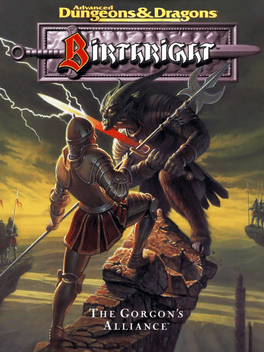
Birthright: Gorgon's Alliance is a hybrid wargame sim/first-person 3D RPG for PC CD-ROM released in 1996, based on the moderately popular "Birthright" D&D campaign.Do you remember the '60s?
1996
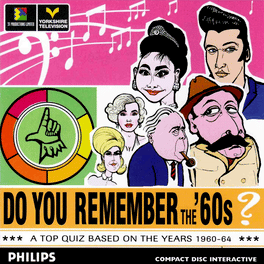
Do You Remember the 60's?, is an interactive quiz based on 1960's popular culture.Carnival of the Animals
1996
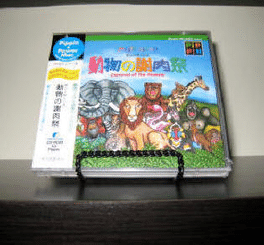
Classic video game for the PipPin. Interactive story book game for the PipPin.Aerial Racers
1996
Aerial Racers
1996
This is one of the games that came with Amiga Forever, which I highly recommend. I'd define it as slow, sluggish and unresponsive, which is a shame, as the game is an obvious homage to Racing Destruction Set. There is a large number of user-created tracks included, and you can make your own. You can even adjust the gravity (on top of the default "earth" mode, the gravity on tracks can be that of any of the other planets, the moon or the sun). If they had gotten the controls right, this could have been something to write home about.