New Games - Page 12597

Mini-Yonku Shining Scorpion: Let's & Go!!
1996
Mini-Yonku Shining Scorpion: Let's & Go!! is a Racing game, developed by Kid and published by ASCII Entertainment, which was released in Japan in 1996.Nishijin Pachinko 3
1996
Nishijin Pachinko 3
1996
Nishijin Pachinko 3 is a Miscellaneous game, developed by Soft Machine and published by KSS, which was released in Japan in 1996.Wild Arms
1996
Wild Arms
1996
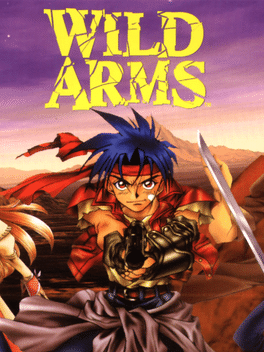
star 8Wild Arms is a Western-themed role-playing video game developed by Japanese software company Media.Vision. Originally released in Japan in 1996 for the Sony PlayStation video game console, it was later translated and released in North America in 1997 and Europe in 1998 by Sony Computer Entertainment. It is noteworthy for not only being one of the first role-playing video games on the PlayStation, but also one of the few to feature a Western American setting and motif. The game features 2D computer graphics for normal gameplay, while battle sequences are rendered in 3D.Kichikuou Rance
1996
Kichikuou Rance
1996
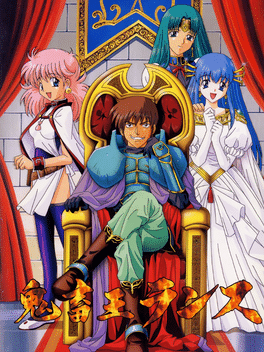
star 9.1Kichikuou Rance (literally translating to "Brutal King Rance") is the seventh game in Alicesoft's flagship Rance Series. It was released in Japan on December 19, 1996. It was the first Alicesoft game to be produced for Windows 95 operating systems, as well as the first game to use the company's SYSTEM 35 engine and the territory conquest strategy gameplay used in several of its future releases.Sugoroku Ginga Senki
1996
Sugoroku Ginga Senki
1996
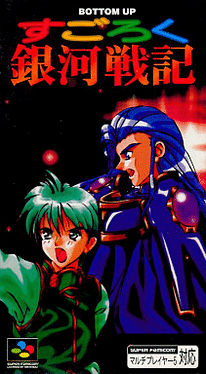
Sugoroku Ginga Senki is a Miscellaneous game, developed and published by Bottom Up, which was released in Japan in 1996.Mega Man 8
1996
Mega Man 8
1996
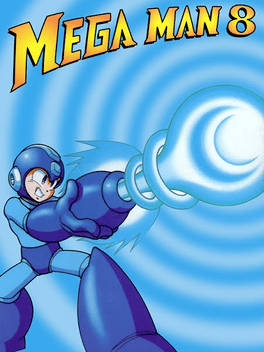
star 7.2A gigantic space explosion sends two strange meteors crashing to Earth. The call goes out and Mega Man speeds to the site. There he sees his arch-rival, Dr. Wiley, fleeing the scene, clutching one of the mysterious metallic meteors. Now Mega Man must uncover the secret of the second meteor in a race to stay one step ahead of Dr. Wiley and his new deadly breed of super-powered robots. • Battle across 14 huge stages to face eight devious new enemies. • Multiple upgrades for Mega Man - customize to your specifications every game. • Intense Japanese anime intros, cut scenes and cinema screens. • Incredibly fluid animation and highly detailed backgrounds.Angelique Special 2
1996
Angelique Special 2
1996
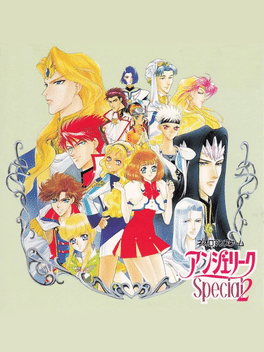
Angelique Special 2 is a Strategy game, developed by Koei and published by NEC, which was released in Japan in 1996.Furcadia
1996
Furcadia
1996
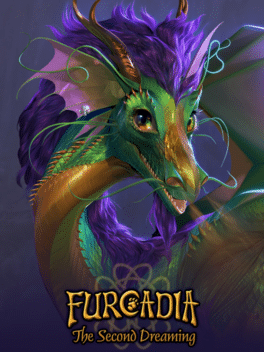
star 6Furcadia is a fantasy world of magic and creation, alive with adorable animals and mythical creatures. Choose your favorite customizable avatar and start exploring this friendly, user-empowering Online Social Game (MMOSG) with rich player-driven content. Use the free, simple yet powerful tools to build literally anything you can dream up! Whether you enjoy Socializing with friends, Exploring, Creating, or Roleplaying, we invite you to an interactive experience unlike any other. Current Guinness World Record holder for longest running MMO.The Settlers II: Mission CD
1996
The expansion features nine new single-player campaign missions in which the player again controls the Romans, this time under the command of Octavius's great-grandchild, as he attempts to conquer the entire world. It also features twelve new maps for Free Game mode, now renamed "Limitless Play", and a map editor.Digital Pinball: Necronomicon
1996
Digital Pinball: Necronomicon is a pinball video game created for the Sega Saturn by KaZe in 1996. Only released in Japan, this high-resolution 2D game draws much of its graphical and audio inspiration from the metafictional Necronomicon.Puyo Puyo 2: Ketteiban
1996
This game is a Japan-only port of the second game in the Puyo Puyo series originally made for the Arcades by Sega. It's based on the Sega Saturn port, but featuring a modified version of Remix's Practice mode that incorporates the Saturn version's previously-exclusive Beginner characters. Starting with this port, Minako Ozawa replaces Mami Inoue as Arle's voice actress.Mario Kart 64
1996
Mario Kart 64
1996
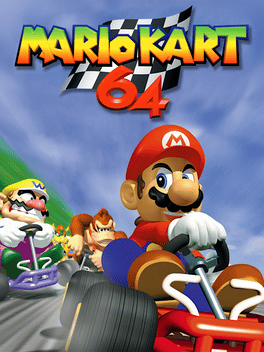
star 8.1Mario Kart 64 is the second main installment of the Mario Kart series. It is the first game in the series to use three-dimensional graphics, however, the characters and items in this game are still two-dimensional, pre-rendered sprites. The game offers two camera angles and three engine sizes: 50cc, 100cc and 150cc. Each kart has distinctive handling, acceleration and top speed capabilities. Shells that you fire at rival racers, Bananas that make them skid out and Lightning Bolts that make them small and very slow are just a few of the game's unique power-ups.Pebble Beach no Hatou Plus
1996
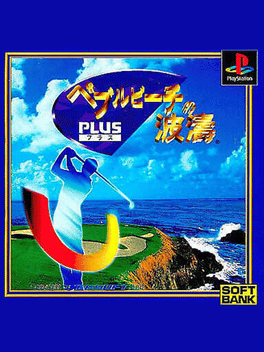
Pebble Beach no Hatou Plus is the sequel to the Megadrive game Pebble Beach no Hatou that was released in 1994. Enjoy the 3D golf course set in a prestigious West Coast surrounded by the natural beauty. Pebble Beach is widely regarded as one of the most beautiful courses in the world. It hugs the rugged coastline and has wide open views of the ocean. 3D is a beautiful and faithful reproduction of the Pebble Beach golf course layout and graphic art.Madou Monogatari I: Honoo no Sotsuenji
1996
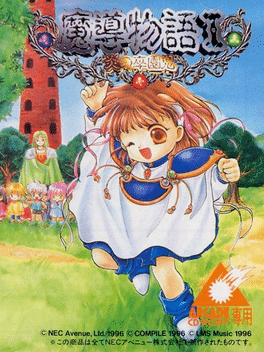
Sorcery Kindergarten has very strict requirements for graduation. Indeed, this year, only one person even qualified to take the final exam at all: six-year-old Arle Nadja, who now faces the daunting task of climbing the monster-infested Magic Tower and retrieving the three Magic Orbs hidden within in order to graduate. What trials await Arle inside the Tower? Can she pass the test, or will she be doomed to another year of kindergarten? Madou Monogatari I: Honoo no Sotsuenji (Sorcery Saga I: The Fiery Kindergarten Graduation) is a 1996 dungeon crawler for the PC-Engine Super CD-ROM² system. It's a remake of the first game in the Madou Monogatari series, originally developed by Compile for the MSX2 computer and subsequently ported to several other platforms. The various ports differ wildly from each other, sometimes to the point of being almost completely different games; though the PC-Engine version is based on the original home computer editions, it adds high-quality cutscenes, CD audio, near-full voice acting, aTrue Love Story
1996
True Love Story
1996
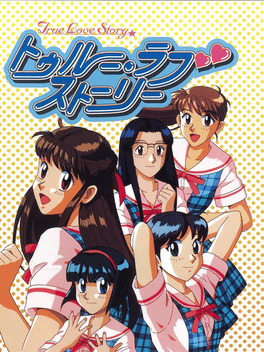
True Love Story is a visual novel styled love simulation game where the protagonist meets many girls and has one month's time to make one of them fall in love with him. The player moved to a new town and is living with his younger sister. The story progresses in a typical visual novel style where one reads onscreen text, talks to present characters and moves from location to location in a determined order. Free movement is not done directly on a map but is rather scheduled. During school and lunch breaks the player can schedule places on school campus he wishes to visit, and after school additional scheduling of the place around the town can be selected. Depending on place one visits, the location will have different girls to talk to, or if noone and the player will soon leave the place without engaging in any dialogue with anyone.Pocket Puyo Puyo Tsuu
1996
star 6.9Pocket Puyo Puyo Tsuu is the Game Boy port of the arcade game Puyo Puyo Tsuu.J.B. Harold no Jikenbo: Kiss of Murder
1996
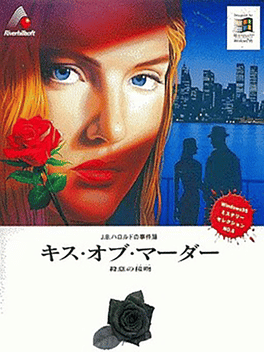
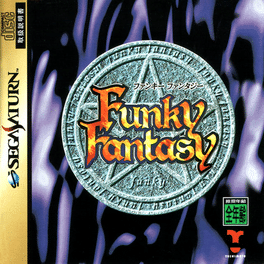
Kiss of Murder is set in a parallel world to Manhattan Requiem, and while featuring the same set of characters as that title, has a completely different scenario. Early releases of the game were add-ons to "Manhattan Requiem" and used its graphical data. This version is a stand-alone release as a part of the Windows 95 Mystery Selection series.Funky Fantasy
1996
Casual Romance Club
1996
Casual Romance Club
1996
You are a teenage boy in high school. You join the Casual Romance Club in order to meet other people and perhaps find love. There are twelve girls you can approach, each one possessing her own unique beauty and personality. Use your time and efforts wisely and you may just get yourself more than a casual romance... You are given a month to shop around and win somebody's love, after which you'll ask the girl of your choice to keep seeing you even after the club adjourns. Each game day starts at the Starry Sky restaurant, with the club notebook laid out for you. The club notebook has the lowdown on all the girls -- their basic statistics, pictures, horoscopes, likes, dislikes, etc. The girls also record their thoughts and reactions on daily events next to their horoscopes, so reading the club notebook can prove vital to your success.