New Zx Spectrum Games - Page 52

The Sun Crosswords: Volume 1 & 2
1991
Sun Crosswords is a Puzzle game, developed and published by CDS, which was released in Europe in 1991.Super Munchers: The Challenge Continues...
1991
Super Munchers is the follow-up to the original Number Munchers.Swamp Gas Visits the United States of America
1991
An educational game for the Macintosh computer. Up to 4 players play and learn about geography.Gimme a Break: Shijou Saikyou no Quiz-ou Ketteisen
1991
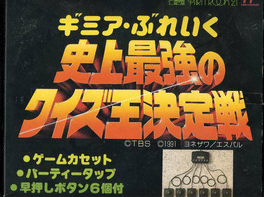
Gimme a Break: Shijou Saikyou no Quiz-ou Ketteisen is a quiz game released for the Famicom (NES) in Japan, and is based on an actual Japanese game show that aired from 1989 to 1992. Players can answer trivia questions against AI or human opponents, with the ultimate goal of challenging the game's Quiz King.Apple Sauce X mas
1991
Quiz Rouka ni Tatte Nasai!
1991
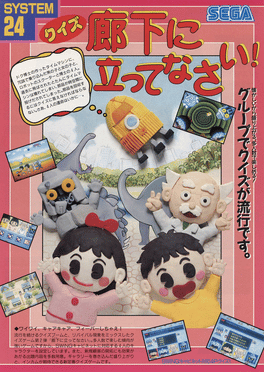
Quiz Rouka ni Tattenasai! is an arcade game revolving around solving quizzes.Super Jeopardy!
1991
Super Jeopardy!
1991
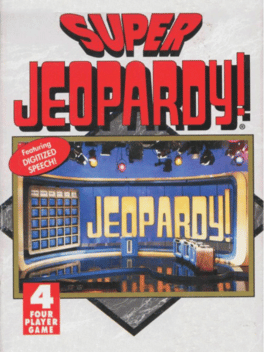
Super Jeopardy! is based on the popular Jeopardy! TV game show. In this digital incarnation, 4 players compete at answering reverse trivia questions in trademark Jeopardy! fashion-- i.e., the host provides the answer and a player has to provide the questions. As many as 4 human players can participate, with the remaining slots filled by the computer. Competition takes place in quarter-final, semi-final, and final round modes. A player will select a question from one of 6 categories. The game gives the answer to the question and the players use their controllers to buzz in. At that point, a player has 80 seconds to spell out the question (and the computer has already provided the "What is..." question preamble). If the player gets the question wrong, that player loses money and the remaining players have an opportunity to buzz in.Riddle Wired
1991
Riddle Wired
1991
Riddle Wired is a quiz game for the Sega Mega Drive, released exclusively in Japan via the Sega Game Toshokan service.Apple Sauce Beach
1991
Santa-kun
1991
Santa-kun
1991
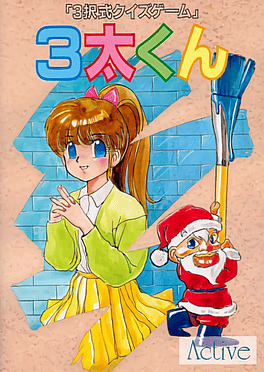
A nameless otaku (which roughly corresponds to the English geek, albeit with a focused "nerdiness" in all things anime) encounters an aggressively-looking Santa Claus, who offers to test his knowledge; if he succeeds, he can have his way with a few magically summoned beautiful girls... Santa-kun is a quiz simulation. Santa asks a question, and the player must choose the correct answer among the three available ones. The game consists of several "matches"; in the beginning of each, a fully dressed young girl is introduced. A match consists of three rounds (25 questions all together); after each round, the girl removes part of her clothing. Upon successful completion of a match, the girl is shown fully naked. The questions revolve (with a few exceptions) around video games and computer technology.Quiz Daisousa Sen: The Last Count Down
1991
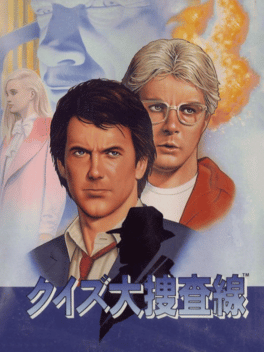
Quiz Daisousa Sen: The Last Count Down is a quiz adventure game. Players control either Neo McDonald or Geo Kentucky in their adventures through Quiz City, a place where answering questions gets results. The genre to these questions include movies, history, geography, songs, sports, and entertainment news. Story progression through the games is largely decided through cutscenes and choices given to players, making the experience very similar to a choose-your-own-adventure.Family Feud
1991
Family Feud
1991
Based on the television game show, Family Feud. The player chooses a family of five to play against another family. Players are asked to find the most common answers to various questions asked by the host, so the family can earn points. The family with the most points at the end of the game wins the prize money.Quiz Avenue
1991
Quiz Avenue
1991
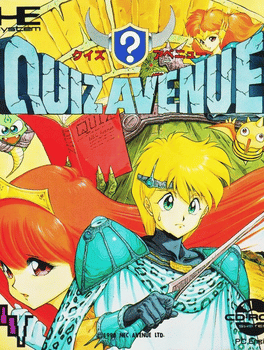
Quiz Avenue is a trivia game with a "quest mode" in which the player controls a warrior who must save the princess Questine from the clutches of evil Shameless, the enemies of the Erudition kingdom. The player navigates the hero on small boards with branching paths; each point of interest represents a quiz "battle" against a monster, culminating in a "boss battle" on the final stage, where the player is able to select the topic of the questions (e.g. geography, movies, English language, etc.). Quiz encounters vary in length and amount of answers to choose from, but always have a time limit for each question. In addition, a separate "party mode" allows players to compete in trivia games, each consisting of three or five rounds.Jantei Monogatari
1991
Jantei Monogatari
1991
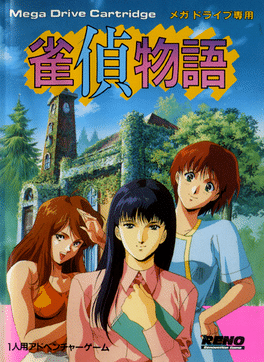
Jantei Monogatari is a hybrid of a traditional-style Japanese adventure game and a regular mahjong game. The player takes the role of the unnamed private investigator, and moves from place to place via menus, talking to different characters. The investigation happens through playing mahjong with each suspect: win and they'll tell you a bit more of what they know. At first, the investigator can only speak with the three girls in the photo, but as he wins games of mahjong against them, he gains information and experience that allow him to find new clues and talk to more suspects. The investigator will need to play against a dozen different opponents in his attempt to find out what happened to the kidnapped girl.Hyper Marbles
1991
Hyper Marbles
1991
Hyper Marbles is an action game for the Sega Mega Drive, released exclusively in Japan via the Sega Game Toshokan service. The object of Hyper Marbles is to knock all of your opponents into the electrical fences at the sides of the stage, while making sure you aren't knocked in yourself. A, B and C boosts.Quiz Meitantei Neo & Geo: Quiz Daisousasen Part 2
1991
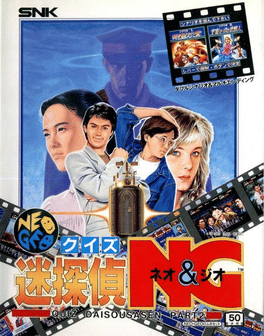
Quiz Meitantei Neo & Geo: Quiz Daisousasen Part 2 is a quiz adventure game released for the Neo Geo in Japan only. It is a direct sequel to Quiz Daisousa Sen: The Last Count Down released the year prior. Players once again take control over the detectives Neo McDonald or Geo Kentucky, who must explore the city and interrogate people.The Official Everton FC Intelligensia
1990
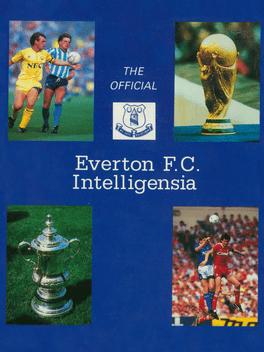
The Official Everton F.C. Intelligensia is a quiz game about football. Despite the title it's not specifically about Everton as the player can choose to represent any English top flight team of the 1989/90 season and it features question about both domestic and international football. All questions have three alternatives to choose from and has to be done before time runs out. Some are accompanied with a picture. The game is built around the FA Cup and like in real life first division clubs enters the competition in the third round. In each round the player has to answer a number of questions which depends on the opposition drawn and if it's a home or away game. Opposition from higher divisions lead to more questions being asked. Goals are scored by answering questions correctly and the number of answers required depend on the difficulty level chosen. In the same way goals are conceded by answering questions wrongly.