New Ps3 Games - Page 315

Wally wo Sagase! Ehon no Kuni no Daibouken!
1993
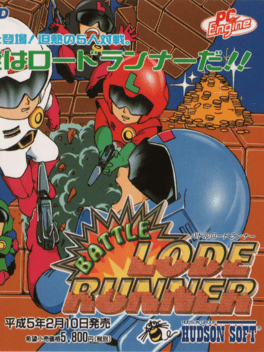
Wally wo Sagase! Ehon no Kuni no Daibouken! is a Puzzle game, developed by Natsu System and published by Tomy Corporation, which was released in Japan in 1993.Battle Lode Runner
1993
Battle Lode Runner
1993
Once an ancient arcade game, and with a previous version on the PC Engine by Pack In Video, Hudson Soft have taken the addictive gameplay of Lode Runner and given the graphics a complete face lift. The puzzle-based action in Lode Runner is simple: You are presented with a side-view platforms-and-ladders based level and you have to collect all the gold and escape without getting caught by the baddies. To defend yourself, you can dig holes in the ground, either to the left or to the right, and enemies stumbling upon them will fall down and be trapped. If you time it right, the hole will re-fill before the enemy can climb out, forcing them to respawn elsewhere in the level. If you prefer evasive action, make sure the coast is clear so you can escape up a ladder or across a well-placed rope, but be warned - they will follow! Once you have collected all the gold, hotfoot it to the nearest long ladder and escape out the top of the screen. In magazine previews, this was originally titled Lode Runner II.Sanrio Carnival 2
1993
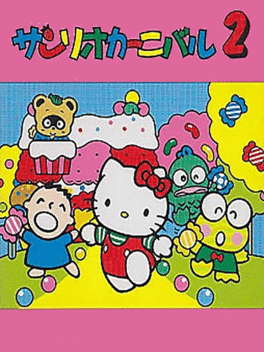
Sanrio Carnival 2
1993
Sanrio Carnival 2 is a Puzzle game, published by Character Soft, which was released in Japan in 1993.Where in Space Is Carmen Sandiego?
1993
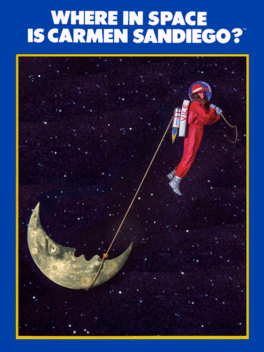
Where in Space Is Carmen Sandiego? is a game to teach astronomy. The player flies in a rocket ship throughout the solar system, interrogating various alien lifeforms in order to solve the theft of an important part of the solar system (e.g. Saturn's rings). There was only a limited amount of fuel available for travel. So if the player didn't ask the right questions on the right planets, or followed the wrong clues, the criminal(s) would get away, leaving the player to start over again with another crime. This version is somewhat similar to Where in the World Is Carmen Sandiego?Franky, Joe & Dirk... On the Tiles
1993
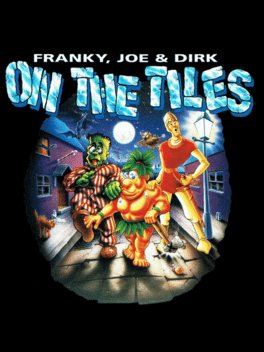
The Joe and Mac, Dragon's Lair and Dr. Franken franchises combine in this tile sliding puzzle game. A rather bizarre concept given the source material but does the gameplay stand on its own merits?Magic Bubble
1993
Magic Bubble
1993
Magic Bubble is an unlicensed 1993 puzzle game developed by C&E for the Sega Mega Drive. It was the only game produced by C&E (a Taiwanese company) where the packaging, instructions and in-game text is all in English. The game involves matching like-coloured bubbles which float to the top of the screen. In the 2000s, publishing rights to the game were purchased by Super Fighter Team, who also published a translation of another of C&E's games, Beggar Prince.Super Sokoban
1993
Super Sokoban
1993
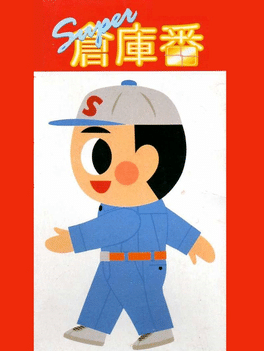
Super Sokoban (or Soukoban) is a puzzle game in which the player must push crates around a maze to their designated storage area, ensuring they do not accidentally push a crate into a position where it cannot be recovered. Thinking Rabbit created the original game in 1982 on home computers, and Super Sokoban is the first Super Famicom game to follow the same blueprint. The intro establishes that the eponymous Sokoban, or warehouse worker, must perform enough box-pushing puzzles to earn enough cash for a flashy new car so that he might finally impress the girl of his dreams. An added wrinkle is that each stage has a fixed move limit, and so the player must not only push the boxes in the right order but do so with maximum efficiency. The game was not released outside of Japan.Gambler Jiko Chuushinha 2 Gekitou! Tokyo Mahjong Land-hen
1993
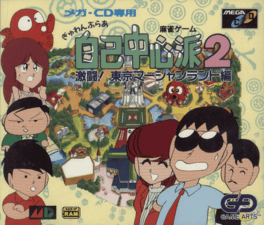
Gambler Jiko Chuushinha 2: Gekitou! Tokyo Mahjong Land-hen is a Sega Mega-CD sequel to Gambler Jiko Chuushinha.Kuni Chan no Game Tengoku Part 2
1993
Kuni Chan no Game Tengoku Part 2 is a table game for the Sega Game Gear and sequel to Kuni Chan no Game Tengoku.Chiisana Obake: Acchi Socchi Kocchi
1993
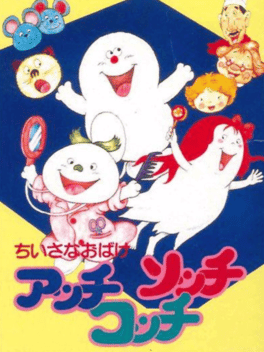
Chiisana Obake: Acchi Socchi Kocchi is a Puzzle game, developed by Atlus and published by Vap, which was released in Japan in 1992.Sid & Al's Incredible Toons
1993
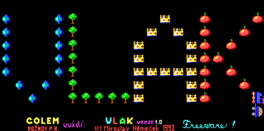
Sid & Al's Incredible Toons is a spin-off of The Incredible Machine series. It features cartoon characters and items instead of pseudo-realistic contraptions, but the goal is the same: to build hilarious machines reminiscent of the pictures of Rube Goldberg. Sid Mouse and Al E. Cat have probably never heard of Tom & Jerry, but they’re just as single-minded: any means to hurt the adversary is a good one. They get plenty of means in Incredible Toons. Around 100 puzzles need to be solved, each one a 2D machine of which crucial parts are missing. The player's task is to choose useful objects from a separate window, position them on the screen and start the machine to see if it’s working. A simple example: a piano hanging from a rope needs to be dropped on Al. To accomplish this, you place open scissors next to the cable and drop a ball on them - voila, the rope is cut, Al crushed. However, most puzzles are far more complicated; for example, the player might first have to lure Al under the piano with a fish, whicVlak
1993
Dr. Tomy
1993
Dot Valley
1992
Wordtris
1992
Porntris
1992
The Hovering Castle
1992
The Hovering Castle
1992
Hovering castle is one of the first Bulgarian games for PC. The game is a representative of the Quest genre, it was created in 1992 and is not commercial. The authors are Hristo Bozhinov, Ivan Kolev and Stanislav Evstatiev. Ivan Kolev and Stanislav Evstatiev later founded Dimension Design and Garga Games. The game has graphics of (320x200x256 colors) with drawn characters and setting, and even becomes "cult" for many players. The game is partly controlled by text commands in Bulgarian, such as "Вземи чашата", and there are constantly witty messages in Bulgarian.Chip's Challenge
1992
Chip's Challenge
1992
The Microsoft Windows port of Chip's Challenge is a top-down tile-based puzzle video game based on the 1989 Atari Lynx original. It includes 149 levels (one more than the original's 148). It was included in the Windows 3.1 bundle Microsoft Entertainment Pack 4 in 1992, and the Windows version of the Best of Microsoft Entertainment Pack in 1995, where it found a much larger audience.Maxwell's Maniac
1992
Maxwell's Maniac
1992
Maxwell's Maniac is a computer game originally part of the Microsoft Entertainment Pack series. Loosely based on the concept of the Maxwell's Demon thought experiment, the object of the game is to separate the red and blue molecules into their respective color-coded chambers using a sliding door. It is superficially similar to JezzBall in layout.