New Ps3 Games - Page 328

Columns II: The Voyage Through Time
1990
Columns II: The Voyage Through Time is the sequel to the Sega puzzle game Columns. It was only released in arcades in Japan until it was later ported to the Saturn under the title Sega Ages: Columns Arcade Collection.Mahjong Gakuen Touma Soushirou Toujou Mild
1990
AKA: 麻雀学園 MILD 東間宗四郎登場. A port from the arcade version of Mahjong Gakuen. This is the mild (no nudity) version.Honey Peach
1990
Honey Peach
1990
Honey Peach is an unlicensed strip rock-paper-scissors, or Ro-Sham-Bo, game for the NES/Famicom. Ports also exist for the publisher's own console, the Q-Boy, as well as for the Game Boy in the form of 4-packs. The goal of the game is to win two out of three rounds of rock-paper-scissors with a girl to get her to take off an article of clothing. There are six girls, each with three stages of attire before getting fully nude. After winning against a girl, you are given a password to the next match. You can enter the password in the beginning of the game after the start screen to go straight to your favorite girl.Hatris
1990
Palamedes
1990
Dizzy Panic
1990
Dizzy Panic
1990
Dizzy Panic is a puzzle video game based on the Dizzy series. Gameplay involves moving a wall left and right so that falling shapes pass through the appropriately shaped holes in the wall.Ranma 1/2: Kakuren Bodesu Match
1990
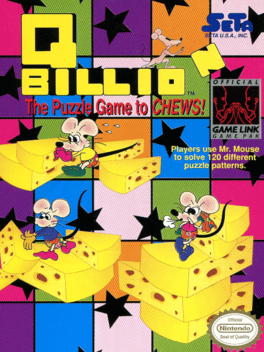
Ranma 1/2: Kakuren Bodesu Match or simply Ranma 1/2 is the first game in the Ranma Ranma 1/2 game series.Q Billion
1990
Snoopy's Magic Show
1990
Snoopy's Magic Show
1990
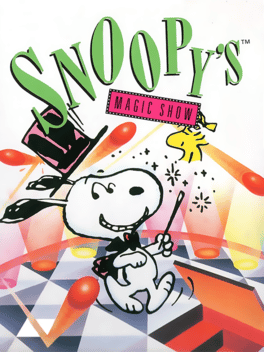
star 6As legendary magician Snoopy the Great, you must rescue your assistant Woodstock when his attempt to perform the dangerous Magic Ball Trick goes out of control. Magic Balls are on the attack and even Woodstock has been multiplied by the runaway spell. Maneuver around ever changing barriers and escape through enchanted exits. Summon all your powers to collect Woodstocks through more than 100 levels of escalating jeopardy in… Snoopy’s Magic Show.Popeye
1990
Popeye
1990
Popeye is a Japan-exclusive Game Boy video game based on the comic strip of the same name licensed from King Features Syndicate. A cancelled US version was found in the 2020 Nintendo data leak, intended to be published by INTV Corporation. The scenario is a maze and the player controls Popeye who has a time limit to collect some hearts, find Olive Oyl and save Swee'Pea which only appears somewhere to be saved after the hearts were collected and Olive found.Sokoban World
1990
Sokoban World
1990
Pushing around boxes in store rooms may not sound like ideal fodder for a video game. Well, they went and made one anyway. this is one of those brain melting puzzle games that some will love and some will despise. Each level you are presented with a room with boxes and spots, which are where the boxes should end up. You can push the boxes, but not pull them and you really have to plan in advance to stop getting, um...'boxed' in. If you feel you've taken a bit of a wrong turn, you can simply push a button and rewind your moves. But as well as countless levels of box-shoving there's also a level editor that allows you to create your own levels of fun and frustration. (From The PC Engine Software Bible)Qix
1990
Qix
1990
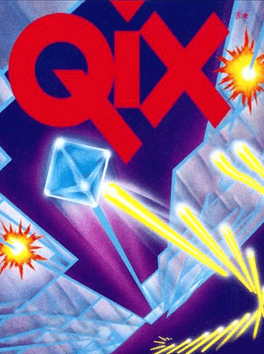
Released on Game Boy in 1990, this version of QIX has not lost its appeal! QIX is an acclaimed arcade classic in which your goal is to capture areas of the playing field by drawing Stix (lines) with your marker.Fisher-Price: Perfect Fit
1990
Dropping down the Perfect Fit game chute are familiar, everyday objects such as letters, numbers, figures, and lots of familiar Fisher-Price toys. Inside the game board are outlines of these same objects, just waiting for you to move the pictures into their correct outlines. Play at your own level, from simple matches to matches requiring up-down or side-to-side flips. Play alone and better your time, or play against a friend or even the computer to see who's quicker. Whichever way you do it, it's great fun!Dash Galaxy in the Alien Asylum
1990
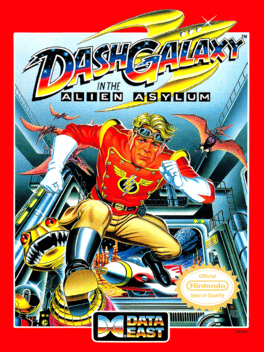
star 5.2Dash Galaxy in the Alien Asylum was an action game for the Nintendo Entertainment System released in 1990 exclusively in North America. Players take the role of Dash Galaxy, a space scout who has been captured by a hostile civilization. Gameplay involves a series of floors with several rooms each. Keys must be collected to progress to higher floors and, eventually, an escape ship. Dash's only weapons are a limited supply of bombs and remote detonators. Good timing is crucial to completing the game, requiring navigation of trampoline jumps and roaming enemies. While the rooms are side-scrolling action puzzles, the floors have a overhead view and include more difficult block-moving puzzles which can fatally trap a player.Earth Shaker
1990
Earth Shaker
1990
In the style of Boulder Dash and Repton, Earth Shaker sees you as a small robot scuttling around an underground land of manic mayhem. Your job is to collect all the on-screen diamonds, digging your way through the soil and dodging the stones and stuff that get dislodged and drop on your head (or not as the case may be).Hatris
1990
Hatris
1990
star 6.3Hatris is a puzzle video game developed by Alexey Pajitnov, creator of famous video game Tetris. In Hatris, the falling blocks of Tetris are replaced by falling hats which are top hats, cowboy hats, baseball caps, derbys, party hats and crowns. The setting is a hat factory, where hats are dropped down from a conveyor belt two at a time and must be stacked on one of six mannequin heads. Once five hats of the same kind have been stacked on top of each other, they fall down onto another conveyor belt below and are shipped out of the factory, rewarding the player with a cash bonus (the game keeps track of score as money, not simply points). Once you ship out enough hats out of the shop, you go up a level to the next shop. The higher shop number you get to, the more types of hats start appearing to make it more difficult for you to accomplish your task. The game ends when one of your stacks of hats reaches the top of the screen.FA Tetris
1990
Oxyd
1990
Oxyd
1990
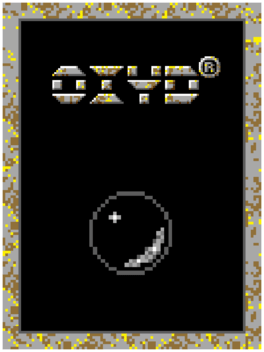
Oxyd is a 1990 puzzle game developed for the Atari ST and ported to the Amiga, Macintosh, MS-DOS, and the NeXT platform by Dongleware Verlags GmbH. It is a game of puzzles and tests to restart all the oxygen generators on the player's home planet.