New Puzzle Games - Page 292

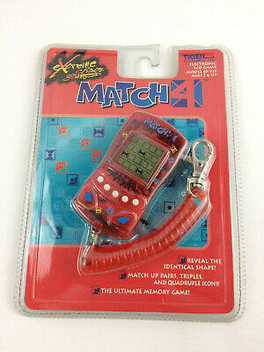
Match 4
1998
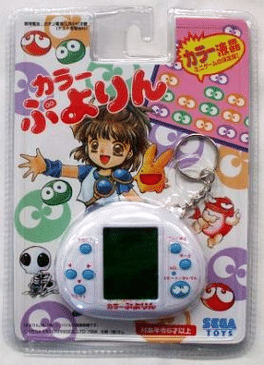
Color Puyolin
1998
Color Puyolin
1998
Colour Puyolin is an LCD game released by Sega Toys. It is an update over a previous LCD handheld named Puyolin which was handled by Compile. Several colours were made.Pingus
1998
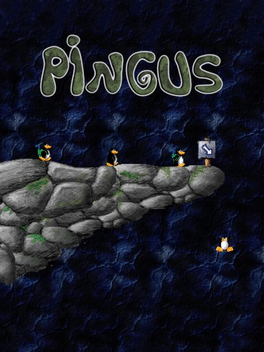
Pingus
1998
Pingus is an open-source video game programmed by German developer Ingo Ruhnke. It is a clone of Lemmings with penguins instead of lemmings.Ducks
1998
The Curse of Ra
1998
The Curse of Ra
1998
The Curse of Ra puts a new spin on the classic Mahjongg game. It introduces new elements such as bombs, magnets and walls, and uses the one-layer two-angles arcade rules. Work your way through 50 cleverly designed levels with increasing difficulty which will challenge both your mind and logic. You can play either in single or various multiplayer modes. Also known as "Rahjongg: The Curse of Ra", it was first released commercially by eGames and as shareware by UsedStar; the shareware version contained the first sixteen levels of the game (available to download on the Curse of Ra website). An add-on mission pack, Ra's Revenge containing fifty extra levels was also released by both eGames and UsedStar. Ra's Revenge and the other mission packs are also available on the Curse of Ra website.Die Maus: Verrückte Olympiade
1998
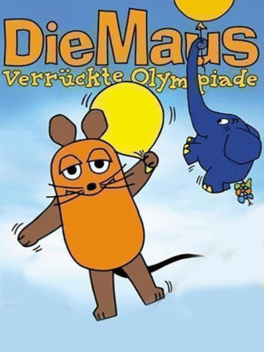
star 5.7Die Maus is an action / puzzle game based on the German children's television show Die Sendung mit der Maus (The show with the mouse).15 OS
1998
Simon the Sorcerer's Puzzle Pack
1998
Simon the Sorcerer's Puzzle Pack is a collection of small puzzle games that go around the Simon the Sorcerer's theme. Jumble - A new type of sliding tile puzzle - rearrange the pieces in a constantly changing animation!Tetris 4D
1998
Tetris26
1998
Wonder Stick
1998
Wonder Stick
1998
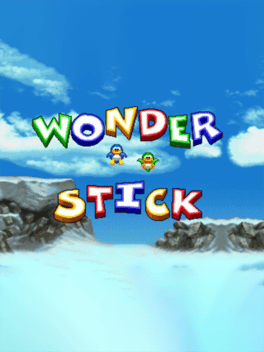
Wonder Stick is an adult maze game in the model of the 1981 Konami classic, Amidar. The objective is to encircle sections on a grid while avoiding the enemies in order to remove the blocks and reveal the hidden nude image underneath. Once all of the blocks are removed the stage is complete. The player character is penguin that drops a line to encircle blocks while the button is held down. At the start of each line the player drops a tag. The tag will return to the player if the button is let go or will circle around any blocks that are fully enclosed by the line. Enemies can be killed by this moving tag and will drop either power-ups or food items for the player. If a situation gets too hairy the player may use a help, denoted by the fish icons in the upper-left hand corner, which will momentarily stun enemies and allow the player to pass by them unscathed. Every five levels the player gets to play a bonus level where he can travel a grid with no enemies for the purpose of picking up food items and extra lives beFish Fillets
1998
Fish Fillets
1998
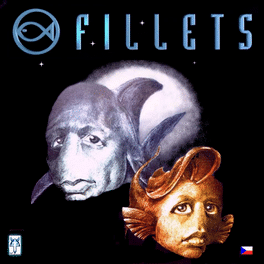
A challenging puzzle game featuring two underwater agents dealing with home invasion...Blockhead II
1998
Tsumu
1998
Tsumu
1998
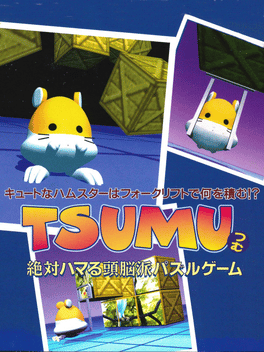
Tsumu is 3D puzzle game where the player, as a hamster, uses a forklift to construct different images.Bubble 2000
1998
Bubble 2000
1998
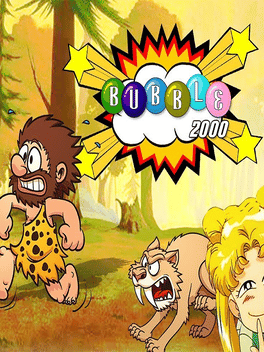
Adults Only. This is a Tetris type game that requires the player to shoot colored balloons at existing balloons on the screen with the object of matching colors. Once a level is cleared, a nude image of a woman will appear on the screen.Segata Sanshirou Shinkenyugi
1998
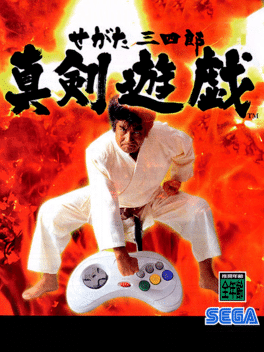
A collection of minigames based on the popular Japanese Saturn mascot Segata Sanshiro. Each game is based on a specific commercial and completing them unlocks the ability to view the related commercial. This title was released after the final Segata Sanshiro commercial ran, in which Segata risks his life to save the SEGA headquarters building from an oncoming missile.Pocket Puyo Puyo Sun
1998
Missland 2
1998
Tetris 64
1998
Tetris 64
1998
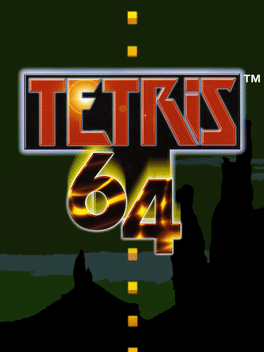
Tetris 64 is a puzzle game for the Nintendo 64. It was released only in Japan in 1998 despite the whole game being in English. It is the only Nintendo 64 game that can make use of the Nintendo 64's bio-sensor which was included with the game.Puzzle Link
1998
Puzzle Link
1998
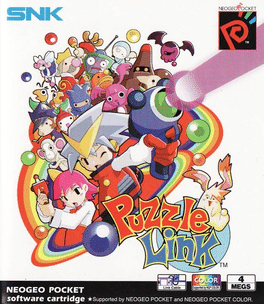
Puzzle Link is a game where blocks of matching color have to be dissolved. New blocks constantly scroll into the screen from the top. The game is over when the first blocks reach the bottom of the screen. You can dissolve blocks by shooting at them. The shots form a line where they impact. If that line connects otherwise unconnected blocks of the same color they will dissolve. There are three different modes: In "Normal" you have to link two special blocks that appear after some time. If you manage to finish the level within the time limit you will unlock one of 50 collectible cards. In "Clear Mode" you have to clear a given constellation of blocks. "Battle Mode" is a two player link-cable mode.