New Puzzle Games - Page 293

Hexcite: The Shapes of Victory
1998
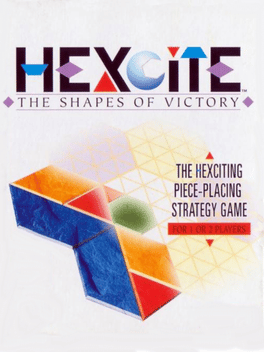
The world's best strategy games have two things in common: they start with a deceptively simple board and the goal of taking territory from your opponents. Now HEXCITE brings a whole new shape to strategy games. In HEXCITE, 1 or 2 players battle to dominate the board with pieces of different shapes and sizes. Like any great strategy game, HEXCITE is simple to learn, but challenging to master. And every round is unpredictable until the last play. Who knows? HEXCITE could be the shape of things to come!Clickomania!
1998
Pac-Attack
1998
U.P.P.
1998
U.P.P.
1998
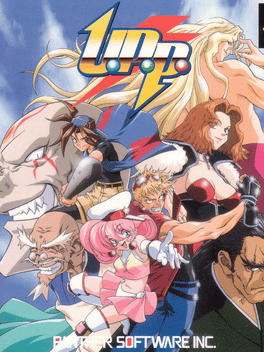
The Soul Fight International Championship has begun. Eight fighters have gathered to put their skills to the test. Defeat the best fighters, and become the king of the Soul Fight world. U.P.P. is a puzzle game that plays like an upside-down version of Columns with a twist. Groups of various-colored gems appear from the bottom of the screen and rise toward the top. Match three in a row vertically, horizontally, or diagonally of the same color to clear them. Every clear and combo earns charge for your Soul Gauge, which when enough charge is gathered allows you to unleash special attacks that can either hinder your opponent or give yourself an advantage. Each character has three different attacks, which require different amounts of energy charge.Rami-chan no Ooedo Sugoroku: Keio Yuugeki-tai Gaiden
1998
Rami-chan no Ooedo Sugoroku: Keio Yuugekitai Gaiden is a 1998 video game for the PlayStation. Developed by Victor Interactive Software, it is the third and last game in the Keio Flying Squadron series, and was released only in Japan. While the first game is a side-scrolling shoot 'em up and its sequel, Keio Flying Squadron 2, is a platformer with shooter sections, the third game is a party game. Like the first two games, the third game refers to Japanese culture, both ancient and modern simultaneously.Sokoban Basic 2
1998
Sokoban Basic 2
1998
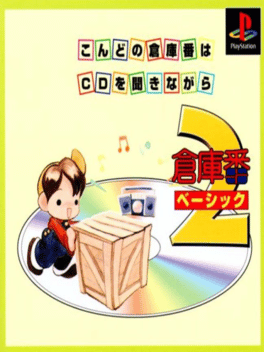
The second Playstation game based on the classic puzzler based on the gaffer in charge of a warehouse needing to get the stock correctly stashed. Unfortunately the stock can only be pushed around requiring a bit of lateral thinking to get the warehouse in order.Bust-a-Move 4
1998
Bust-a-Move 4
1998
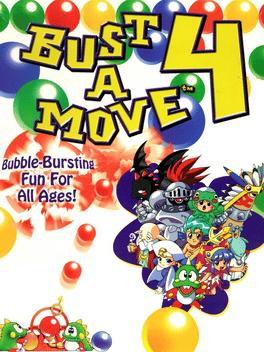
Arcade Game Boy Color PlayStation 3 PC (Microsoft Windows) PlayStation PlayStation Portable Dreamcaststar 7.3Puzzle Bobble 4 (also known as Bust-a-Move 4 in North America and Europe) is the third sequel to the video game Puzzle Bobble and is the final appearance of the series on the Arcade, PlayStation and Dreamcast. The game is also the final title to be recognizably similar in presentation to the original. Building upon the success of Puzzle Bobble 3, the game adds a pulley system that requires two sets of bubbles, attached to either side of a rope hanging across two pulleys. The game contains a story mode for single player play. In total, the game features 640 levels. The console version features a level editor to either create and save a level, set a succession of levels, or to create an unlimited amount of extra levels and stages. It also has an alternative "story mode".Waku-waku Monster
1998
Aventuras na Ilha X
1998
Aventuras na Ilha X
1998
An activity center CD-ROM for kids based on the Brazilian singer and TV host Xuxa Meneghel.Mawatte Mucho!
1998
Mawatte Mucho!
1998
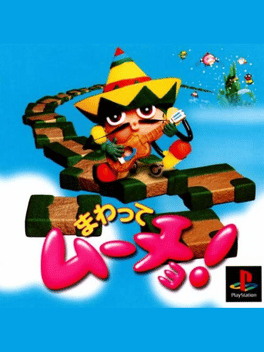
Action puzzle game where the goal is to move blocks by spinning them. The gameplay is to liberate three pink creatures by open the three blue chests of each level and then go to the goal, the levels are in some stages divide into two sublevels, and you move between them using a blue teleporter, and in round four of each world you must defeat a boss to complete that level.Hello Kitty's Cube Frenzy
1998
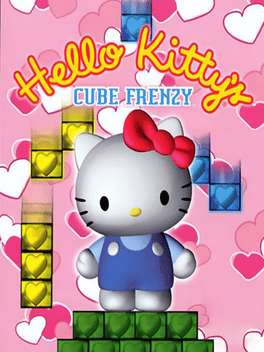
star 5.9The objective of each stage is simple: Kitty must collect all of the items scattered throughout each level. However, you can only tell Kitty to move left or right, and if you are not careful, Kitty will fall off the edge and say hello to the grim reaper. Luckily, blocks fall from the sky, which can be rotated and used to create staircases and bridges to the objects. However, placing three blocks with identical colors next to each other will make them disappear; this can both help and hurt. In addition to the block problems, Badz Maru, Hanamaru, and Pandaba will wander around and cause problems for Hello Kitty. Can you handle the pressure and collect all of the items in HELLO KITTY'S CUBE FRENZY?Devil Dice
1998
Devil Dice
1998
star 7Devil Dice is a unique puzzle game, where the player controls a small devil that runs around a grid covered in large dice. The player can both stand atop dice, and stand on the ground (with the dice towering above). When standing on the dice, the player can move from die to die, or can roll a die in the direction he or she runs, revealing a different face as the die rotates. Creating a group of adjacent dice with identical pips—the size of which must be at least the number of pips—causes those dice to slowly sink into the field before disappearing. Chain reactions are possible by adding additional dice to a sinking set. Different types of dice are available in some modes, with different properties to make the game more challenging. It was originally created by developer Shift on the "homebrew" Yaroze platform, and later turned into a commercial game. Released in 1998, it is one of only a handful of games to make the leap from the Yaroze to commercial release. The game is a million-seller and a demo version wasDr. Mario
1998
Dr. Mario
1998
Dr. Mario was remastered for the Super Famicom and released as a stand-alone Nintendo Power service release, only in Japan, and also for the Nintendo Gateway System. The game also received a Satellaview broadcast. The same version was previously bundled with Tetris and released in the West as Tetris & Dr. Mario.Rocks'n'Gems
1998
Rocks'n'Gems
1998
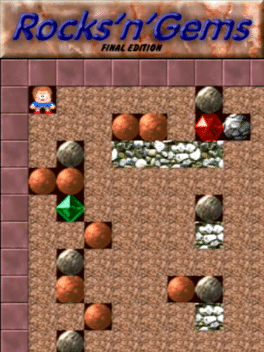
Rocks'n'Gems is a 2D puzzle game based on the 80's classic 'Boulder Dash' It was developed by Gerhard Rittenhofer via the Net Yaroze PS1 development kit and released as a full game on the Official UK Playstation Magazine's demo disc 16, volume 2.Brain Drain
1998
Brain Drain
1998
Brain Drain is a puzzle game in which the player has to recreate a pattern, consisting of different symbols like apples or hearts, which is shown in the corner of the screen. The main playing field consists of said symbols, but randomly switched around. The player controls a frame which encloses four of the symbols. When pressing a button, the symbols are rotated clockwise around the frame. Of course the levels have to be solved within a time limit. In the higher difficulty levels, the player also has to deal with so-called special effects which occasionally kick in during play, e.g. some symbols get hidden by "?" blocks, symbols rotate on their own or the controls are reversed. Three power-ups can be earned by completing bonus levels or finishing a level really fast: clock (stops time for 20 seconds), flash (skips the current level) and credit (gives a second try after time has run out). Clock and flash have to be activated manually; credits is applied automatically. Besides the regular playing mode, there is alsJagot
1998
Susume! Taisen Puzzle Dama: Toukon! Marutama Chou
1998
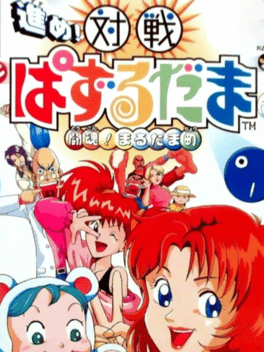
Susume! Taisen Puzzle Dama: Tōkon! Marutama Chō is a puzzle video game released in 1998 on the Nintendo 64 in Japan only. The game was developed and published by Konami. It is a port of the arcade and PlayStation game Susume! Taisen Puzzle-Dama (Let's Attack Crazy Cross), originally released in 1996, but also features characters and gameplay from the spin-off Taisen Tokkae-Dama.Irritating Stick
1998
Irritating Stick
1998
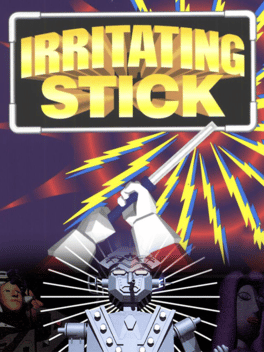
Irritating Stick (originally Dengeki Iraira Bou), is a carnival game in which the player has to move a spinning stick through maze-like levels, without touching the borders. If the borders are touched, the player gets zapped and loses the game.