New Puzzle Games - Page 325

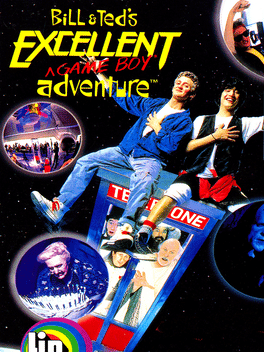
Bill & Ted's Excellent Game Boy Adventure: A Bogus Journey!
1991
star 7.5Bill & Ted navigate through time in this platformerShikinjoh
1991
Shikinjoh
1991
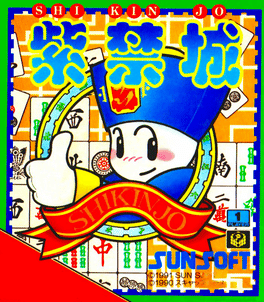
Shi-Kin-Joh ("Forbidden City") is a puzzle game similar to Sokoban in which the player must reach a goal by pushing oversized mahjong tiles which block the path. When two matching tiles are pushed next to each other, they disappear. Other types of tiles will lock any movable tiles that come in contact with them. The Megadrive version includes five different sound & graphics sets, dozens of puzzles to solve, and a "special puzzle" mode where the rules of the game are changed dramatically. There is also a puzzle construction mode where custom puzzles can be created. Game progress is saved using passwords.Dr. Hello
1991
Dr. Hello
1991
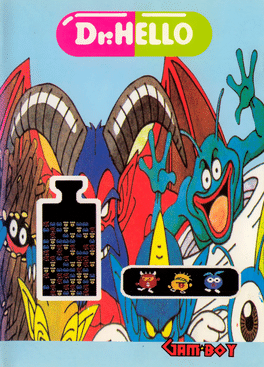
Dr. Hello is an unlicensed Dr. Mario clone developed for the MSX and ported to the Sega Master System. It was developed in South Korea by a company known as "Sis Co." in 1991, without the backing from either Sega or Nintendo. The game uses a completely different set of graphics and music to Dr. Mario, but the gameplay is exactly the same. Despite being released on a Master System cartridge, the Master System version runs in SG-1000 mode, and hence appears to have weaker graphics than most other Master System games. This is likely because the MSX and SG-1000 share similar specifications, and porting from one system to another was not too difficult.Ghox
1991
Star Mobile
1991
Star Mobile
1991
Aries, Taurus, Gemini... "Star Mobile" is an enchanting action puzzle game played before a constellation themed backdrop. Stack the stars of varying weights as they fall from the sky. Stack them carefully so as not to unbalance the scales!Shikinjoh
1991
Shikinjoh
1991
Shikinjoh is a 1989/1990 puzzle game by Scap Trust for the NEC PC-88 and NEC PC-98. Sunsoft ported it to the Sega Mega Drive and Sega Game Gear in 1991, with the Mega Drive version having added Sega Mega Modem capabilities. No version has left Japan. A version was later included with Sunsoft's Game no Tetsujin The Shanghai for the Sega Saturn.Asmik-kun World 2
1991
Asmik-kun World 2
1991
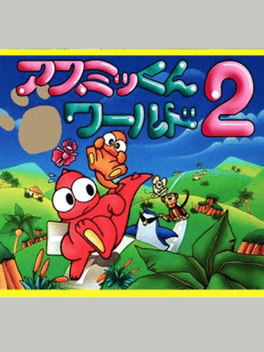
Asmik-kun World 2 (アスミッくん ワールド 2 Asumikkun Wārudo 2) is a Game Boy video game by Asmik, copyrighted in 1991.Unlike its predecessor, Boomer's Adventure in ASMIK World (Teke! Teke! Asmik-kun World), this game was never released outside Japan. Like its predecessor, the game is an excellent example of the trap-em-up genre, which also includes games like Heiankyo Alien and Space Panic. In the game, Asmik-kun has to build a "road" from the entrance to the exit in each level. An enemy has come to kidnap the children on a certain world and the "roads" are intended for the children to be rescued and escorted safely back home.Don't Pull
1991
Don't Pull
1991
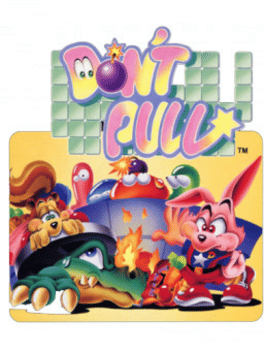
A puzzle game similar to games like the Adventures of Lolo series, Pengo, and Capcom's own puzzle game Pirate Ship Higemaru. It involves the player controlling either a rabbit named Don (Player 1) or a squirrel called Pull (Player 2), pushing blocks to crush monsters. Unlike the other two games, it is neither connected to both and there is no plot or backstory behind the game’s events.Hatris
1991
Kero Kero Keroppi no Daibouken
1991
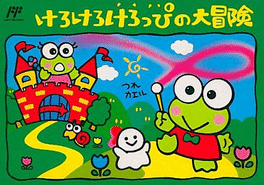
Kero Kero Keroppi no Daibouken is based on the popular Sanrio character Keroppi. Released on the Nintendo Family Computer console in Japan in 1991. Big Adventure is a children's puzzle game where Keroppi must rescue his girlfriend Keroleen who is locked up in a castle. To do so, he must solve the action based puzzles in seven differently themed worlds with four different types of stages (the surface of the maze, flying a plane, a Reversi-like level, and through a field of lava). All the items in the game are pre-determined; there is a need to memorize the pattern for each playthrough so that a player may advance through the levels more quickly once they have achieved a degree of expertise in the game.Kinetic Connection
1991
Kinetic Connection
1991
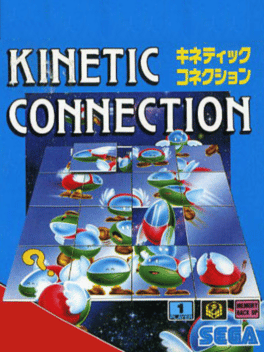
Kinetic Connection is a Sega Game Gear puzzle game released only in Japan. It appears to be part of a series of games by Sadato Taneda but the relationship is unknown. In the game, you must reconstruct a scrambled video loop by swapping and rotating tiles. The game has numerous cameos from Opa-Opa of Fantasy Zone fame.Sabnack
1991
Oeka Kids: Anpanman no Hiragana Daisuki
1991
An educational game to teach children Hiragana. Oeka Kids: Anpanman no Hiragana Daisuki is a Miscellaneous game, developed by TOSE and published by Bandai, which was released in Japan in 1991.Pyramid Magic Special
1991
Pyramid Magic Special (ピラミッドマジック特別) is a puzzle-platform game for the Sega Mega Drive, released exclusively in Japan via the Sega Game Toshokan service. Pyramid Magic Special is essentially a re-tooled version of the original Pyramid Magic, with identical graphics, gameplay and music. The levels are mostly the same also, but generally have more obstacles to make them less straight forward.Teki Paki
1991
Teki Paki
1991
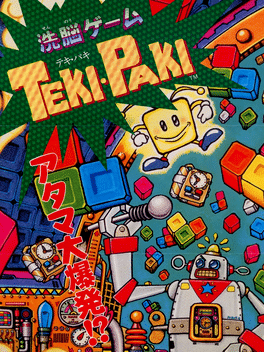
A falling block puzzle game, Teki-Paki is based around creating strings of 5 or more blocks vertically, horizontally or diagonally. The player drops L-Shaped 3-block pieces onto the game field. If the screen is filled, the game is over.Gorby no Pipeline Daisakusen
1991
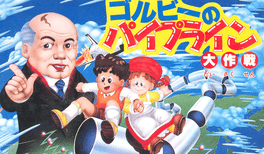
In this falling-block puzzle game, a small girl—wearing a Russian national costume of sarafan, kokoshnik, and valenki—pushes tiles representing segments of water pipe down a two-dimensional, vertical shaft; this shaft is the field of play. A second girl, also in national costume, waves semaphore flags to give the impression that she guides the placement of the tiles. The player must quickly rotate and place the tiles to catch and conduct a continuously-flowing stream of water from pipes on one side of the shaft to the other. When the player successfully links an inflow pipe on one side of the shaft to an outflow pipe on the other side, a row of tiles disappears, and the player earns points. If the player routes the water to a dead end, the game adds a layer of pipe segments for the player to clear. If the accumulating pipe segments stack to the top of the shaft, the game ends. By clearing the requisite number of rows, the player proceeds to the next game level.Lemmings
1991
Lemmings
1991
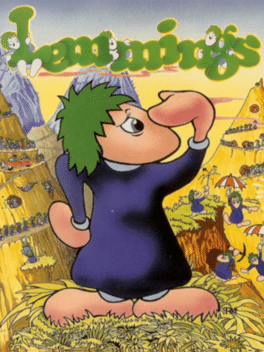
star 7.1Lemmings is a puzzle-platform game developed by DMA Design and published by Psygnosis in 1991. Players guide a group of lemmings through hazardous levels to a designated exit. The gameplay involves assigning specific skills, such as digging or building, to overcome obstacles and avoid traps. Each level has a time limit and requires saving a minimum number of lemmings to progress. The game was released on multiple platforms and is regarded as a classic of the puzzle genre.Locksmith
1991
Locksmith
1991
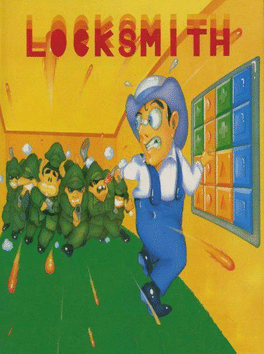
Unbelievable! Someone created the most complicated locks in the world. Captain Red-Hat Jack was assigned to grab the enemy's defense information centre's distribution plan, but firstly he must to resolve the series unbelievable locks to achieve his assignment. So time, intelligence, nervous and exciting will come with Jack always during the spy's war. Do you think he will finish this impossible mission? The answer is "you're better to help Jack!"Bubble Bath Babes
1991