New Games - Page 11880

F1 Career Challenge
2003
F1 Career Challenge
2003
star 5.5F1 Challenge spans four entire championship seasons and features accurate team, vehicle, and driver data for each.The Italian Job
2003
The Italian Job
2003
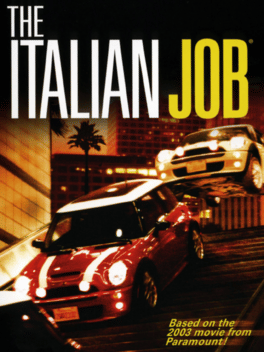
star 5.9Charlie Croker and his gang are left for dead in Venice after being double-crossed during one of the biggest gold heists ever. You must take on the role of Charlie and his gang members in their quest for revenge and the gold. Based on the film, The Italian Job's story mode challenges you to create the largest traffic jam in LA history, and then escape in supercharged Mini Coopers. Master four other action-packed modes, including stunt driving, circuit racing, and multiplayer modes for up to two players.Advance Wars 2: Black Hole Rising
2003
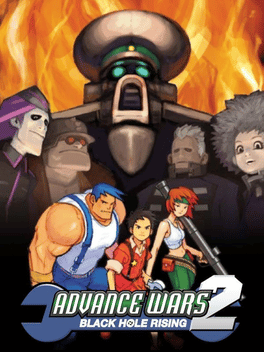
star 8.8In Advance Wars 2: Black Hole Rising brings your GBA all-new strategic action and all-new fighting action! Thrilling turn-based strategy gameplay that will put your brain & your reflexes to the test, in this sequel to the original hit!Population: Tire
2003
Population: Tire
2003
Population: Tire is a game by Videlectrix that takes place in Strong Badia in which you use your mouse cursor to keep the Tire bouncing in the air as long as possible. Increase your score multiplier by hitting birds, balloons, The Cheat and Strong Sad, and beware of wind changes and flying Cold Ones!Hamster Monogatari Collection
2003
Hamster Monogatari Collection is a Miscellaneous game, published by Culture Brain, which was released in Japan in 2003.Viorate no Atelier: Gramnad no Renkinjutsushi 2
2003
The fifth game in the Atelier franchise and the second of the two Gramnad games. This story takes place 20 years after the first game. Both games were re-released on the PlayStation Portable with additional content and endings. The games have never been released outside of Japan.Second Life
2003
Second Life
2003
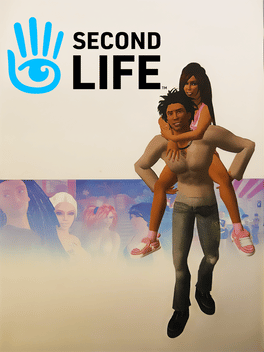
star 5Travel with friends to thousands of beautiful and exciting places — all created by the Second Life community. Filled with Friends, millions of people have already joined Second Life. Chat for free using voice or text with folks from around the world who share your passions and interests.Next Generation Tennis 2003
2003
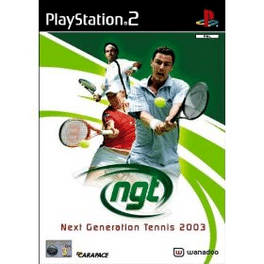
The 2003 version of NGT includes many new innovations: detailed animations, enhanced controls, super realistic trackside details like ball boys and show-time match presentations. Experience points to improve your player's skills, bonus courts and players to unlock. The official courts of Roland Garros (French Open) and the US OPEN as well as both licensed male and female tennis stars.Neverwinter Nights: Shadows of Undrentide
2003
star 8.3Neverwinter Nights: Shadows of Undrentide offers role playing fans even more D&D features than the ground breaking original. Additions include new skills, including Tumble and Appraise; new feats, such as Divine Might, Extra Music and Bullheaded; new weapons, such as Holy Water Flasks and Choking Powder; new prestige classes, like Harper Scout; new monsters from the D&D universe, including Medusa, Cockatrice, Sphinx, and Female Fire Giant; and dozens of new spells. In addition, the expansion pack equips amateur module makers with additional content for the Neverwinter Nights Aurora Toolset, the groundbreaking software included with the full game that allows players to create their own universes, quests and storylines. The toolset will be augmented with all new tile sets for creation of new environments as well as new "Wizards" or automated guides, to help gamers build and play adventures of their own creation.Mother
2003
Mother
2003
star 6.1When included in the Mother 1+2 bundle, Mother (Earthbound Beginnings in the West) received an exclusive equippable item, the Easy Ring, available from the start, which makes the game more balanced (therefore easier than the original version).Jewel of Arabia: Dreamers
2003
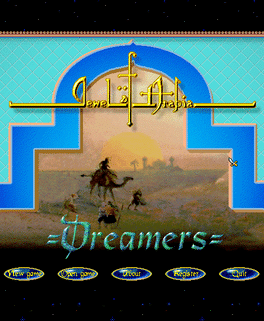
Jewel of Arabia is a captivating world where role-playing comes to life. Dreamers, the first game in this saga, takes you back to the original myths and legends which have inspired all of human civilization. The time is 250 BC and the empire conquered by Alexander the Great a century before has fallen apart. Jewel of Arabia: Dreamers is a compelling and original world you will explore with a party of adventurers drawn from fascinating new character classes. Journey with the unarmed and mystical Sufi, the elusive and deadly Hash-shashin, and the legendary, immortal Djinn. In Dreamers, you will find a world populated with all new races, inspired from the folk tales of the land. Join forces with the beleaguered Satyr, fighting off the aggressive and newly-arrived Mino. Take a side in the bitter civil war dividing the Equine and help end their bloody destruction. And meet the tragic and fatal Sandman civilization, a once great society facing greivous ruin.Mother 1+2
2003
Mother 1+2
2003
star 8.7Mother 1+2 is a compilation of the first two installments of the Mother series, MOTHER and MOTHER 2: GIYGAS STRIKES BACK! (known outside Japan as EarthBound Beginnings and EarthBound, respectively). Mother tells the story of Ninten, a 12-year-old boy who journeys around the world using his psychic powers to collect eight melodies in order to save the planet from an evil race of mind-controlling aliens. Mother 2 tells the story of Ness, a young boy who journeys around the world also using psychic powers to collect eight melodies in order to save the future from an alien of pure evil, intending to sentence all of reality to the horror of eternal darkness. The version of Mother included in this bundle has a special item that can be used to change the difficulty of the game, since it lessens the amount of random encounters and modifies the overall status of the enemies.Star Trek: Elite Force II
2003
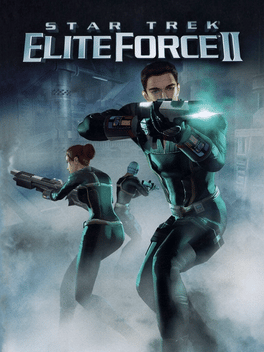
star 7.6In this sequel to the first person action game, you resume the role of Alexander Munro, chief of the Hazard Team, Starfleet's elite security unit. Now assigned to the U.S.S. Enterprise NCC 1701-E, you'll explore strange new worlds, battle against both new and familiar civilizations and go on the most dangerous assignments in the galaxy. After a brief prologue on the U.S.S. Voyager and a short stint at Starfleet Academy, the Hazard Team is assigned its toughest mission yet - duty onboard the Federation's renowned flagship, the U.S.S. Enterprise NCC 1701-E.Mace Griffin: Bounty Hunter
2003
star 6.4Mace Griffin: Bounty Hunter is a first person shooter video game developed by Warthog Games and released for the PlayStation 2, Xbox and Microsoft Windows. A GameCube version was in development, but was eventually cancelled.Starsky & Hutch
2003
Starsky & Hutch
2003
star 6.6Starsky & Hutch is an arcade racing game based on the popular TV series from the 70s, released to tie in with the film. The game includes 18 missions, each based on an episode of the TV show and introduced by Antonio 'Huggy Bear' Fargas. There is also a free roaming mode, in which the player explores the GTA-esque environment looking for action and trouble. Like the film, the game does not entirely play it straight. Starsky & Hutch are actually shooting a TV show, and the scoring for each mission reflects how ratings-friendly your driving is. You are awarded gold, silver or bronze medals for each mission depending on performance, and must get at least 1 gold and 2 silvers on season 1 for a second season to be commissioned, and 3 golds and 2 silvers in season 2 for there to be a third for you to play through. The overall goal in each mission is usually to chase and destroy a criminal's car. There is always a secondary target as well. In addition, the player will gain viewers by hitting the bad guy, pulling off elaGT Cube
2003
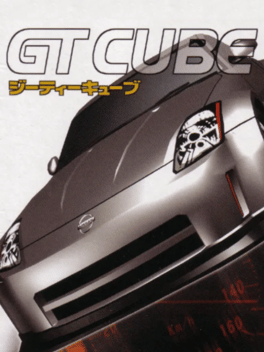
GT Cube
2003
star 3.6GT Cube is a Racing game, published by MTO, which was released in Japan in 2003.Neighbours from Hell
2003
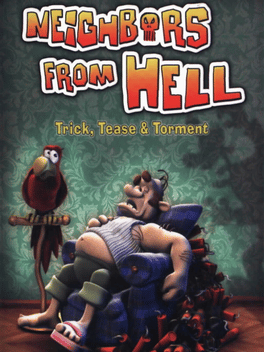
Neighbours from Hell
2003
star 7.5Woody is an average man who has a happy life, until his neighbor Mr. Rottweiler, makes his life miserable. So Woody decides to take full revenge on Mr. Rottweiler, becoming the star of a new TV show where he performs tricks on his unsuspecting neighbour, setting traps in his house such as sawing the chair, banana peels/soap on the floor, smeared paintings and messing with home equipment. Create disarray, increase ratings, and win awards as you make a living hell out of the neighbour's life!Wario World
2003
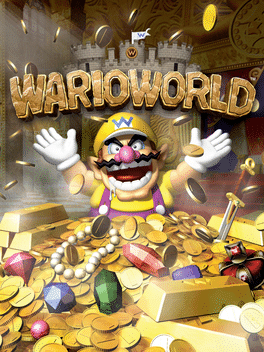
Wario World
2003
star 7.2While Wario enjoys the riches from his many adventures, a mysterious black jewel in his trove transforms gems into monsters. Now, Wario must scramble to recover his riches in an alternate world filled with quirky puzzles, swarming enemies, and lots of loot. As Wario, you'll punch, kick, jump, grab monsters and objects, and inhale surrounding coins like a vacuum cleaner. You must cling to 3D balls to fight bosses, find hidden areas through trap doors, and bash your surroundings to uncover secrets.Tomb Raider: The Angel of Darkness
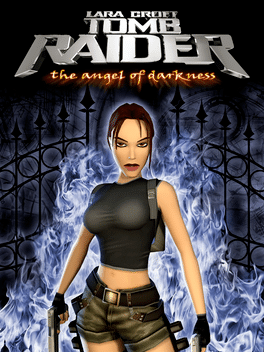
2003
star 6.1Tomb Raider: The Angel of Darkness is the sixth game in the Tomb Raider series, and is the sequel to Tomb Raider: Chronicles. Angel of Darkness introduces new stealth and close-combat moves - ducking, sneaking and hug-the-walls walking. Lara must build her skills by performing action sequences. You'll have her running, dodging, performing flying leaps and platform jumps, shimming along walls and cables, as well as moving boxes and other obstacles around. Advancements are achieved with strategically placed power-ups. Collect weapons and ammunition, artifacts and money.