New Games - Page 12090

Sammy Suricate
2001
Sammy Suricate
2001
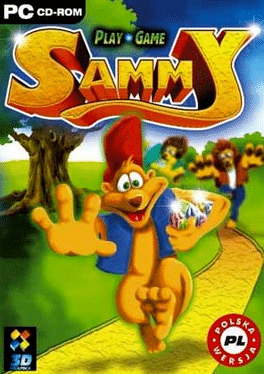
The game combines elements of logic and skill, but it also contains levels of training. As Sammy Suricate, we need to collect all the gems and avoid hostile lions.SWAT 3: Tactical Game of the Year Edition
2001
star 5Uncompromised duty, honor and valor. As an LAPD SWAT officer, you must have a deep and abiding reverence for human life and a firm resolve that all possible tactical alternatives be exhausted before employing deadly force. Your fundamental mission is to make Los Angeles a safe haven for all law-abiding citizens, while keeping the men under your command free from harm. The Tactical Game of the Year Edition also includes a special Tactics footage shot on location at the famous Blackwater Training Center. Learn about SWAT tactics, history, training and more…all provided by actual SWAT officers.Zax: The Alien Hunter
2001
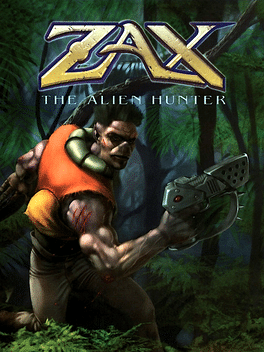
star 8Zax: The Alien Hunter is a PC action game from Reflexive Entertainment.Eldorado Gate Volume 7
2001
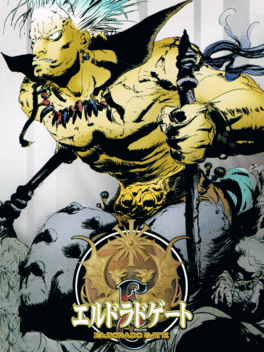
El Dorado Gate is console gaming's first serial RPG series, where each Dreamcast GD-ROM contains 3 seperate (though interrelated) adventures, each telling a story of one of the series' 12 characters. There's 7 volumes in all, the first few introducing the characters whilst the later volumes flesh out how their stories are related, leading to the finale. Part of Capcom's experiment of serializing an RPG over a year with one part every other month.Dark Age of Camelot
2001
Dark Age of Camelot
2001
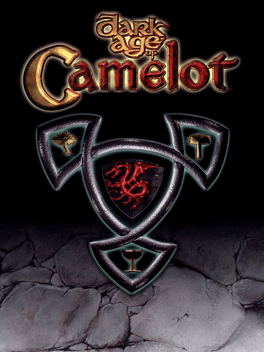
star 8.9Dark Age of Camelot is a 3D medieval fantasy MMORPG that combines Arthurian lore, Norse mythology and Irish Celtic legends with a dash of high fantasy. It is set in the period after King Arthur's death and his kingdom has split into three parts which are in a constant state of war with each other. DAoC includes both PvE and RvR combat, players can choose to adventure alone or join groups to get completion of credit in large-scale PvE encounters and for communication purposes in RvR.Patrician 1+2
2001
Patrician 1+2
2001
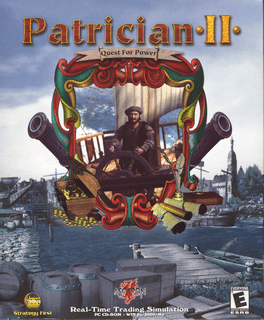
In this bundle you can have two great trade games, predecessors to Patrician 3, in the price of just one! Set against the historical backdrop of maritime trade at the time of the Hanseatic League, the Patrician series sees the player take the role of a citizen of a medieval hanseatic town in Northern Europe, between London and Novgorod, with the aim being to rise from the status of an ordinary, unimportant trader to that of a major business tycoon and governor of your hometown. To achieve this goal, the player must gain the respect and recognition of other inhabitants and try to make a profit through maritime trade, the production of goods and the completion of missions. The player can raise his profile by both improving the city and through diplomacy, or by raising money for his treasury by means of piracy and smuggling - but watch out, others want easy money too, so you would do wise to arm your ships!Command & Conquer: Red Alert 2 - Yuri's Revenge
2001
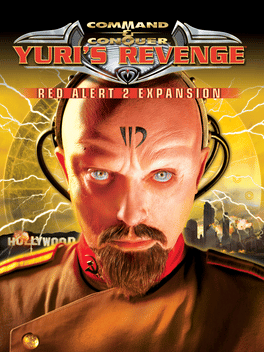
star 8.1The game begins with a presidential briefing in the White House concerning Yuri and how he has begun his take over of the world through mind control. Yuri interrupts the briefing to explain how he plans to take over the world, telling the American President Michael Dugan that he has a network of Psychic Dominators around the world, which he is now beginning to reveal. One of Yuri's Psychic Dominators is on Alcatraz Island in San Francisco, which Yuri activates just before ending his transmission to the White House. The President immediately calls in an airstrike on the device, but all the attacking aircraft were shot down, although one crashes into the nuclear reactor on the island, causing the device to lose power and to not function. Despite this, Yuri activates his other Psychic Dominators around the world and the majority of the planet quickly succumbs to Yuri's mind-control.AirKano: Dr. M no Yabou
2001
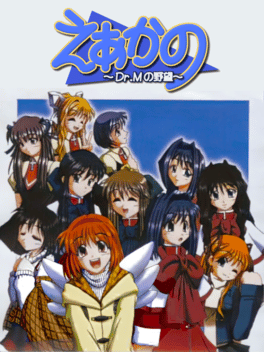
A Mega Man-like game released by Keio Digital Vertex, featuring characters from the Kanon and AIR visual novels.Ski Resort Tycoon II
2001
Ski Resort Tycoon II
2001
Ski Resort Tycoon II the sequel to Ski Resort Tycoon. The game combines the best features of the original with new elements and improvements. Add ski runs and buildings to your resort, while managing your income and trying to keep the visitors happy. Better graphics, bigger maps and a wide variety of animations distinguish this product from its predecessor. The game has the same general atmosphere as the original, but with improved graphics and user interface. More equipment, additional views including 360 degrees, better and more complete buildings and a new and improved sound.Codename: Outbreak
2001
Codename: Outbreak
2001
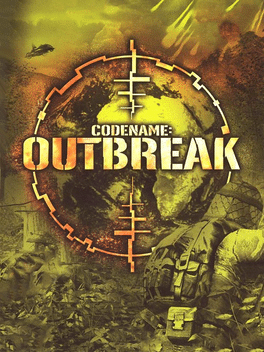
star 7.4Venom. Codename: Outbreak is a tactical 3D-shooter set in the near future. Your aim is to oppose an alien invasion on Earth and protect the human race from extermination while evil parasites continue turning people into mind-killing beasts. Together with a teammate, you play the role of an ex-Ukranian combat group member - and your primary goal is to progress through 14 action-packed single-player missions or play via multiplayer with your friends over a LAN connection.Project Eden
2001
Project Eden
2001
star 6.9Due to severe overpopulation, the planet Earth’s diameter is increasing with the growth of towering mega-cities, each inhabited by millions of humans. Buildings are growing ever-upwards, interconnected with a thick web of roads, walkways and service channels. In these giant human hives, only the affluent may feel the rays of the sun and breathe the cleaner air. Your team has been selected to go down and investigate problems at the Real Meat factory, in which all of the equipment has started to simultaneously malfunction. Technicians sent to repair the machinery have gone missing without explanation. The UPA's (Urban Protection Agency) orders are clear: prepare for the descent. Project Eden is a 3D shooter with an emphasis on puzzle-solving. You'll lead a squad consisting of four UPA agents: Carter Dorlan, Andre Herderman, Minoko Molensky, and Amber Torrelson. Each operative has his or her own special ability that you'll need to master in order to progress. As Carter, use your knack for interrogation and nimble fLove Hina Advance ~Shukufuku no Kane wa Naru kana~
2001
You take the role of Urashima Keitaro, who’s been rejected from entering Tokyo University for the second year running making him, what the Japanese call, a ronin. To make things worse, his parents have kicked him out of his house. Fortunately, his Grandmother owns the nearby inn and Keitaro thought this would be the perfect place to live and work as the landlord. Or so he thought. He finds out that the building is no longer an inn and is in fact a girls’ dorm making him the only guy around! Most guys would kill to live with six cute girls, but if Keitaro’s not careful, this job will kill him…Super Tokusatsu Taisen 2001
2001
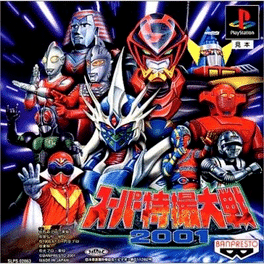
A crossover strategy game featuring characters from many tokusatsu propertiesThe Italian Job
2001
The Italian Job
2001
star 7.6The Italian Job is a video game based on the 1969 film of the same name. The game features a story mode based on the movie, and a multiplayer "party" mode where players compete through several different circuits in London and Turin, as well as a single player practice mode where the player can develop skills needed for completing the story mode.Green Green
2001
Green Green
2001
Green Green is an erotic visual novel developed and published by Groover that takes place in an isolated and nondescript boarding school known as Kanenone Gakuen that prides itself on the tradition of men growing amongst other men without any external influences to disturb them. Until one day, when the current administration decided to consider making the academy co-ed, and in order to see how the change would affect the student body, first and second-year girls were brought to live on school grounds for one month. While you, Yuusuke Takasaki, take the change in stride, your three hormone-driven friends see this as the true beginning of their youth.Arabian Nights
2001
Arabian Nights
2001
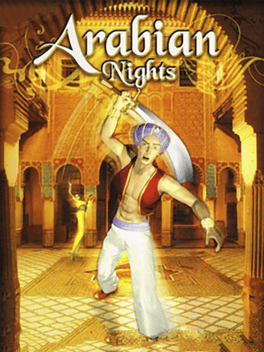
Arabian Nights is a 3-D action-adventure arcade video game published in 2001 for Microsoft Windows. It was published by Visiware and Wanadoo. It is based on One Thousand and One Nights.The Rage
2001
The Rage
2001
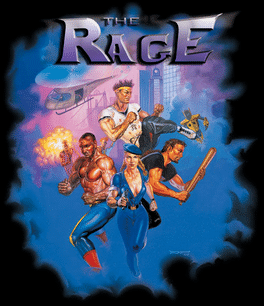
The Rage is one of the very few examples of 3D scrolling beat’em up for PC; it guarantees a great playability, never forgotten by old style arcade players, together with the new stunning graphics, thanks to modern PC hardware, and really strong musics. It allows to fight with up to four players, using the same PC or Internet and LAN connections, in real brawls against a great number of enemies with a wide range of easy-to-do moves.Fiend
2001
Fiend
2001
Fiend is a a 2D survival horror game greatly influenced on the work of HP Lovecraft. You play as Nick Cane who is sent to the small town of Lauder to see if a mine contains any valuable minerals. Arriving at Lauder you suspect that all is not right with the town and slowly the visit turns into a nightmare. The game was released in 2001 and took around 2 years of work to finish. The engine is made using the allegro library and has features such as realtime lighting and particles effects.