New Games - Page 12094

NBA ShootOut 2002
2001
NBA ShootOut 2002
2001
If you love basketball (and you know you do), get ready for best thing since sliced bread. NBA SHOOTOUT 2002 takes the popular SHOOTOUT franchise to new heights, featuring the most realistic-looking action to date. The player models are created from a combination of photographs, motion-capture animation, and texture mapping which means the superstars and benchwarmers alike will appear just as they do in real-life. An updated game engine gives the play the feel of the NBA, and all of the new rules changes are in effect, too. The courts look like their real-life counterparts, with updates included for new floors like Seattle's. You choose your team, execute any desired trades, set your starting lineup, and pick through the playbook to create the most dominant squad in the league. High-flying dunks, touch shooting, and a sophisticated foul system make the NBA SHOOTOUT 2002 even more incredible than the beloved series installments that paved the way.Sub Command
2001
Sub Command
2001
star 6Take charge of the most deadly modern-day submarines in the world - three distinct submarines across two unique and challenging campaigns. Utilize cutting-edge sensor and weapon technology to locate, track and destroy the enemy - even deliver Tomahawk missiles to inland targets. Whether transiting, diving, or surfacing you control the smartest, stealthiest and most feared subs on the water today. Three submarines to command - Seawolf, 688(I) and Akula. Each contains authentic naval systems including Sonar, Radar and Target Motion Analysis. Test your skills while firing Tomahawk missiles, rescuing crippled subs, rising through the polar ice cap to communicate information and much more. Easy to use game interface - With straightforward controls and automated crewmen, controlling a submarine has never been easier. Enhanced sound and 3D graphics engine - 3D Objects (over 250), from Russian trawlers to France's Mirage fighters - plus exacting sound modes pull you in like never before. You won't just hear the torpedosLaxius Power
2001
Laxius Power
2001
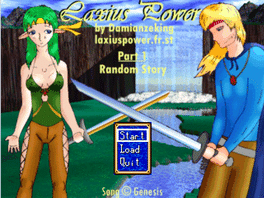
Laxius Power is the first game of a popular trilogy of freeware roleplaying games released from 2001 to 2004. The trilogy focuses on the beginning of a long journey experienced by Random Pendragon, his girlfriend Sarah Brandolino and his best friend Luciana Vicenti, including many more characters.Uplink
2001
Uplink
2001
star 7.1You play an Uplink Agent who makes a living by performing jobs for major corporations. Your tasks involve hacking into rival computer systems, stealing research data, sabotaging other companies, laundering money, erasing evidence, or framing innocent people. You use the money you earn to upgrade your computer systems, and to buy new software and tools. As your experience level increases you find more dangerous and profitable missions become available. You can speculate on a fully working stock market (and even influence its outcome). You can modify peoples academic or criminal records. You can divert money from bank transfers into your own accounts. You can even take part in the construction of the most deadly computer virus ever designed.Tiny Toon Adventures: Dizzy's Candy Quest
2001
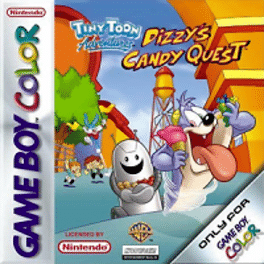
This is a puzzle solving game in which the player (as Dizzy from the Tiny Toons Cartoon) has to collect and return different types of candy to a friendly robot that needs the candy to free himself from Montana Max. The game is divided in 5 worlds (The Studios, Ice World, City, Gogo Dodo's world, Looniversity) with varying numbers of sublevels. Getting to the candy is made complicated by conveyor belts, trap doors and fans as well as dissolving bridges etc. To add to the trouble, clones of popular Tiny Toon characters (Plucky Hamton, Furrball etc.) are programmed to attack the player. Extras can be collected for extra energy, time etc. The game is presented from a top down perspective. Estimated playtime approx. 30 hours.Cyber Troopers Virtual-On Force
2001
Cyber Troopers Virtual-On Force is a 3D mecha fighting game developed by Sega AM3 (formerly Hitmaker) and published by Sega. It was released in Japanese arcades only on the Sega Hikaru arcade system board in 2001. Following its initial release, there was initially no home console port of the game due to the Hikaru's superior graphical capabilities. A region free home port of the game was released for Xbox 360 on December 22, 2010. The Xbox 360 version retains the same gameplay as the original series, only with a few inclusions: 2 on 2 Leader Battles, co-op boss fight mode, a Mission mode and Xbox Live support for online play. Battles have local 2 player splitscreen or up to 4 player over System Link. The game also has a special Collector's edition which includes a booklet called Virtual On Chronicle 15, that looks back at 15 years of Virtual-On, and a six disc soundtrack called Virtual On Official Sound Data. All of the items come packaged in a box with artwork from Hajime Katoki. Jaguarandi is now available as aImp
2001
Harry Potter and the Sorcerer's Stone: Third-Floor Corridor Challenge
2001
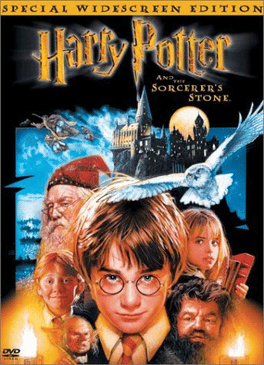
Complete a series of puzzles to access deleted scenes in this game included on the second disc of the DVD release of Harry Potter and the Sorcerer's Stone.Equinox
2001
Equinox
2001
Equinox is a limit removing 13-level mapset for Doom II created by B.P.R.D in 2001. It is listed as one of the Top 100 WADs of All Time by Doomworld. Equinox is known for its large scale architecture, which had a tendency to crash some source ports at the time of its release.Super Masao 2
2001
Super Masao 2
2001
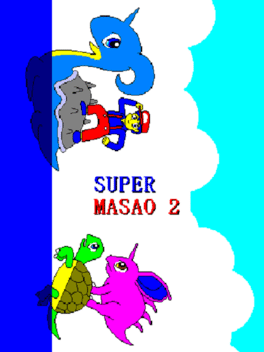
A side-scrolling action game originally published on Naoto’s Script in 2001. It consists of 17 stages including hidden one and its goal is to find a star in each stage, collect 4 stars at least and defeat the boss in the last stage. The author, Naoto Fukuda, is known for his taste for making parody games. Therefore, it is basically inspired by a series of Super Mario Bros. (especially Super Mario 64). Many enemies look very similar to Pokémon characters. It is often mentioned as the most popular browser game on the Japanese Internet in the early 2000s.Ultimate Ride
2001
Ultimate Ride
2001
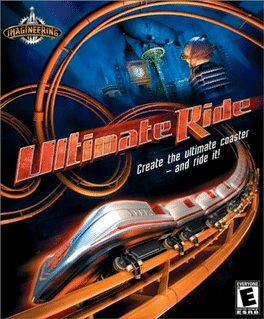
Ultimate Ride is a video game by Disney Interactive for Microsoft Windows in which players design, engineer and ride virtual roller coasters.Woody Woodpecker
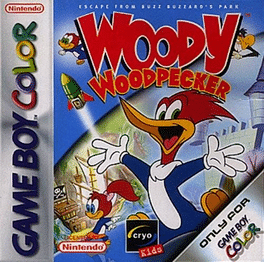
2001
M&M's Shell Shocked
2001
M&M's Shell Shocked
2001
star 6.9M&M's Shell Shocked is an Action game, developed by Boston Animation and published by Simon & Schuster, which was released in 2001.Elite Forces: WWII - Iwo Jima
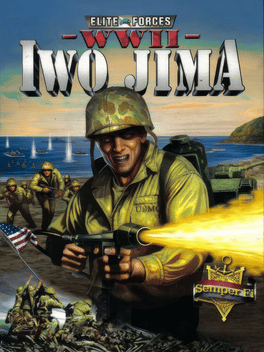
2001
Join the ranks of the U.S. marines as you embark on a treacherous and chaotic amphibious beach landing, defeat a vast network of interconnected pillboxes and emplaced guns, negotiate your way through perilous mine fields and enemy bunkers to track down and eliminate an elusive enemy. Experience the story of one rifleman’s heroic struggle to survive and prevail among the nearly 100,000 combatants who warred for 36 days for possession of the island of Iwo Jima.Robot Wars: Advanced Destruction
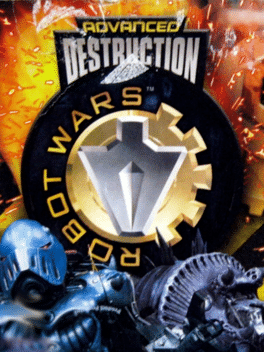
2001
In just over 4 years the Robot Wars TV series has grown from cult status to become a massive worldwide phenomenon, with the BBC show now attracting a weekly audience of around four million viewers. Taking its cue from the latest series, this GBA Robot Wars game cranks up the action with new events, new robots, new arenas and a wide range of new game features. The game brings together all the elements of the TV show - players can design and build their own robots, drawing upon a database of body parts, armour, engines, wheels and weapons. Once complete, battle can commence! The game also features a quick start `pick up and play' function, so gamers can select from a range of pre-built robots, and get straight to the realistic 3D action.Casper: Spirit Dimensions
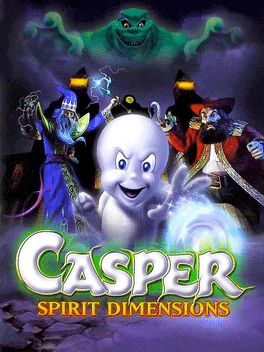
2001
star 1.8Spiral into phantom dimensions where you will fiercely battle for the fate of the spirit world! Portals will transport you to mysterious realms that are populated by ghosts of the past, present and future; all possessed by the evil Kibosh. Use your powers of flight and fright to become the quickest, smartest and most powerful ghost in the Spirit Dimension!Tarragona 3: Devil's Bridge
2001
The Devil's Bridge is inspired in the Tarragona's roman aqueduct. The legend tells that a shepherd requested to the Devil to build a bridge between two mountains, this will make his live easier because he will save time moving the sheeps. The Devil built it in one night! The next morning the Devil request the price to the shepherd: the soul of the first who cross the bridge! But he told him to take the correct soul. He was not the first one to cross it! The first one was a sheep.