New Games - Page 12378

Sonic R
1998
Sonic R
1998
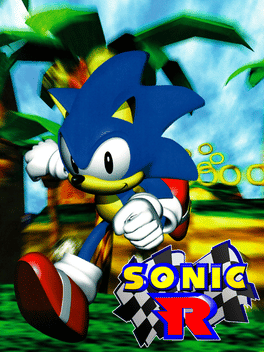
Sonic R is a 1998 LCD game created by Tiger. The game features a directional pad which only has Left and Right and 2 buttons, "jump", and "run". There are also buttons for toggling the power and sound on/off and to display the score. Two AA batteries are required to play the game. This game is based off another game of the same name on Sega Saturn. The background of the game bears a resemblance to Resort Island, a level from the Saturn game.Sonic
1998
Sonic
1998
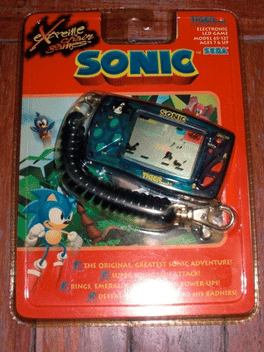
Sonic is a keychain-based LCD game created by Tiger Electronics in 1998. The game case is shaped somewhat like a Game Boy Micro and has a keychain attached to it. The game features a standard directional pad and 2 buttons "A" and "B", as well as reset and power toggle buttons. The background of the game seems to be an industrial area, likely Eggman's base, as there are grills on the floor. The game comes in both black and blue casings.The Patrick Polly Swooshball Challenge
1998
The Patrick Polly Swooshball Challenge is a game with a mix of Pong and Tennis. The game concept is based on a major commercial campaign by Candelia, one of the leading candy manufacturers in Scandinavia. Released as freeware, people had to send in 5 scanned barcodes from bags of Polly in order to receive the game.Resident Evil 2
1998
Resident Evil 2
1998
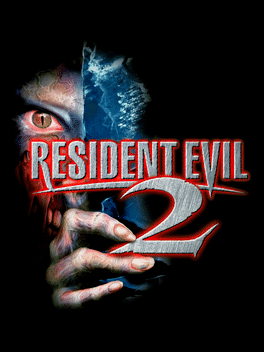
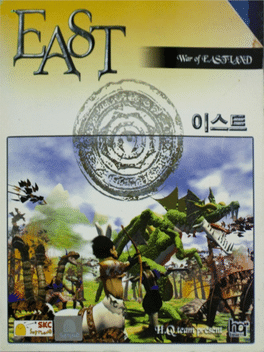
The Game.Com edition of Resident Evil 2 follows much the same structure and story of its console counterpart. This version has the player control Leon by positioning him in the direction he needs to go and by having him move forward whilst engaging zombies. Leon can only be moved over three horizontal planes as in a 2D game with a side view, but with a pseudo 3D effect. Each non-scrolling location holds different zombies and once they are dead Leon moves to a new screen. He has access to an inventory to cycle between weapons. There is support for options such as touchscreen inventory menus, in addition to the game keeping track of the time the player has spent with the game.East
1998
Azarashi
1998
Azarashi
1998
An adorably cute game that will challenge your reflexes and keep you coming back. Use your lightning-fast fingers to stop one of three seal keychains from dropping. Your score depends on your reflex - if you catch the seal quickly, you will get more points. Make sure you're not too fast with your finger, or the seal might get hurt! Azarashi is a classic arcade style game from Studio Pixel, the creator of Kero Blaster and Cave Story. Simple and addicting, it's a great way to kill time.Pocket Family GB
1998
Pocket Family GB
1998
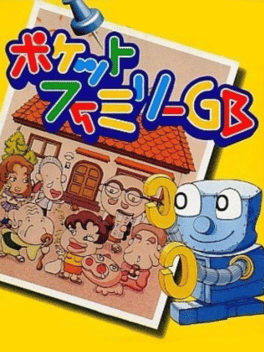
You play as a robot landlord that tends to the resident’s needs, play mini games/earn money and items and watch their families grow. Families come and go as you oversee multiple houses with different themes.Honya Monogatari
1998
Laurie Anderson's Puppet Motel
1998
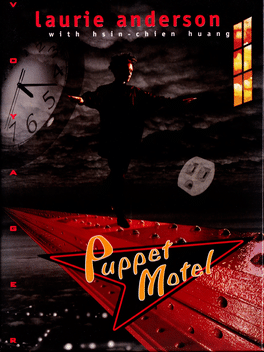
This is an interactive environment containing music, videos, monologues, and art-jokes from performance artist and musician Laurie Anderson with the help of designer Hsin-Chien Huang. It begins with an electrical outlet that glows and howls into the darkness. Then you enter "The Hall of Time", a corridor in the motel where icons cover the walls, and lead to 33 symbol-crowded rooms. A puppet Laurie Anderson sparingly appears as a guide.Mission Sunlight
1998
Mission Sunlight
1998
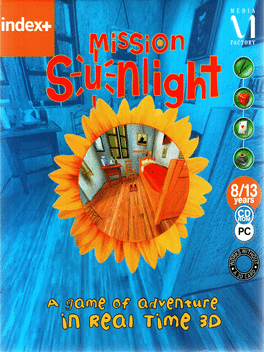
Mission Sunlight is an educational adventure game that presents paintings by Vincent Van Gogh reconstructed in full real-time 3D.Ocean Bound
1998
Ocean Bound
1998
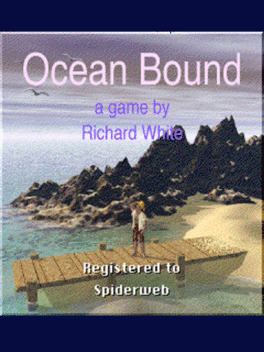
Ocean Bound is a survival game where you and the crew of your ship are stranded on an unknown island. The main goal is to build a ship to escape back to civilization, but before you can do that you must establish a colony, collect resources and try to stay alive. But once you manage to escape, the next level simply strands you in another island. There are sixty levels in total, featuring all sorts of islands, some as big as continents, and each one requires a different strategy to stay alive.Beached II
1998
Beached II
1998
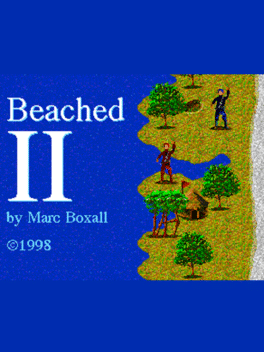
Whilst travelling out on the open sea, your boat sinks. You, and two others are washed onto a tropical island. The island is a paradise, with trees, bananas, coconuts, and vines. However, you suddenly remember the long range weather forecast. A tornado will form in this area in about one week. You must work hard to build a raft to get off the island, but also make sure you keep alive by eating, drinking and sleeping. The other survivors must build their own rafts too. You must decide if and when you help them, or if you line your own pockets with gold.Beached
1998
Beached
1998
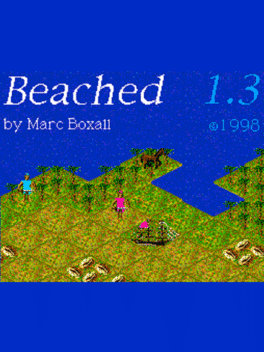
After a mysterious boating accident, you find yourself stranded on a small tropical island. Life isn't so bad here: there's food, wood, and gold for the taking, so why leave? Well, even paradise has its dark moments, and this particular paradise is about to be wiped off the map by a hurricane. Your newfound life of leisure has turned into a lesson in bare survival. Avoid starving to death, chop wood, build a boat, and get off that sand pile. Before you leave, you might even have enough time to line your pockets with the gold that still litters the island.Agora: Soul of the Oracle
1998
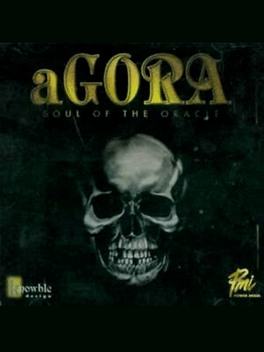
Reminiscent of Diablo, but instead of maps, the game consists of eighteen 3D globes. There are no boundaries, you can walk all the way around the globe if you want to. This does get somewhat confusing at times though. In order to move to the next globe, you have to find all the pieces of a stone disk. However, your enemies will also pick up the disk pieces and you have to defeat them to get them back. When you die, you are reincarnated at your "oracle", a stone structure which you have to defend. If your oracle is destroyed, you can no longer be resurrected. This is also true for your enemies.Forever Legend
1998
Forever Legend
1998
Forever Legend is a freeware role-playing game inspired by Final Fantasy series. A young child from the outside world came into the realm of ordinary people from the huge meteor. The child, named Kilgaly, grows up to become a hero who has to vanquish evil and save his land. Gameplay is divided into overworld traveling and turn-based battles with menu options such as "attack", "magic", "item" and "run". The overworld is viewed from a top-down perspective, which switches to a side view during battles, like in Final Fantasy games.Disney's Adventures in Typing with Timon & Pumbaa
1998
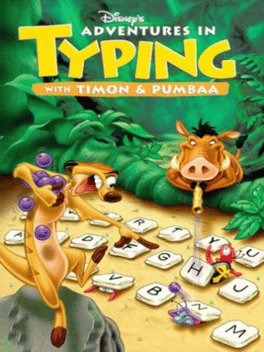
Rafiki, Timon and Pumbaa from Disney's Lion King are the tutors in this typing game created for children ages 6 and up. The comedic meerkat and warthog team are "going off on an adventure to broaden their horizons", and wise old Rafiki advises them to bring along his keyboard. When they demur, Rafiki enjoins the player to assist them in their travels, and the typing tutorial begins. The game employs standard practice routines, beginning with proper posture and placement of the fingers on the keys, followed by letter repetitions as each section of the keyboard is mastered. At first the exercises focus on accuracy, later working up to increasing the player's typing speed. Keyboard exercises are interspersed with mini typing games that become available as the player progresses: Milestones are rewarded with printable certificates, and Rafiki keeps a progress report of the player's WPM (words per minute) and accuracy statistics, as well as showing which keys the player needs to work on. There is a Ctrl + P option at tSuper Mario Bros. 2
1998
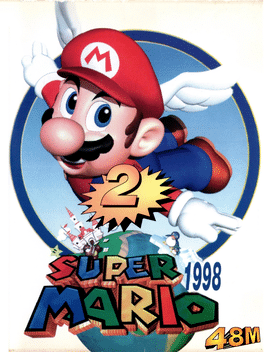
Super Mario Bros. 2
1998
Super Mario Bros. 2 is a pirated port of the All-Stars version of Super Mario Bros. for the Mega Drive/Genesis, made by Gamtec in 1998.