New Games - Page 12475

Eojjeonji Joeun Iri Saenggil Geot Gateun Jeonyeok
1997
Eojjeonji Joheun Il-i Saenggil Geot Gateun Jeonyeok (which roughly translates to "A Night Where Good Things Are Bound to Happen") is a Korean-made beat-em-up based on the comic book by Myung Jin Lee. The protagonist of the game is a rebellious teenager named Namgoong Gunn. On the way to his new school, where he hopes to forget his rather violent past, he spots a beautiful girl, and immediately afterwards his wallet gets stolen. Following the thief, Gunn gets involved in a struggle against a powerful criminal syndicate.RedCat: Het Levende Kleurboek
1997
In this game, children can draw and color on the computer. They can color in coloring pages that have a movie attached to them and they can make drawings complete with special patterns.Pastor 3D
1997
K-9 Cyber Companion
1997
Math Invaders
1997
Math Invaders
1997
While passing the uncharted planet Metreon, the spaceship SS Pythagoras is attacked by hostile Geometroids who have taken the crew and ship hostage. The ship's security chief managed to avoid capture and now must fix the ship, free the crewmates, re-take control of SS Pythagoras and stop the Geometroids from taking over Earth.Mavis Beacon Teaches Typing Version 8
1997
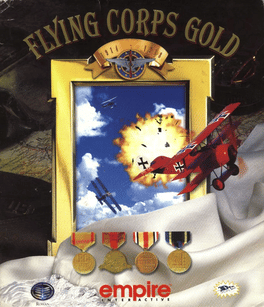
Mavis Beacon Teaches Typing Version 8 is the 8th entry in a series of instructional typing software featuring Mavis Beacon, a fictional typing tutor. This title uses minigames as teaching aids, teaches typing posture, stretches, and keyboard placement through a series of short-form videos, and also allows the player to test their typing speed and improve their typing skills by copying various texts, including poetry and classic literature. The minigames in Version 8 are: Rag Time Space Junk Road Race Check-out Time Chameleon Picnic Shark Attack Penguin CrossingFlying Corps: Gold
1997
Final Conflict
1997
Final Conflict
1997
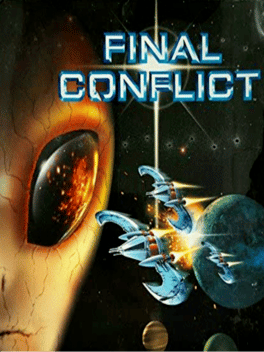
You're about to engage in galactic war like there's no tomorrow. Fail and there won't be one. It's just you against the Donanji Marauders, the most lethal aliens in the universe. But if you take them on too soon, you can kiss your little Alliance good-bye. Better get your ships together. You've got planets, moons, space stations and bad manners to conquer. Crucial resources are spread over 21 uniquely designed missions. The good news is you decide your own path.Fighter Ace
1997
Fighter Ace
1997
Do YOU have what it takes?! Killer or cannon fodder, Binky? Strap one of WW II's mightiest fighters to your virtual backside and prepare for TOTAL WAR! Microsoft Fighter Ace is a premium, subscription-only game that hurls YOU into the cockpit in a massively multiplayer aerial melee guaranteed to get your heart pounding and adrenaline squirting through your veins.Le Mans 24
1997
Le Mans 24
1997
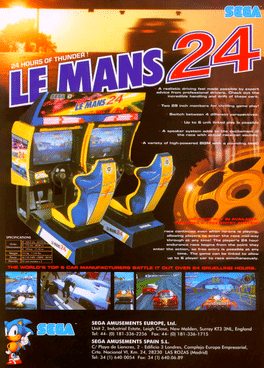
Le Mans 24 (ル・マン 24) is a Sega Model 3 arcade game by Sega, based on the real life endurance race of the same name and licensed by its organisers, Automobile Club de l'Ouest. It is unrelated to Le Mans 24 Hours for the Sega Dreamcast. Le Mans 24 is unique among Sega racing games in that the races occur in real-time, with 24 in-game hours equivalent to roughly 10 minutes. Players have a limited amount of time to complete the 24 hour race and can earn extra time by passing other cars or completing a lap of the track. Likewise, being passed by another car subtracts time from the timer. If the timer runs out, the race continues even if there are no players. The player can choose to insert another credit and continue where s/he left off. Up to 3 twin cabinets can be linked to allow 6 player competition. Le Mans 24 is much more realistic than other racing games of its era, with periods of rain affecting how the cars handle, simulated tire wear, and a day/night cycle.Decisive Battles of WWII: Ardennes Offensive
1997
Decisive Battles of WWII: Ardennes Offensive is a computer wargame developed by the Strategic Studies Group. The game depicts the historic World War II battle known as the Battle of the Bulge. Ardennes Offensive is the first game in the Decisive Battles of World War II series.Conquer the Universe
1997
Conquer the Universe
1997
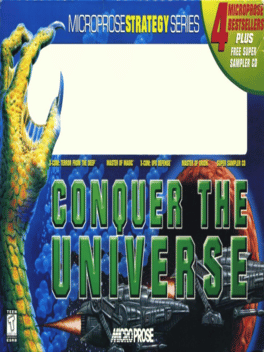
Conquer the Universe is a compilation containing the following games: - Master of Magic - Master of Orion - X-COM: UFO Defense - X-COM: Terror from the Deep It also features a Super Sampler CD with demo versions of Grand Prix II and Magic: The Gathering.ThunderGun: The Cybwar Mission
1997
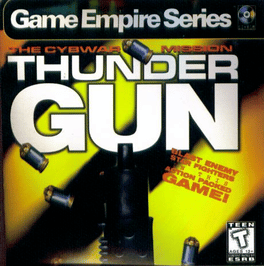
The year is 2880. For the past century, extraterrestrials have been pillaging the planet Soran for its massive deposits of Asterite, a light-weight anti-gravitational rock used to build stable orbital cities. Galactic wars have been fought between the different life forms excavating for the valuable rock. As a Thunder Gun pilot, your mission is to journey deep into Gateway's underground lair to defeat his robotic army, free the kidnapped Queen, and deliver Earth from the grip of this brutal cybwar.Boggle
1997
Boggle
1997
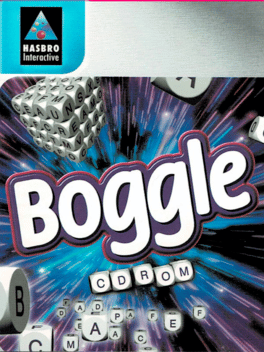
star 5.1A computer version of the classic word finding game. 16 lettered dice are rolled and arranged in a square. The player then has a limited amount of time to find as many words as possible in the grid. New game variations for the computer include a 4X4X4 cube of dice for finding words, a head-to-head game where players place the dice themselves before looking for words, and two tetris-like games where players must find words among onrushing Boggle dice.Disney's Hercules
1997