New Games - Page 12559

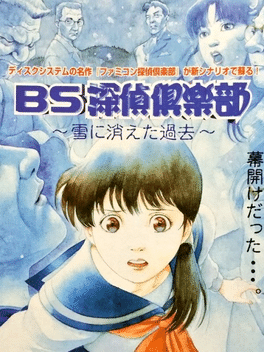
BS Tantei Club: Yuki ni Kieta Kako
1997
A Satellaview-only game in the Famicom Tantei Club franchise. The game is made up of 3 chapters; the first was broadcast from February 9–14, the second from February 16–21, and the last from February 23–28. The game was later re-broadcast several times. It is currently not possible to obtain and play the game in its intended form, as Satellaview service is no longer supported, some parts of the game used stream voice acting, which is not part of the game code itself, and the game was never ported to other consoles. As a Satellaview release, it was never released outside Japan.Hyper Securities S
1997
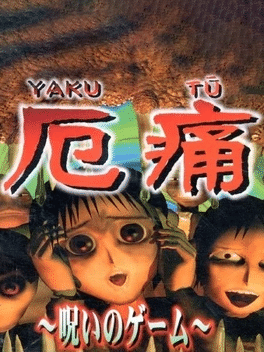
The Yakutsu Noroi Game
1997
The Yakutsu Noroi Game is a Japan-only PlayStation horror visual novel game that is sequel to Yuujou Dangi. The protagonists visit an abandoned school at midnight to dig out a time capsule they buried when they were in elementary school. The trip turns out unexpected.Vagabond's Quest
1997
Vagabond's Quest
1997
Vagabond's Quest (VQ) was a web-based pit fighting and arena RPG that originally launched in the mid-1990s. The game was designed to be a text-based, multiplayer experience where players could engage in duels, develop their characters, and explore solo dungeon crawlers.Riot Stars
1997
DoDonPachi
1997
DoDonPachi
1997
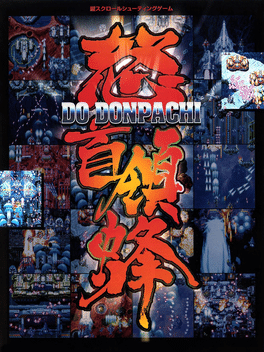
star 7.2Compared to DonPachi, DoDonPachi is generally known for introducing new gameplay elements while improving or changing existing ones. The overall background of the game, unlike following sequels, remains more or less centered around a supposed invasion by a mysterious race of mechanized aliens, which the player is called to face throughout its run. However, more sinister and shocking secrets lie beneath the surface, accessible only to those brave and skilled enough to clear the entire game.Theme Hospital
1997
Theme Hospital
1997
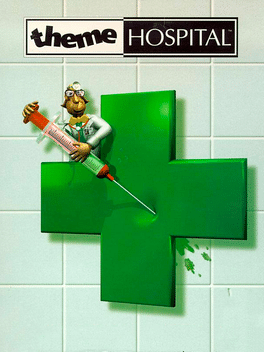
star 8.5Theme Hospital is a business simulation game developed by Bullfrog Productions and published by Electronic Arts in 1997, in which the player designs and operates a hospital. Like most of Bullfrog's games, Theme Hospital is permeated by an eccentric sense of humour. The game is the thematic successor to Theme Park, a game also produced by Bullfrog. The game was a massive commercial success, selling over 4 million copies worldwide.Milandra
1997
Milandra
1997
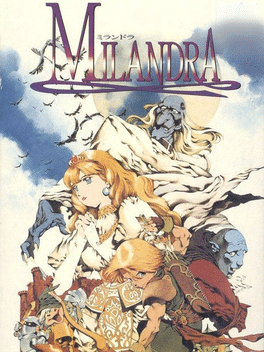
Milandra is a Role-Playing game, developed by Tomcat System and published by ASCII Entertainment, which was released in Japan in 1997.Pikiinya!
1997
Pikiinya!
1997
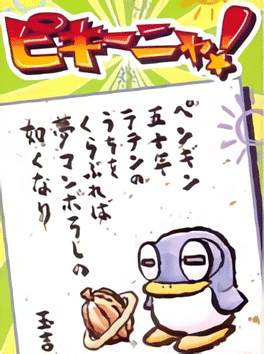
Pikiinya! is a Japan-exclusive action-puzzle video game developed by Crea-Tech and published by ASCII, which was released in 1997 for the Super Famicom. Pikiinya! takes the Tetris-esque formula of blocks falling from the sky, and adds gyrating tropical-type penguins. They excite easily, and sleep when they are alone and/or bored. These penguins just want to live in peace, and throughout the story mode in the game they must constantly fight against people that want to capture them including poachers, witch doctors, and mad scientists. The characters were designed by Tamakichi Sakura (the artist of Super Mario Adventures). The game designers were Hiroshi Miyaoka and Tomoki Tauchi. The voices are from Maki Yagita.Hang Pilot
1997
Dragon Ball Z: Hyper Dimension
1997
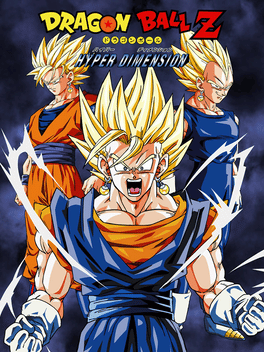
The European port of Dragon Ball Z: Hyper Dimension lacks the story mode, present in the Japanese version.Oil Panic
1997
Oil Panic
1997
Bowser is dropping oil into a castle, and Mario must use two buckets to catch the oil before it touches the floor. Yoshi serves to dispense oil and can even be used to take out Bowser from the top of the castle, gaining bonus points in the process. In Classic Mode, the Station Helper must collect oil dripping from the ceiling of a gas station in one bucket and dump it to his boss before the bucket overflows.Octopus
1997
Octopus
1997
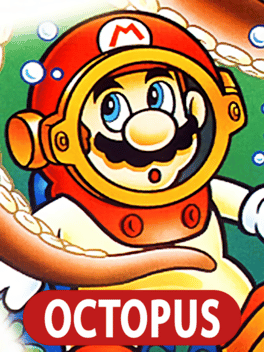
Mario is a sea diver and must deliver treasure to Princess Peach, but he must avoid the Octopus's arms. His speed is affected by how much treasure he is carrying, but he can throw his bagful of treasure at the Octopus's arms. Bonus points are awarded depending on how much treasure he gives to PeachFire
1997
Fire
1997
Mario and Luigi attempt to catch Toads, Yoshis, and Donkey Kong Jrs. after they jump out the window of Princess Peach's burning castle. The catch is that different characters fall at different speeds: Toads bounce the highest, while Donkey Kong Jrs. bounce the lowest. Yoshi Eggs also appear and contain either a Bob-omb or a Moon (a Super Star in the first game); the eggs break open when they are caught or hit the ground. The player receives two points for catching an egg. If a Bob-omb reaches the carriage, everyone, including the Mario Bros., runs away as the carriage explodes, and the player gets a miss. If the Mario Bros. catch a Moon, the player receives five points. At 200, 500, and 700 points, Peach appears and blows a kiss, sending out a heart for Mario or Luigi to catch to remove a miss. Music is also featured in this version, with the tempo changing depending on the speed of the game.Manhole
1997
Manhole
1997
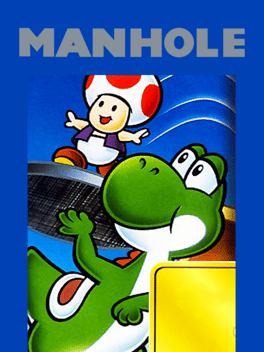
Manhole was remade with an updated "Modern" version for Game & Watch Gallery. Toad, Donkey Kong Jr., and Mario are the pedestrians in this version, walking at different speeds, while Yoshi is the character the player controls. In this version, four manhole covers can stay up at once, unlike in the original. The manhole covers can drop from characters stepping on them, causing the next pedestrian to fall if Yoshi does not act quickly. Yoshi can also hold a manhole cover in place to keep it from falling. He holds up the upper manhole covers with his head and the lower ones with his tongue. At 200, 500, and 700 points, a Chubby comes out of the ground and throws a heart for Yoshi to catch to remove a miss. This version also features music, with the tempo changing depending on the speed of the game.Tamagotchi Gen 2
1997
Tamagotchi Gen 2
1997
The second version of the original Tamagotchi, also known as the "New Species Discovered!! Tamagotchi" in Japan, was produced not long after featuring new characters and a new game. The two versions are differentiated officially as "Gen 1" and "Gen 2".Choose Your Own Nightmare: Night of the Werewolf
1997
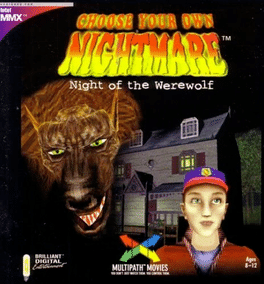
A choose your own adventure game based on the book of the same name. A short horror movie about a werewolf plays out with branching paths where you can choose how the next scene will play out, leading to one of multiple endings.Shienryu
1997
Shienryu
1997
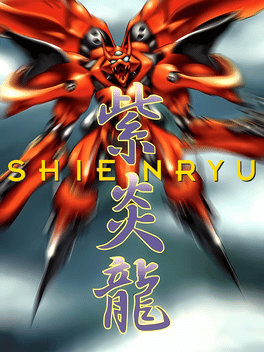
Shienryu is a 1997 shoot-'em-up by Warashi for the Sega Titan Video arcade system later ported to the Sega Saturn.Magic: The Gathering - Battlemage
1997
star 4.9Magic: The Gathering: BattleMage is a real time strategy game published in January 1997 by Acclaim for both PCs and PlayStation. It was also in development for the Sega Saturn, but this version was cancelled in mid-1997. In addition to the real time strategy game, BattleMage has a head-to-head mode. It is set on the continent of Corondor, where a planeswalker named Ravidel forces the most powerful mages to fight each other, so that he can eventually destroy them and conquer the land. The game had a poor critical reception due to its unfair AI, unfriendly interface, and unbalanced gameplay.[citation needed] Spectrum Holobyte filed a lawsuit after Acclaim published the PC version in January 1997, claiming Acclaim had violated an agreement the two companies made in November 1996 which established a release schedule for the game, with the two companies publishing it for different platforms. In October of 2018, the game's rights were acquired by Canadian production company Liquid Media Group along with other titles ori